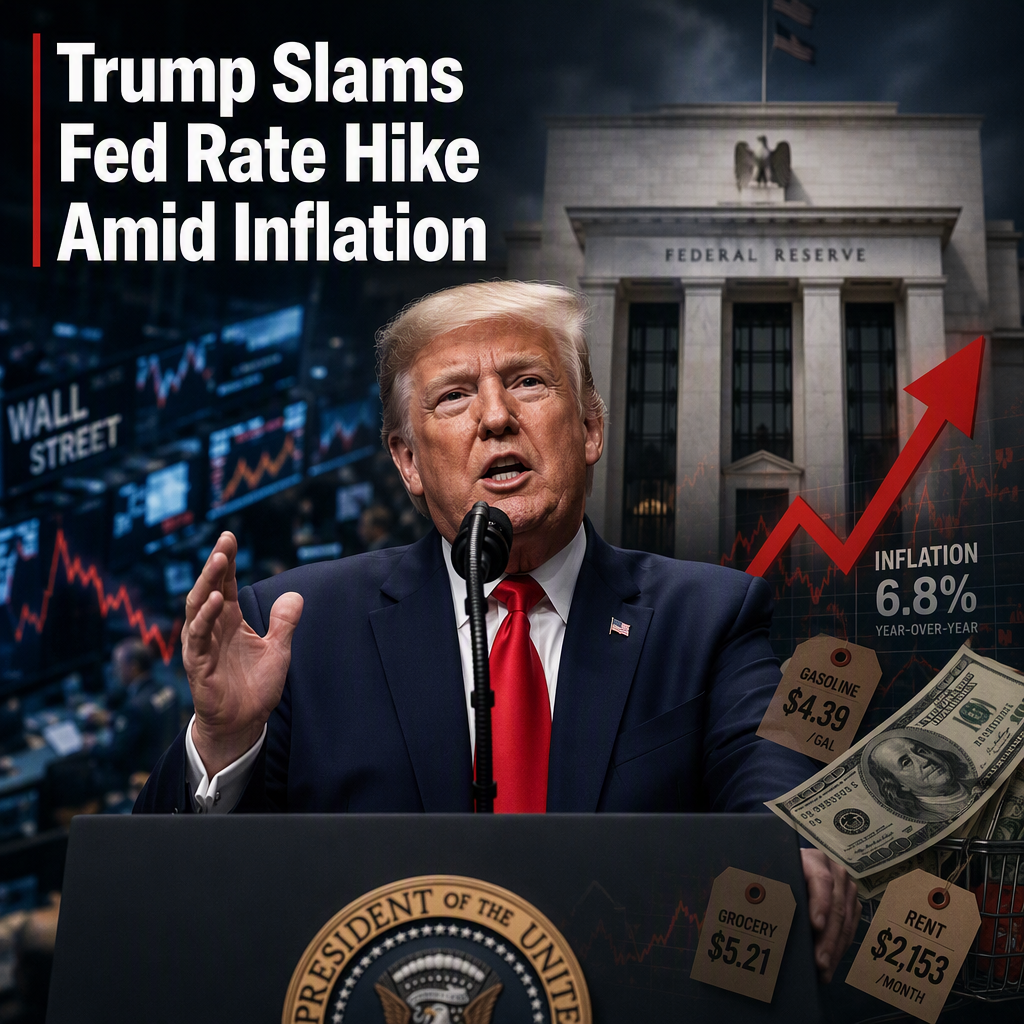
The Federal Reserve has raised interest rates for the first time in years, a move that comes as consumer prices continue to soar and inflation pressures American households [1]. President Donald Trump publicly criticized the Fed's decision, stating, 'The board is very hostile. They’re very political. They’re doing the wrong thing,' highlighting ongoing tensions between the White House and the central bank over monetary policy direction [1].
The rate hike occurs at a critical juncture, with inflation impacting consumers and the president repeatedly voicing opposition to any increase in rates [1]. Trump's remarks were made during a trip to North Carolina, where he was campaigning to help Republicans retain control of Congress [1].
The Federal Reserve's decision is expected to have significant implications for borrowing costs, consumer loans, and the broader economy, though the article does not specify the exact rate increase or provide market reaction data [1]. No forward-looking statements or analyst opinions are included in the source [1].
CONCLUSION
The Federal Reserve's interest rate hike marks a pivotal shift in monetary policy, drawing sharp criticism from President Trump amid ongoing inflation concerns. The move is anticipated to significantly affect borrowing costs and the broader economy, intensifying the debate over the Fed's role and decisions.