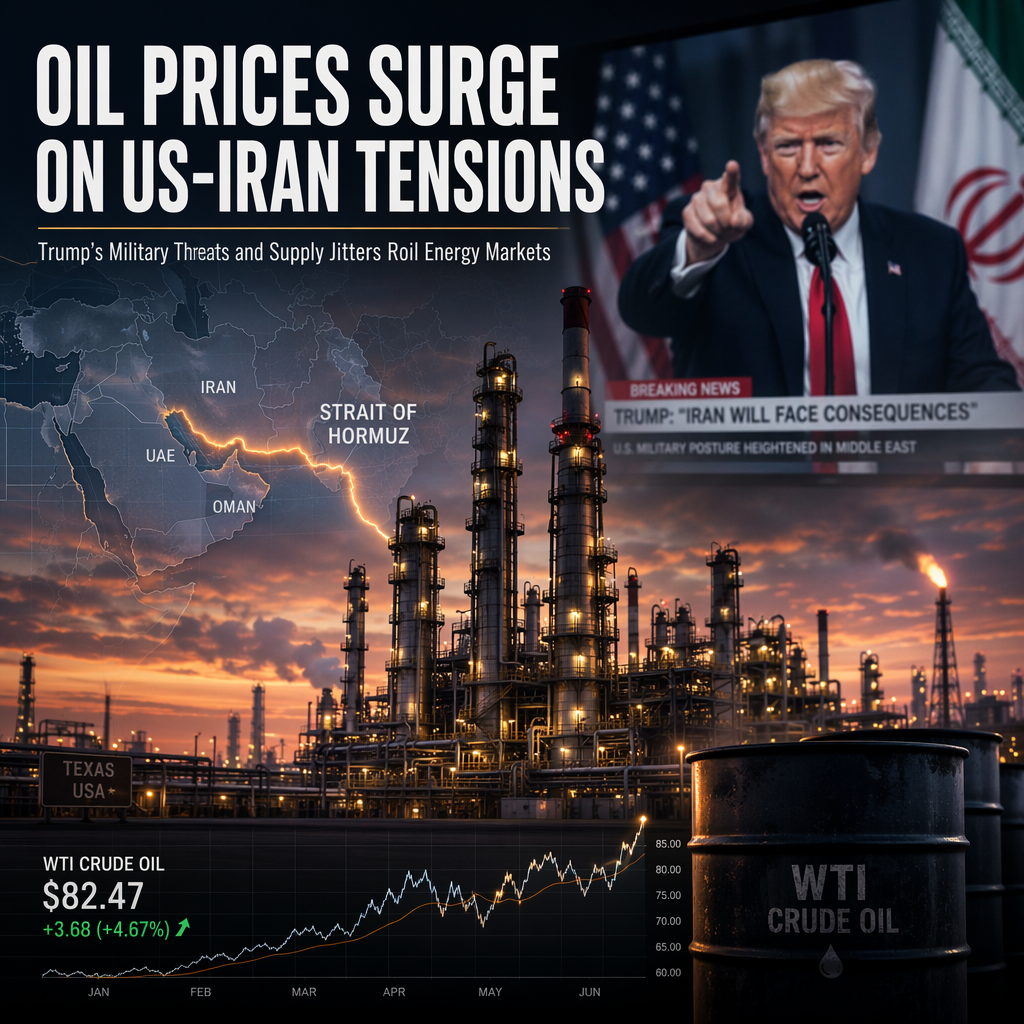
West Texas Intermediate (WTI) oil prices extended their rally for a third consecutive day, trading around $79.20 per barrel during Asian hours on Wednesday, as geopolitical tensions between the United States and Iran intensified [1]. The latest surge in crude prices was triggered by US President Donald Trump’s threats of additional military strikes on Iran, following the reinstatement of a US blockade against Tehran in the strategically vital Strait of Hormuz [1]. Trump stated that military operations would continue and warned that the US could target Iranian bridges and power plants as early as next week if Iran does not return to negotiations [1].
In a notable policy adjustment, Trump abandoned plans to impose a 20% fee on cargo passing through the Strait of Hormuz, asserting that any lost revenue would be compensated by future investments from Gulf nations into the US [1]. The renewed hostilities have heightened global supply concerns, directly supporting oil prices and injecting fresh uncertainty into the energy market. This comes at a time when Persian Gulf producers had recently begun increasing exports after an interim peace agreement was signed [1].
On the macroeconomic front, softer-than-expected US inflation data provided additional support for oil prices. The US Consumer Price Index (CPI) inflation eased to 3.5% year-over-year in June, down from a three-year high of 4.2% in May and well below the market consensus of 3.8% [1]. On a monthly basis, headline CPI declined by 0.4% in June, reversing a 0.5% increase in May [1]. This has fueled hopes that the US Federal Reserve might adopt a less hawkish monetary stance, which could further bolster commodity prices, including oil [1].
CONCLUSION
WTI oil prices have risen sharply amid escalating US-Iran tensions and renewed supply concerns, with President Trump’s military threats and policy shifts driving market uncertainty. Softer US inflation data has also contributed to a more supportive environment for oil prices. The market remains highly sensitive to further developments in US-Iran relations and US monetary policy.