
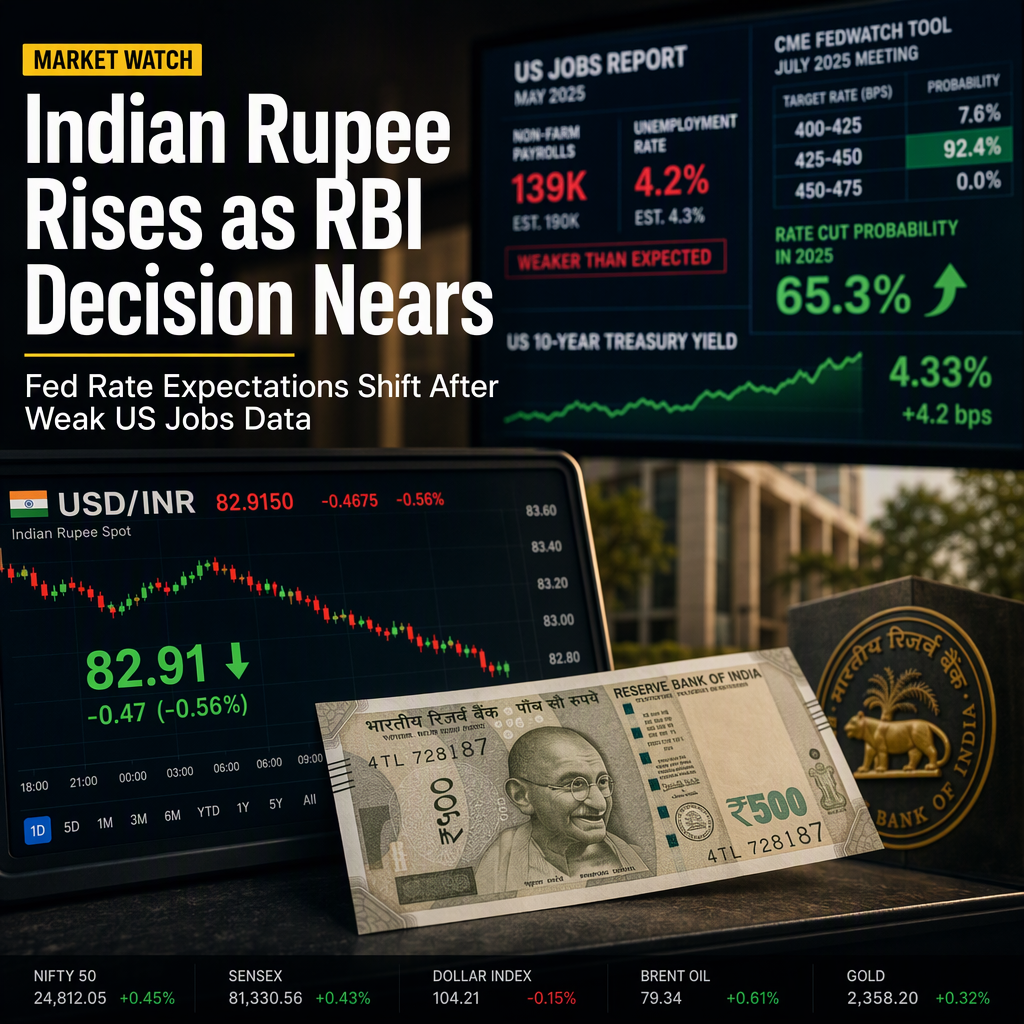
The Indian Rupee (INR) opened marginally higher against the US Dollar (USD) at the start of the Reserve Bank of India’s (RBI) monetary policy week, with the USD/INR pair ticking down to near 96.25. This movement comes as traders have trimmed their expectations for a Federal Reserve (Fed) interest rate hike in the upcoming policy meeting, following the release of weaker-than-expected US Nonfarm Payrolls (NFP) data for September. According to the CME FedWatch tool, the probability of the Fed leaving rates unchanged in October has surged to 82.3%, up from 35.8% the previous week [1].
The US NFP report showed that the economy added 29,000 jobs in September, significantly below the 90,000 estimate and the previous reading of 133,000, which was revised down from 162,000. The US unemployment rate rose to 4.2%, above the expected 4.1%, while average hourly earnings grew by 3% year-on-year, slower than the 3.1% in August and below the expected 3.2% [1]. This moderation in job and wage growth led markets to reassess their hawkish Fed expectations. Despite this, US Treasury yields and the US Dollar remain firm, with the 10-year Treasury yield at around 5.27%, close to its two-decade high of 5.34% posted last week. The US Dollar Index (DXY) reached a fresh yearly high near 102.53 in Asian trading [1].
Looking ahead, the RBI’s monetary policy announcement on Wednesday is seen as the major trigger for the Indian Rupee this week. Analysts at MUFG/BTMU forecast that the RBI will keep rates on hold in the near term but suggest that the central bank may begin its hiking cycle from December. They also see a good chance that the RBI will shift its policy stance from neutral to a tightening bias, signaling a potential change in direction even if rates remain unchanged this week. MUFG/BTMU project a total of 50 basis points of rate hikes in their forecast, with a risk of up to 75 basis points in this cycle, citing strong growth, abundant liquidity, rising credit growth, supportive fiscal policy, higher commodity prices, and inflation risks due to adverse weather conditions in India [1].
While the Rupee has gained some ground, analysts caution that higher US Treasury yields and a strong US Dollar could weigh on the Indian currency in the near term [1].
CONCLUSION
The Indian Rupee has strengthened slightly ahead of the RBI’s policy decision, buoyed by reduced Fed rate hike expectations after weak US jobs data. However, persistent strength in US yields and the Dollar may limit further gains. Market participants are closely watching the RBI for any shift in policy stance or forward guidance.