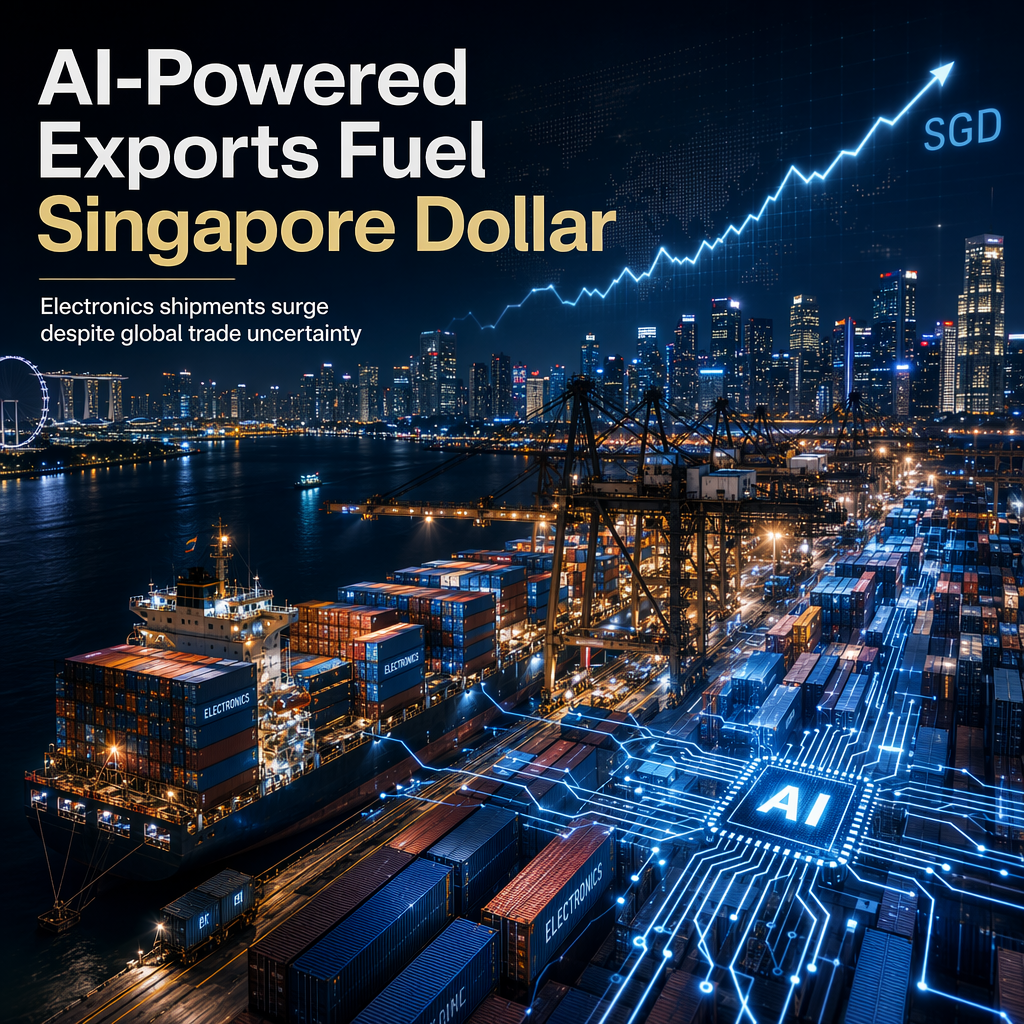
Commerzbank analysts Moses Lim and Dr. Henry Hao report that Singapore's June non-oil domestic exports (NODX) grew by 20.7% year-on-year, reflecting robust performance despite a moderation from previous months. This growth was primarily driven by a surge in electronics exports, attributed to strong global demand for AI-related semiconductors [1]. In the first half of 2026, NODX expanded by 18.6%, significantly surpassing the government's full-year forecast of 3-5%, indicating that external demand for Singapore's exports remains resilient in the face of ongoing geopolitical and trade-related uncertainties [1].
The analysts highlight that the global electronics upcycle is intact, supported by sustained capital expenditure from hyperscalers and cloud service providers, which continues to underpin Singapore's export strength [1]. While there are concerns about tariff-related headwinds potentially impacting non-electronic exports, Commerzbank notes that the effect may be less severe than initially feared, as most economies are expected to face a baseline 10% tariff on shipments to the US [1].
Despite disruptions in the chemical sector, continued investment in AI infrastructure is expected to support electronic shipments and help offset these challenges. Additionally, clearer global trade policies and easing tensions in the Middle East could further aid a recovery in non-electronics exports [1]. The USD/SGD currency pair is trading near 1.2910, reflecting the Singapore dollar's relative strength against the US dollar, supported by these positive export trends [1].
CONCLUSION
Singapore's export sector remains resilient, driven by strong AI-related electronics demand and robust NODX growth. While some risks persist from tariffs and sector-specific disruptions, ongoing investment in AI infrastructure and improving global trade conditions are expected to support the Singapore dollar going forward.