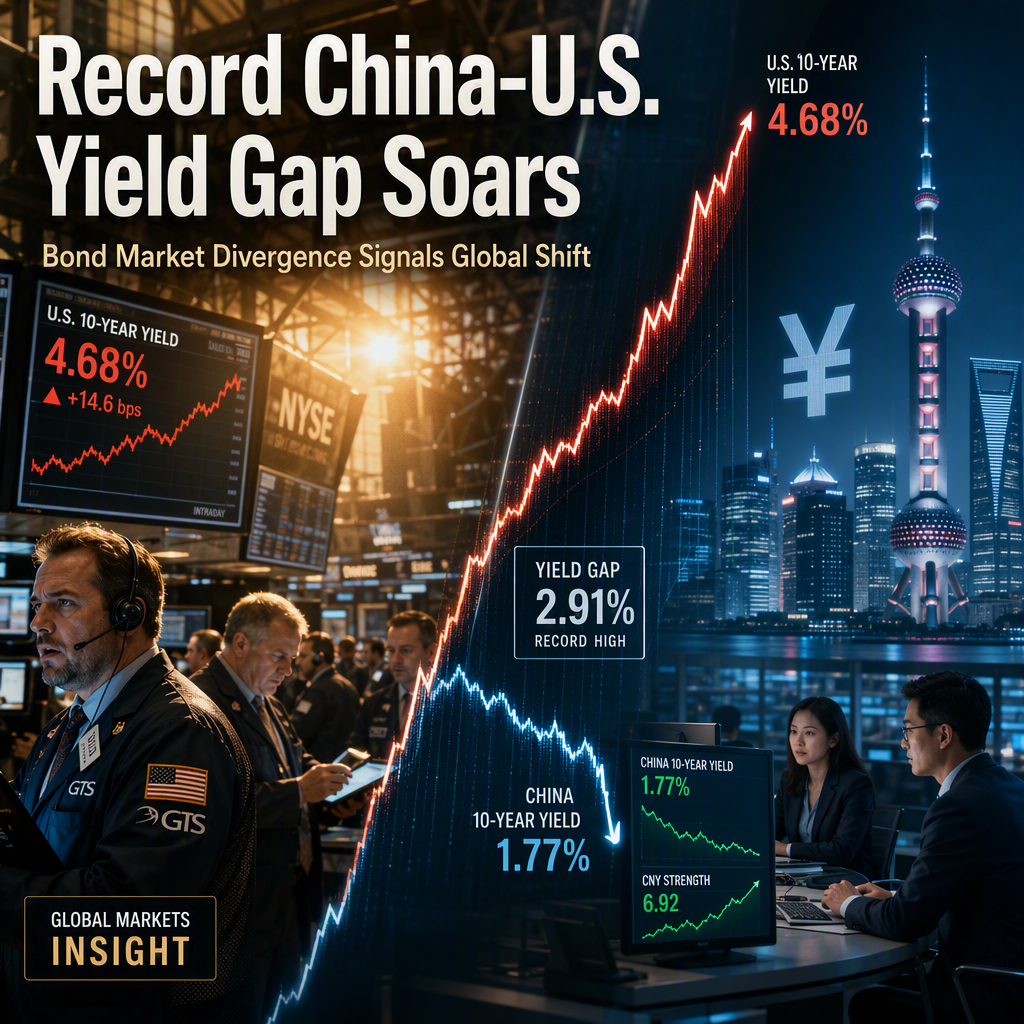
The yield gap between Chinese government bonds and U.S. Treasurys has reached a record high, underscoring a significant divergence between two of the world's largest bond markets [1]. This development comes as global government bond yields have surged to multi-year highs, driven by concerns over persistent inflation, increased government borrowing, and geopolitical tensions [2]. In the U.S., the 10-year Treasury yield climbed to its highest level since November 2023, while yields in other major markets such as Japan, the U.K., and Germany also reached multi-year or multi-decade highs [2].
The widening yield disparity is attributed to contrasting economic and monetary policy conditions. While U.S. Treasurys have seen yields rise amid inflation concerns and the potential for further Federal Reserve rate hikes, Chinese government bonds have rallied due to slow growth, weak consumer demand, and the People's Bank of China's accommodative stance, which has pushed yields lower [1]. The strengthening of the renminbi has further enhanced the appeal of Chinese bonds for foreign investors, as currency appreciation boosts returns [1].
Market participants note that the divergence is striking, with Chinese bonds finding strong support at current levels and U.S. Treasurys facing resistance due to ongoing inflation worries [1]. Technical analysis indicates continued demand for Chinese government bonds from both domestic and international investors, while traders remain cautious about U.S. Treasurys amid volatility and the risk of further price declines [1].
Analysts cited in the sources warn that structural shifts in the global economy, such as deglobalization, protectionism, and increased defense spending, may keep inflation structurally higher than in the past decade [2]. This shift is changing portfolio trade-offs and increasing the term premium demanded by investors, particularly for longer-dated bonds [2]. Jon Cunliffe of JM Finn highlighted that while cyclical inflation may moderate, a return to the low and stable inflation regime of the 2010s is unlikely, with the impact of AI on productivity remaining an open question [2].
CONCLUSION
The record yield gap between Chinese and U.S. government bonds reflects a fundamental shift in global bond market dynamics, driven by diverging economic conditions, monetary policies, and currency movements. Persistent inflation concerns and structural changes in the global economy are fueling volatility and higher yields in major markets, prompting investors to reassess risk and portfolio allocations.