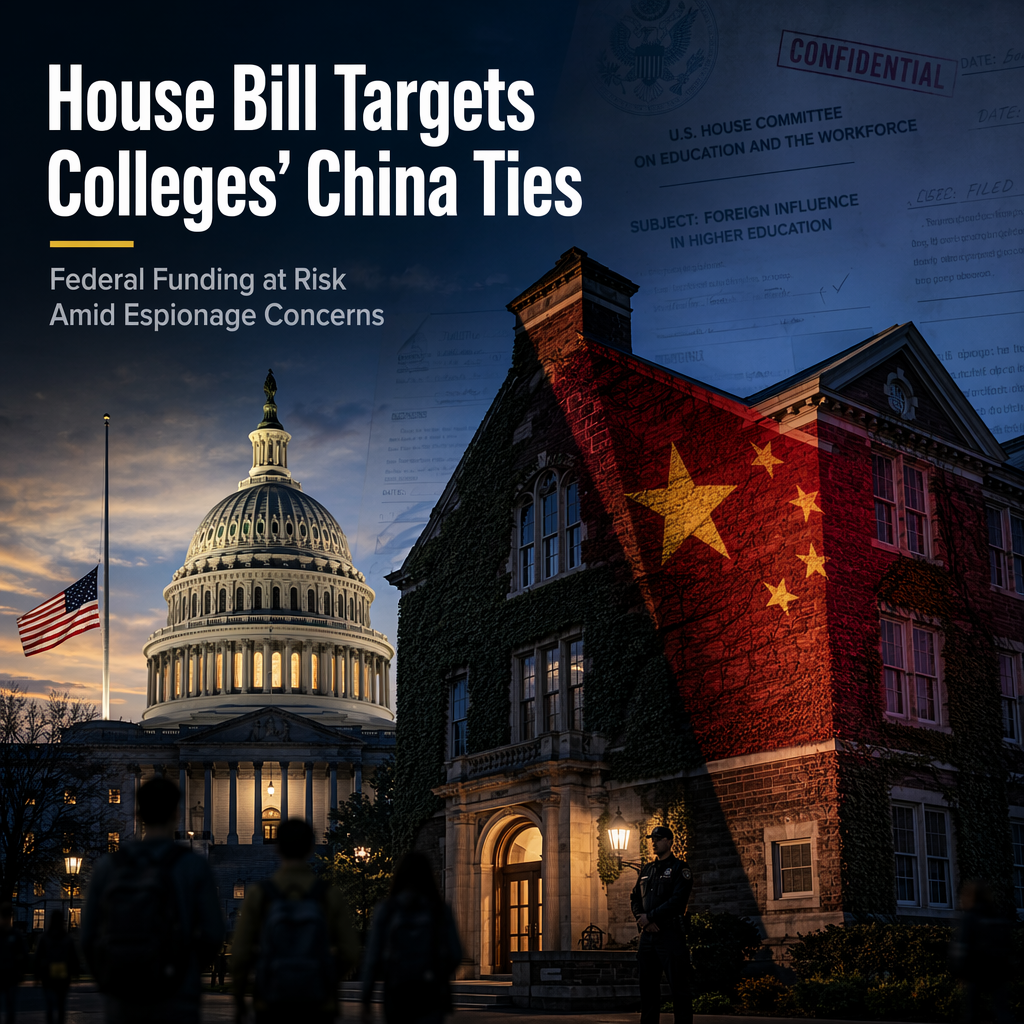
Rep. Pat Fallon has introduced the Espionage Protection Act in the House of Representatives, aiming to strip federal intelligence-related funding from colleges and universities that maintain ties with organizations allegedly linked to the Chinese Communist Party (CCP) [1]. The proposed legislation would amend the National Security Act of 1947 to prohibit federal funding for intelligence programs at institutions with contractual or in-kind relationships with CCP-affiliated groups [1]. Fallon specifically highlighted the Confucius Institute, a nonprofit educational organization funded by the CCP, as a target of the bill, noting that while the number of universities working with the Institute has declined due to previous funding threats, it still maintains partnerships with several schools [1].
The bill would revoke federal funding for various grant programs, including Intelligence Community Centers for Academic Excellence, intelligence advanced research projects, undergraduate and graduate training, Stokes Scholarship Programs, and the SMART Scholarship for Service Program [1]. Fallon argued that the legislation is necessary to protect sensitive U.S. research and national security, citing instances where individuals at these institutions allegedly stole highly sensitive research and biotechnology for the benefit of the CCP [1].
Additionally, Fallon expressed support for an outright ban on student visas for Chinese nationals, stating that such a measure would address concerns about Chinese students potentially stealing technologies and sensitive data [1]. However, the debate over banning Chinese students has caused division within the GOP. Former President Donald Trump, in an interview with Fox News’ Sean Hannity, warned that an outright ban could harm relations between the U.S. and China, and acknowledged some benefits of allowing Chinese professionals to study in the U.S. [1].
The article also references an ongoing investigation into a Riverside County school district in California for allegedly issuing invalid diplomas to nonresident Chinese students and engaging in possible financial misconduct, highlighting broader concerns about foreign influence and financial practices in U.S. educational institutions [1].
CONCLUSION
The Espionage Protection Act represents a significant legislative effort to restrict federal funding for colleges with alleged ties to the Chinese Communist Party, reflecting ongoing concerns about national security and intellectual property theft. While the bill could impact funding for several academic programs, the debate over its broader implications, including student visa policies, remains contentious within U.S. political circles.