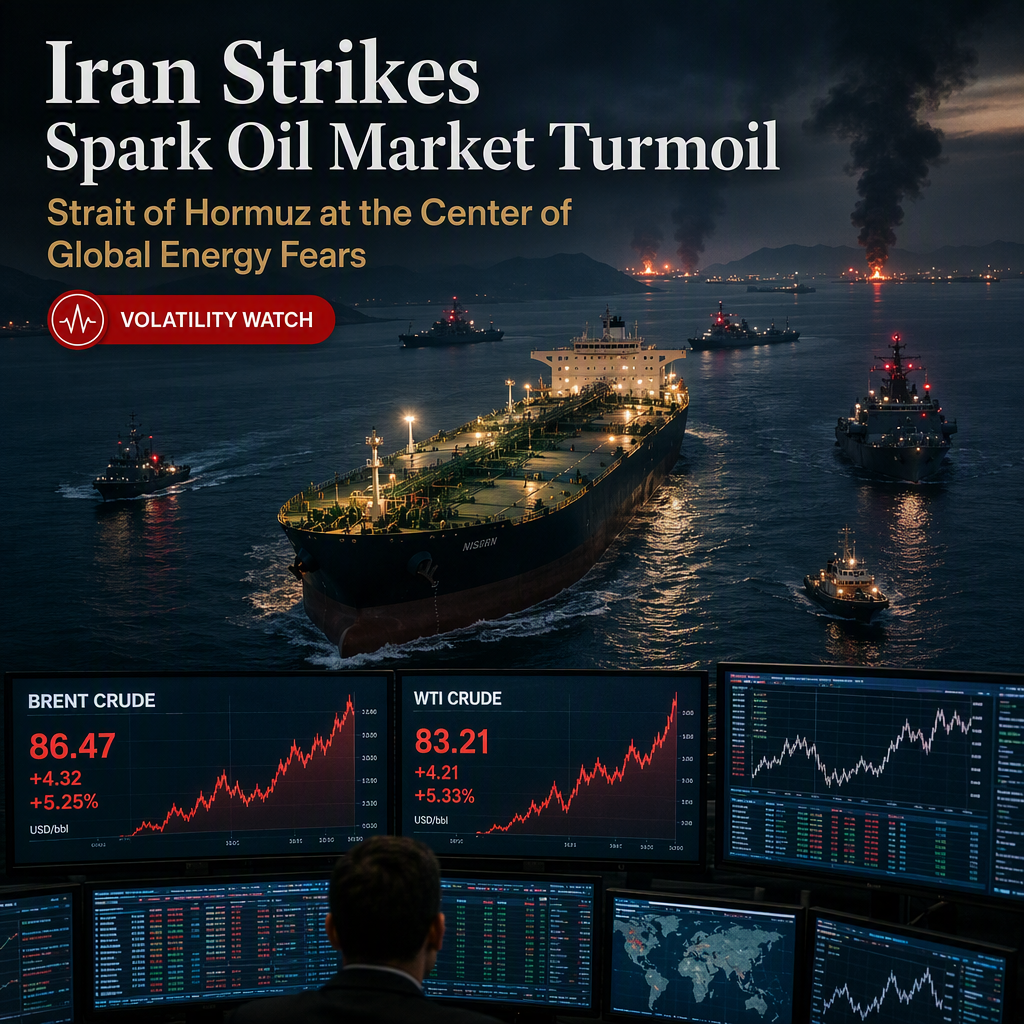
Iran has launched retaliatory actions against US forces following recent American military strikes in a key oil route, escalating tensions in the Middle East [1]. This development has intensified concerns over the security of vital energy corridors, particularly the Strait of Hormuz, which is described as one of the world's most critical energy chokepoints [1]. The situation has prompted market analysts to closely monitor the potential for disruptions in oil supply lines, as any sustained conflict in the region could lead to significant volatility in global oil prices and increased risk premiums [1].
Traders are being advised to pay attention to support and resistance levels for major crude oil benchmarks, including Brent crude and WTI crude, both of which are noted as being highly sensitive to further military developments [1]. Technical indicators referenced in the article suggest that oil prices could break higher if tensions escalate, with previous highs serving as key resistance levels. Conversely, a de-escalation in hostilities could result in prices retracing to support zones identified in earlier trading sessions [1].
Market sentiment is described as cautious, with many investors adopting a wait-and-see approach amid ongoing uncertainty in the region. The potential for further retaliatory actions and the unpredictable nature of the conflict are expected to continue driving volatility in energy markets [1].
CONCLUSION
The escalation between Iran and US forces in a key oil route has heightened market fears of supply disruptions and increased volatility in oil prices. Investors are maintaining a cautious stance, with the situation in the Middle East likely to remain a significant driver of energy market movements in the near term.