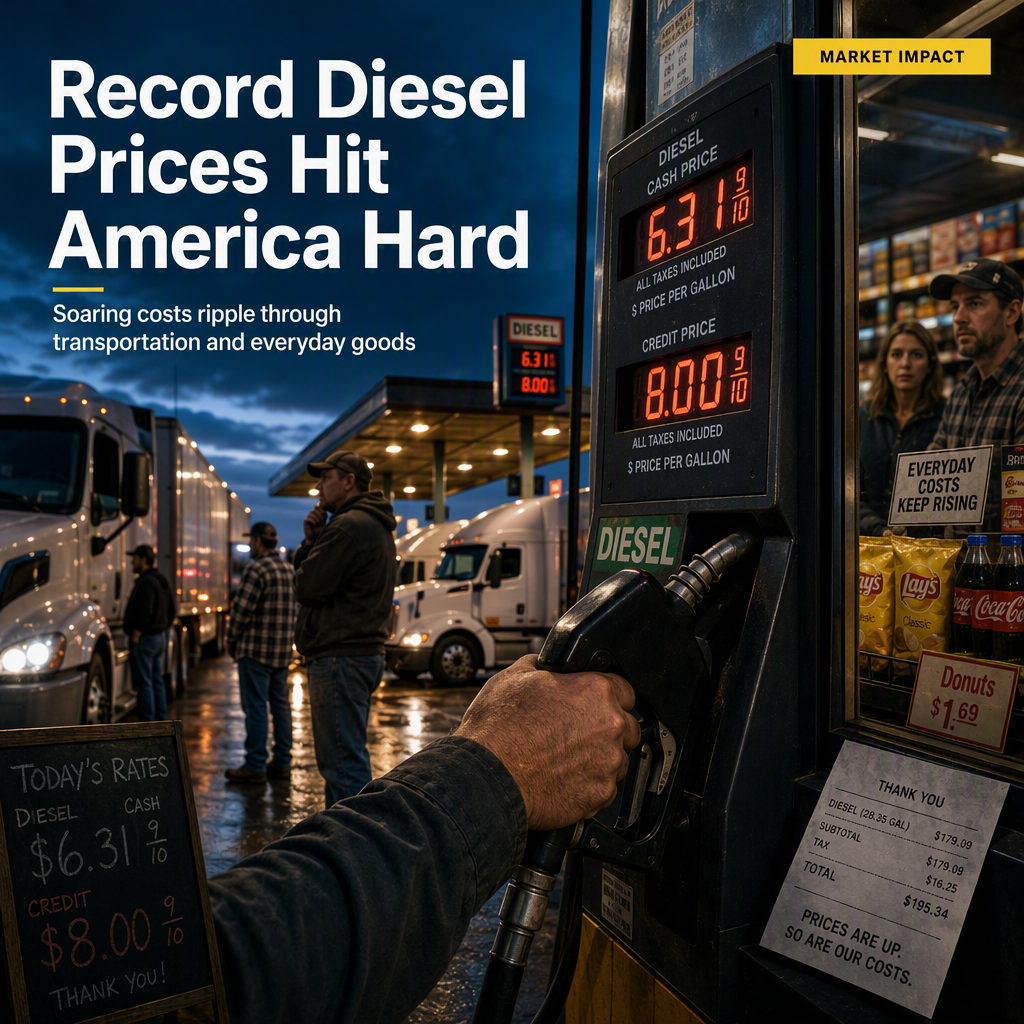
Diesel fuel prices in the U.S. have reached an all-time high of $6.31 per gallon, marking a significant milestone in a steady upward trend that began with the outbreak of war with Iran earlier this year [1]. In California, diesel prices have soared even higher, hitting $8 per gallon according to Norfolk Southern's chief commercial officer at a Morgan Stanley conference [1]. This surge is attributed to energy shocks caused by conflicts in Ukraine and Iran, which are also expected to drive home heating oil costs up by more than 30% this winter, requiring 'significant sacrifices' from consumers, according to a heating industry executive [1].
Economists and supply chain experts warn that the impact of record diesel prices will ripple through the entire U.S. economy. Diesel is described as the 'single most universal tangible input,' meaning that increases in transportation costs for truckers and railroads will eventually push prices higher for virtually all goods and services [1]. The longer diesel prices remain elevated, the broader the list of affected items will become, including groceries, delivery fees, and seasonal products [1].
Retailers are currently absorbing most of the increased transit costs, which are adding several additional cents to the cost of selling fuel. Jeff Lenard, vice president of media and strategic communications at the National Association of Convenience Stores, notes that retail gross margins have constricted by about 15 cents per gallon, typically the net margin for retailers [1]. This squeeze forces retailers to decide whether to absorb these costs or pass them on to consumers at the pump, with many currently choosing to absorb the bulk of the increases [1].
The higher diesel prices are not only affecting fuel costs but also the prices of goods transported by diesel-powered trucks, such as chips, soda, and doughnuts, further amplifying the economic pain for consumers [1].
CONCLUSION
Record diesel prices are exerting significant pressure on the U.S. economy, with transportation and retail sectors already feeling the squeeze. If elevated prices persist, consumers can expect broader price increases across goods and services, and retailers may be forced to pass on more costs. The market impact is high, with analysts warning of continued economic challenges if diesel prices remain at record levels.