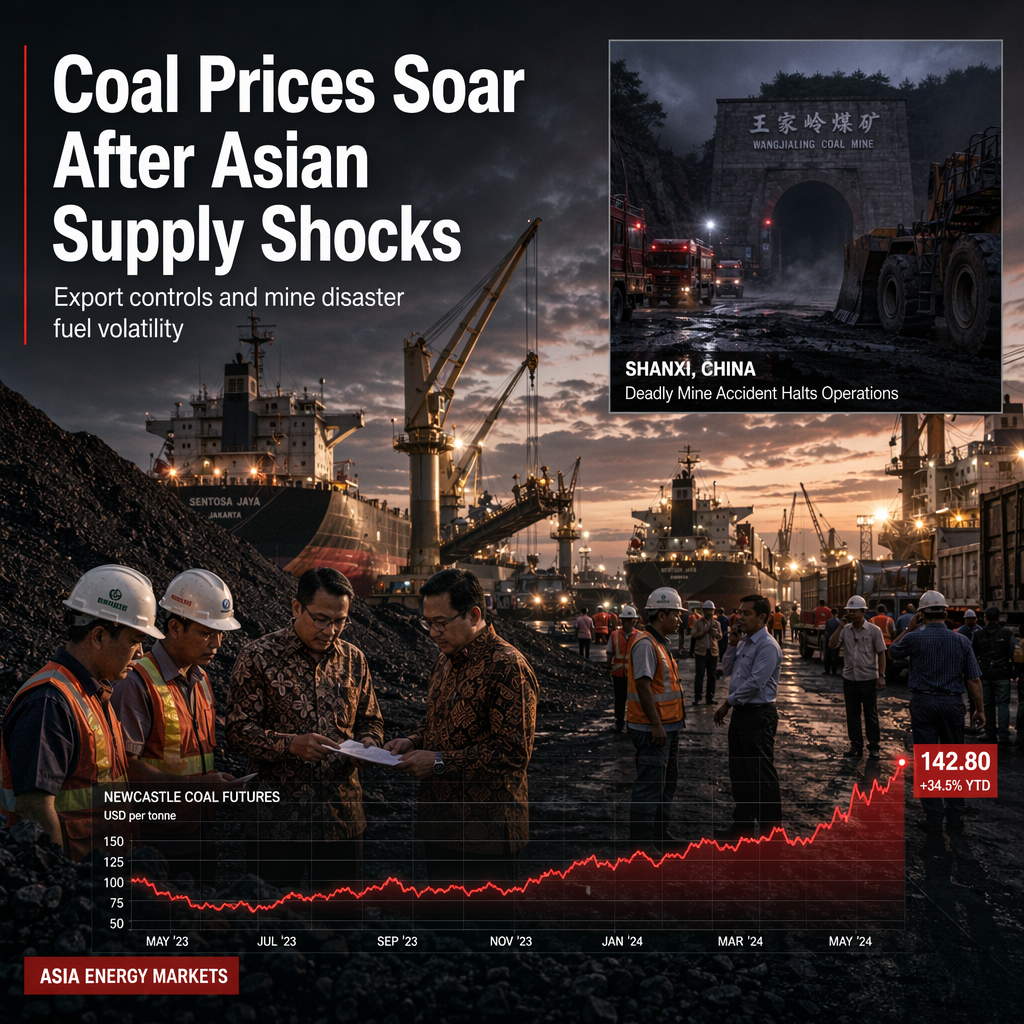
Thermal coal prices have experienced a significant surge following the implementation of stricter export controls by Indonesia and a deadly mining accident in China, according to market participants and analysts [1]. Beginning this month, Indonesia has required all thermal coal exporters to report to a new state-owned company, a move aimed at increasing government oversight and managing domestic supply. This regulatory change has heightened concerns among international buyers and commodity exporters, who warn that the new reporting requirements could introduce additional hurdles and policy uncertainty [1].
Simultaneously, a fatal mining accident in Shanxi province, China, has forced a halt in operations, further reducing coal supply from one of the world's largest producers [1]. These supply shocks come at a time when demand for coal is already elevated due to an LNG shortage caused by the ongoing conflict in Iran, which has disrupted global energy markets [1]. As a result, spot thermal coal prices have shown notable gains, building on already elevated levels seen earlier in the year [1].
Technical analysis indicates strong upward momentum in coal prices, with resistance levels being tested as supply shocks persist [1]. Market sentiment remains bullish, and traders are advised to closely monitor policy developments in both Jakarta and Beijing for further indications of price direction [1]. Industry observers caution that Indonesia's tighter controls may drive increased volatility in global coal markets and could signal the beginning of broader reforms, including potential moves toward a state monopoly [1].
Overall, the convergence of regulatory changes in Indonesia and supply disruptions in China is exerting renewed upward pressure on thermal coal prices, with significant implications for commodity markets and energy security across Asia [1].
CONCLUSION
The combination of Indonesia's new export controls and the Chinese mining accident has created a bullish environment for thermal coal prices, intensifying supply concerns and market volatility. Market participants are closely watching for further policy developments, as these events have broad implications for energy security and commodity markets in Asia.