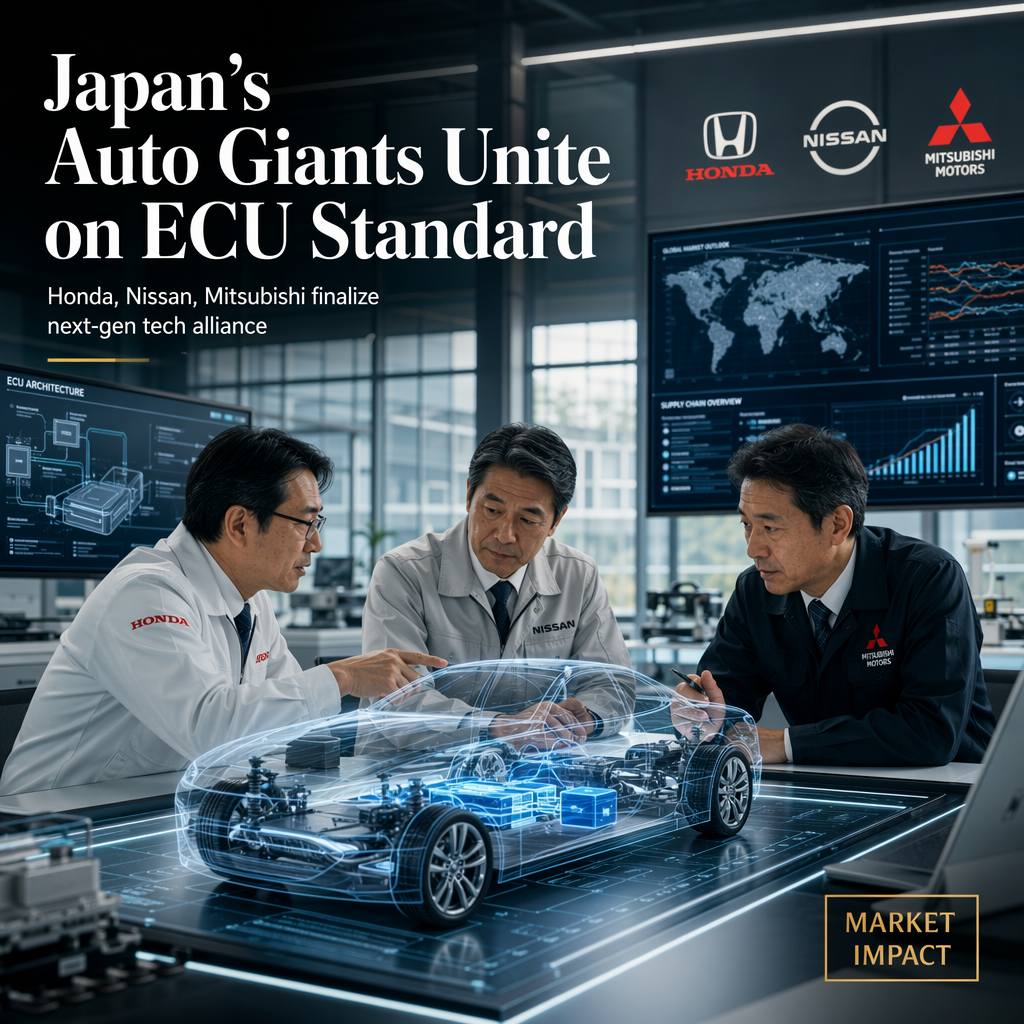
Honda Motor, Nissan Motor, and Mitsubishi Motors have entered final negotiations to standardize electronic control units (ECUs) for their next-generation vehicles, according to Nikkei Asia [1]. ECUs are critical components that regulate software for advanced automotive features, including self-driving capabilities [1]. The three major Japanese automakers are discussing joint procurement strategies for these next-generation vehicles, with the primary goals of reducing costs and improving supply chain efficiency [1].
The move to standardize ECUs is seen as a response to the increasing complexity and cost pressures associated with electrification and autonomous driving technologies [1]. Although specific financial figures have not been disclosed, industry analysts cited in the article estimate that standardization could save each company billions of yen annually by streamlining procurement and minimizing redundant development efforts [1].
Beyond immediate cost savings, the initiative is expected to facilitate further collaboration among the companies in areas such as software development and other electronic components, potentially enhancing their competitive positions in the global automotive market [1]. A senior executive from one of the automakers emphasized the strategic benefits, stating, "By working together, we can leverage our collective strengths and scale to ensure our next-generation vehicles are both technologically advanced and cost-competitive" [1].
This collaborative effort comes at a time when the Japanese auto industry faces mounting pressure from global competitors, particularly in China, where companies have accelerated development cycles and made significant investments in advanced vehicle software and hardware [1].
CONCLUSION
Honda, Nissan, and Mitsubishi's move to standardize ECUs signals a significant step toward cost reduction and technological advancement in Japan's automotive sector. The collaboration is expected to yield substantial savings and strengthen their market positions amid intensifying global competition. While exact financial impacts remain undisclosed, the initiative is poised to have a high market impact.