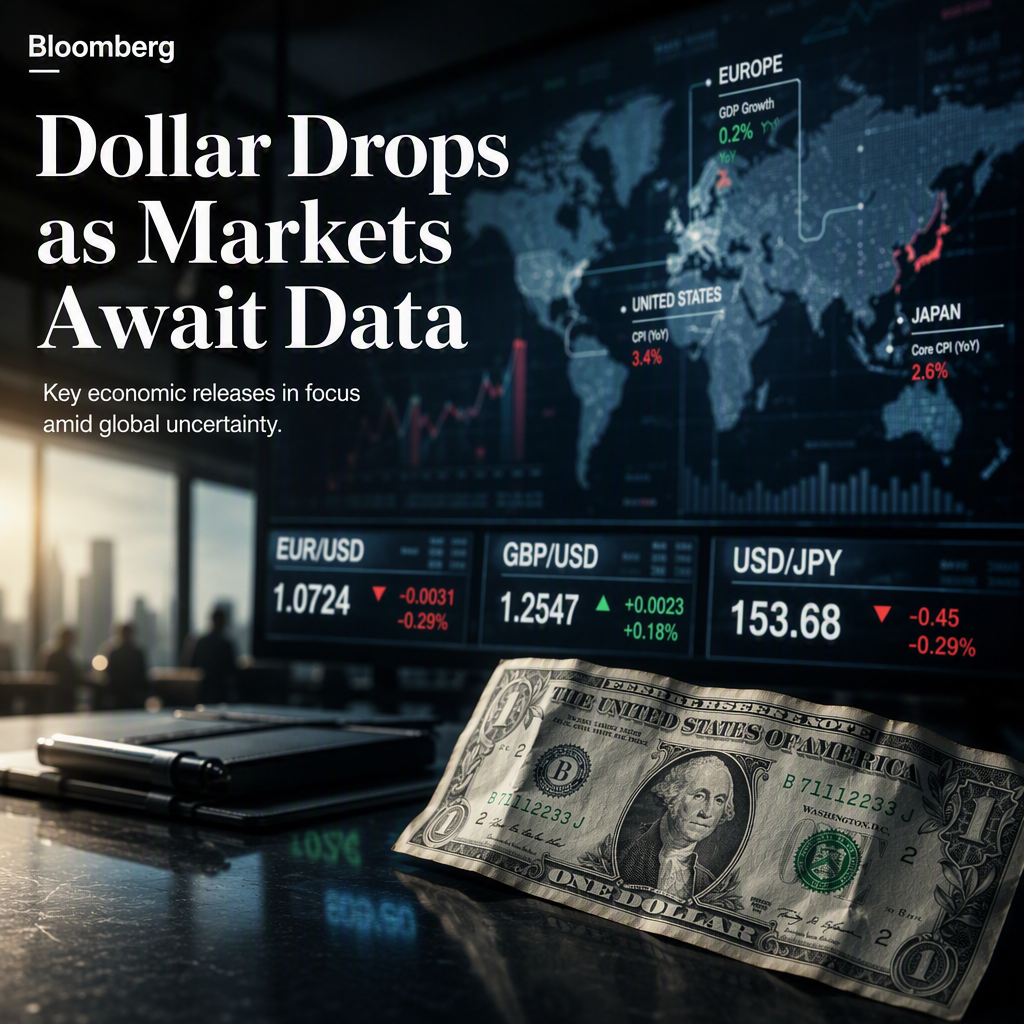
The US Dollar (USD) began the week on a weaker note, with the US Dollar Index (DXY) breaking below the 99.50 level. This decline comes after the market had already digested hawkish remarks from Chair Warsh at Jackson Hole and despite ongoing geopolitical concerns, which have only slightly worsened in recent days [1]. Market participants are now focusing on upcoming US economic data releases, including the ISM Manufacturing PMI, JOLTs Job Openings, and the final S&P Global Manufacturing PMI, which are expected to provide further direction for the USD [1].
In the currency markets, EUR/USD recovered some of its recent losses, climbing back above the 1.1600 level as fresh selling pressure hit the US Dollar. The preliminary Inflation Rate in the Eurozone and German Retail Sales are anticipated to be key drivers for the pair in the near term [1]. GBP/USD also reversed a three-day losing streak, retesting the 1.3550-1.3560 range, with several important UK economic indicators on the horizon, including Nationwide Housing Prices, BRC Shop Price Inflation, and Mortgage Approvals [1].
USD/JPY faced renewed downside pressure, falling back to the 159.50 region after briefly moving above the 160.00 mark. The Japanese economic calendar features the final S&P Global Manufacturing PMI, Capital Spending data, and the Consumer Confidence gauge, all of which could influence the pair's direction [1]. Meanwhile, AUD/USD found support near 0.7150 and managed a modest rebound, with upcoming data releases such as the final S&P Global Manufacturing PMI, Q2 Current Account, Building Permits, and Private House Approvals in focus [1].
In commodities, WTI crude oil prices rose to six-day highs near $87.00 per barrel, driven by ongoing tensions in the Middle East. Gold prices, however, came under pressure, briefly dipping below $4,400 per troy ounce before staging a slight recovery, remaining defensive despite the weaker US Dollar and mixed US Treasury yields [1].
CONCLUSION
The US Dollar's recent weakness reflects market anticipation of key US and European economic data releases. Currency and commodity markets are responding to both macroeconomic indicators and geopolitical developments, with traders closely watching upcoming reports for further direction.