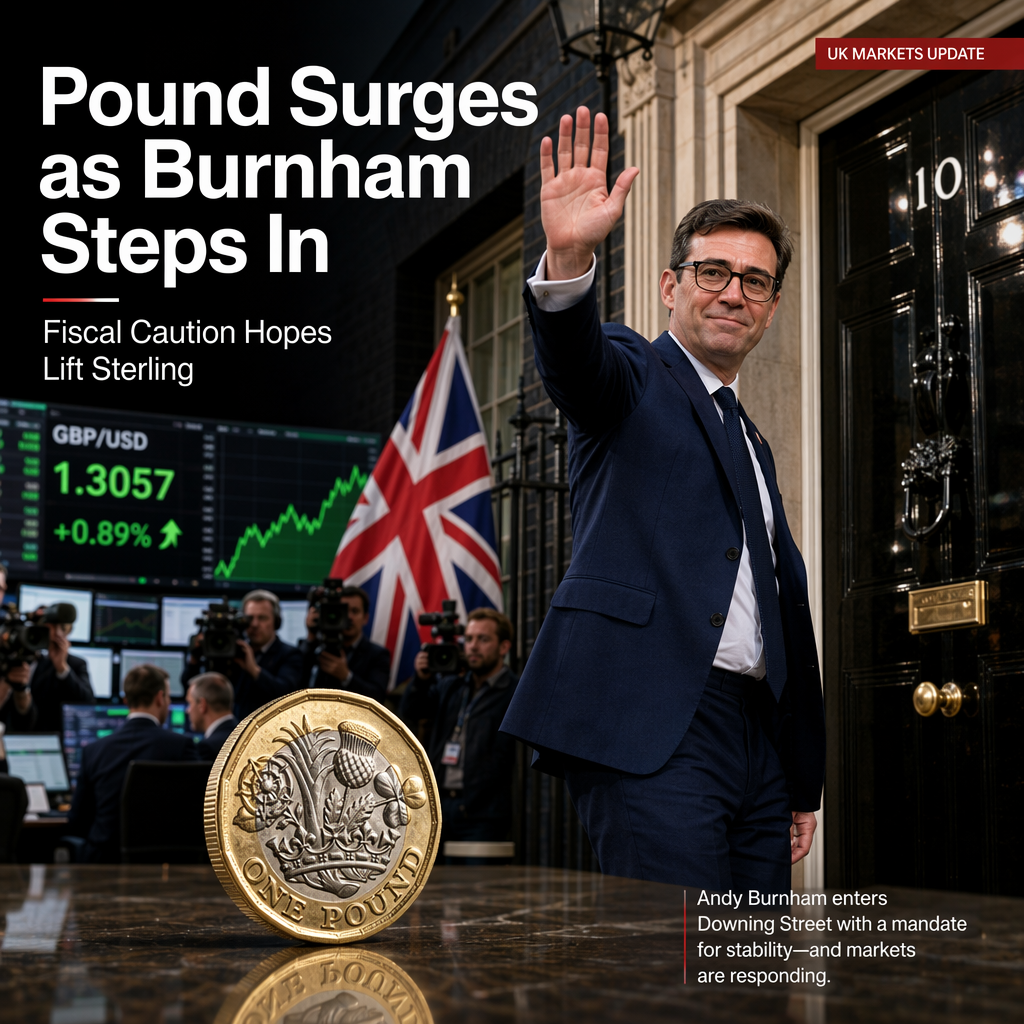
The British Pound (GBP) gained ground as Andy Burnham assumed office as the new UK Prime Minister on Monday, with GBP/USD trading around 1.3470 during European hours after two days of losses [1]. The currency's strength was supported by the UK 10-year gilt yield holding near 5%, reflecting inflation concerns driven by surging oil prices and expectations that the Bank of England may keep interest rates elevated for longer [1]. Market sentiment was further buoyed by reports that Shabana Mahmood is the leading candidate for Chancellor, which eased investor concerns about aggressive fiscal expansion [1].
According to ING's Chris Turner, Sterling's recent gains are attributed not only to expectations of a fiscally cautious chancellor but also to stale short positioning and M&A-related flows into UK equities, as cheaper valuations have made UK stocks more attractive this year [2]. Turner anticipates limited further Pound strength during Burnham's early days in office, but warns that the UK's tight public finances may necessitate tax hikes if the new cabinet aims to expand social care and other initiatives [2].
On the currency front, EUR/GBP is seen with support at 0.8470, with 0.8400 as a best-case level for Sterling this summer, though Turner advises against chasing the EUR/GBP move lower [2]. Meanwhile, the GBP/USD pair also benefited from a weaker US Dollar, as market expectations suggest the Federal Reserve will keep interest rates steady at its upcoming meeting, although the CME FedWatch Tool indicates a 61.4% probability of a rate hike in September [1].
Geopolitical tensions also played a role, with increased risk aversion stemming from escalating hostilities between the US and Iran, which could potentially impact the Greenback and global markets [1].
CONCLUSION
The British Pound strengthened as Andy Burnham became Prime Minister, supported by expectations of fiscal caution and favorable market flows. However, analysts highlight that the UK's constrained public finances may lead to tax increases, potentially limiting further gains. Market participants remain attentive to both domestic fiscal policy and international developments impacting currency movements.