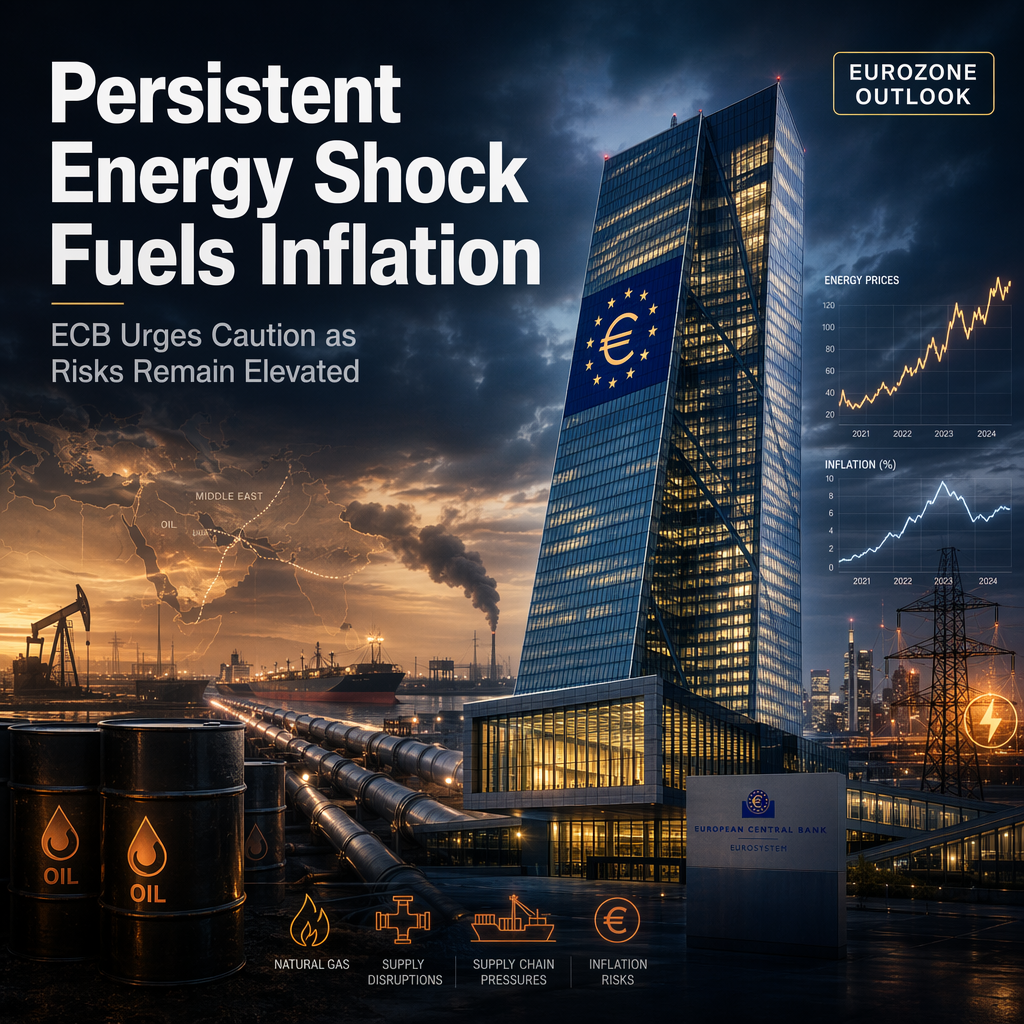
The Eurozone is experiencing ongoing inflationary pressures due to a persistent energy shock, primarily linked to tensions in the Middle East, according to Jan von Gerich of Nordea. All members of the European Central Bank (ECB) have assessed that the risks to the inflation outlook remain skewed to the upside compared to staff baseline projections, with the evolution of the Middle East conflict identified as the key source of risk [1].
The energy shock has proven more enduring than anticipated during the ECB's March and April meetings, with indirect effects now becoming increasingly visible and broad-based. This has led to a further deterioration in the inflation outlook for the Eurozone [1]. Even if the conflict in the Middle East is resolved promptly and sustainably, the ECB cautions that this would not necessarily end the energy shock's impact. Under a milder scenario with less elevated energy prices, much of the inflationary damage from the shock would already be embedded in the broader economy [1].
Specifically, supply chain disruptions, higher production costs, and firm-level price adjustments are now entrenched and would not quickly reverse even with a resolution to the conflict. As a result, the ECB remains unconvinced that inflation will return to target in the near term [1].
CONCLUSION
The ECB perceives persistent upside risks to Eurozone inflation due to the ongoing energy shock and its broad-based effects. Even a resolution to Middle East tensions may not swiftly alleviate inflationary pressures, suggesting continued caution from policymakers.