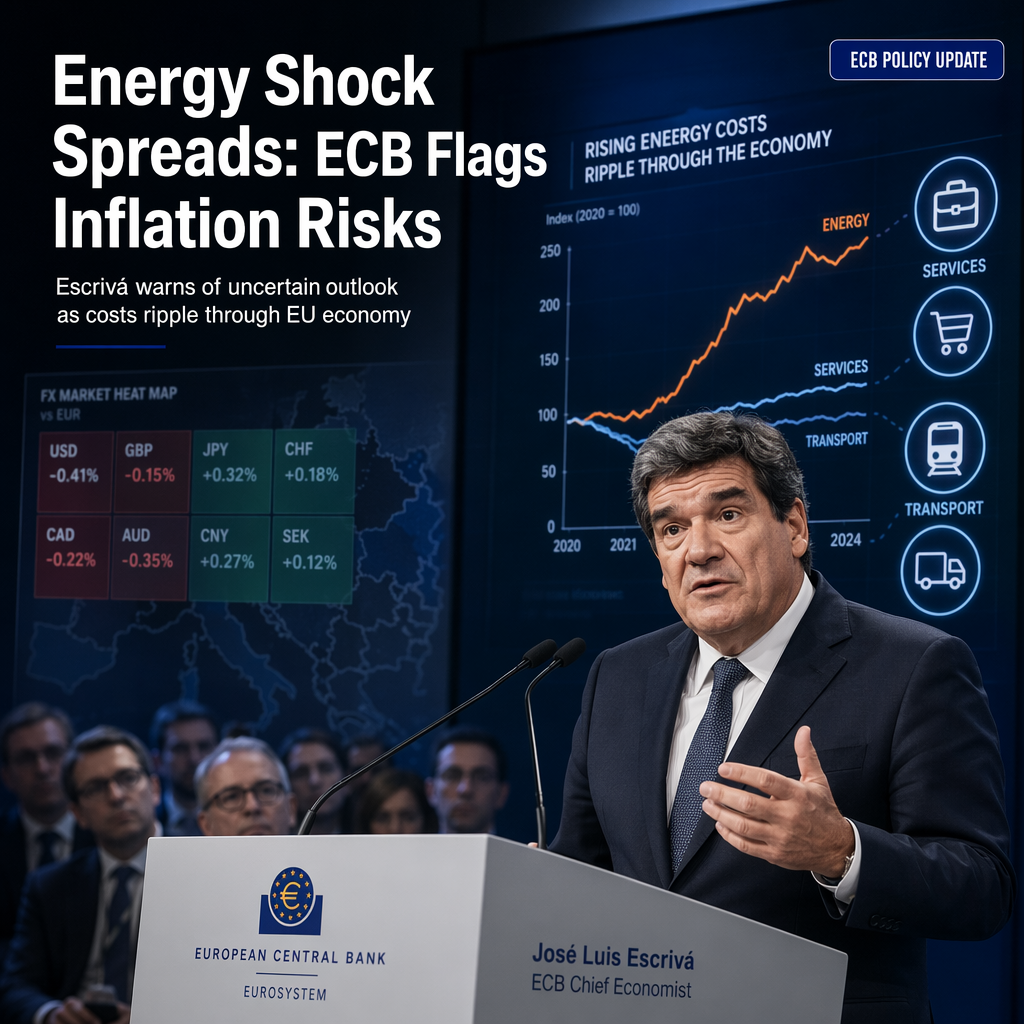
European Central Bank (ECB) policymaker José Luis Escrivá stated in a speech in Barcelona that higher energy costs are now spreading to the services and transport sectors within the European Union (EU) [1]. Escrivá emphasized that the inflation outlook remains highly uncertain, citing several factors contributing to this uncertainty, including the unclear timeline for oil production recovery and the unpredictable nature of oil prices and their transmission to broader inflation [1].
Escrivá also highlighted that while there is concern about second-round effects on wages, such effects have not yet materialized [1]. He noted that the baseline scenario for inflation is subject to considerable uncertainty, particularly regarding how energy price increases may pass through to other sectors and potentially impact wage growth in the future [1].
In related market data, the US Dollar was the strongest against the Swiss Franc, appreciating by 0.65% on the day, and also gained 0.33% against the Euro and 0.62% against the British Pound [1]. The heat map provided shows the percentage changes of major currencies against each other, reflecting ongoing volatility in currency markets amid inflation concerns [1].
No forward-looking statements or analyst opinions were provided beyond Escrivá’s warnings about uncertainty and the potential for further inflation transmission.
CONCLUSION
ECB’s Escrivá’s comments underscore the ongoing uncertainty in the EU’s inflation outlook, particularly as energy costs begin to affect a wider range of sectors. While second-round wage effects have not yet appeared, the situation remains fluid, and markets are responding with notable currency movements. Investors should remain cautious as the inflation trajectory and its broader economic impacts are still unclear.