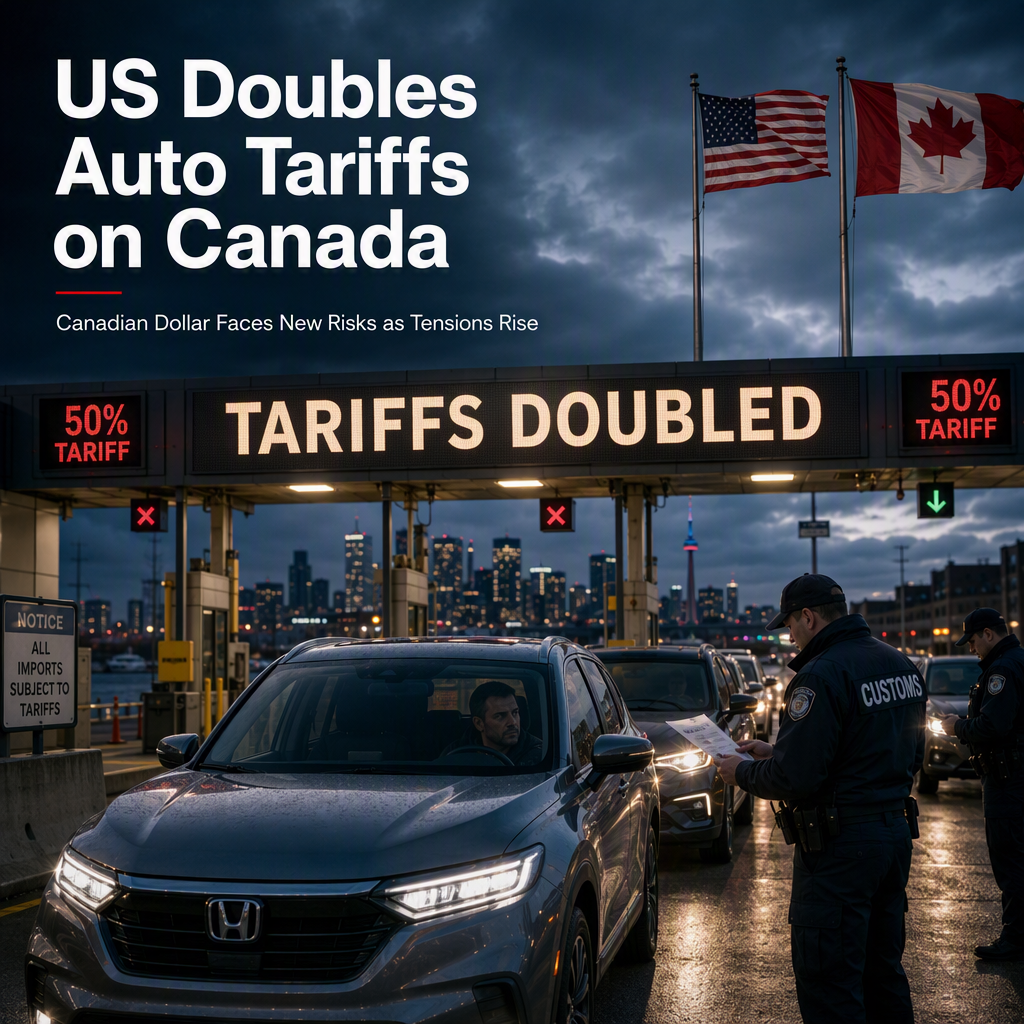
The US President has announced that, starting January 1, 2027, tariffs on cars imported from Canada will be doubled from 25% to 50% [1]. According to Michael Pfister at Commerzbank, this measure represents a relatively moderate response by the current administration's standards, but it will affect a much larger share of Canadian exports to the US compared to the tariffs that recently came into force, which covered approximately USD 20 billion worth of goods [1].
The ultimate impact on Canada and the Canadian Dollar will depend on whether USMCA (United States-Mexico-Canada Agreement) protections apply. If USMCA protections are not enforced, the tariff increase could surpass last year's total rise; if they are, the impact would be more manageable, though still challenging for the Canadian economy [1]. Pfister emphasizes that market sentiment may play a more significant role than the tariff increase itself, suggesting that negative sentiment could weigh heavily on Canada's real economy even if the effective tariff rate rises only slightly [1].
There is potential for negotiations, as the tariffs were announced well in advance of their implementation date. Pfister notes that the US President discussed the country's reliance on aluminium imports from Canada, which could be a point of leverage in upcoming talks [1]. This early announcement may provide an opportunity for both countries to reach an agreement before the end of the year [1].
CONCLUSION
The US decision to double auto tariffs on Canadian imports poses a significant risk to the Canadian economy and currency, with the extent of the impact hinging on USMCA protections and market sentiment. However, the advance notice of the tariffs leaves room for negotiations, offering hope that an agreement could be reached before the measures take effect.