
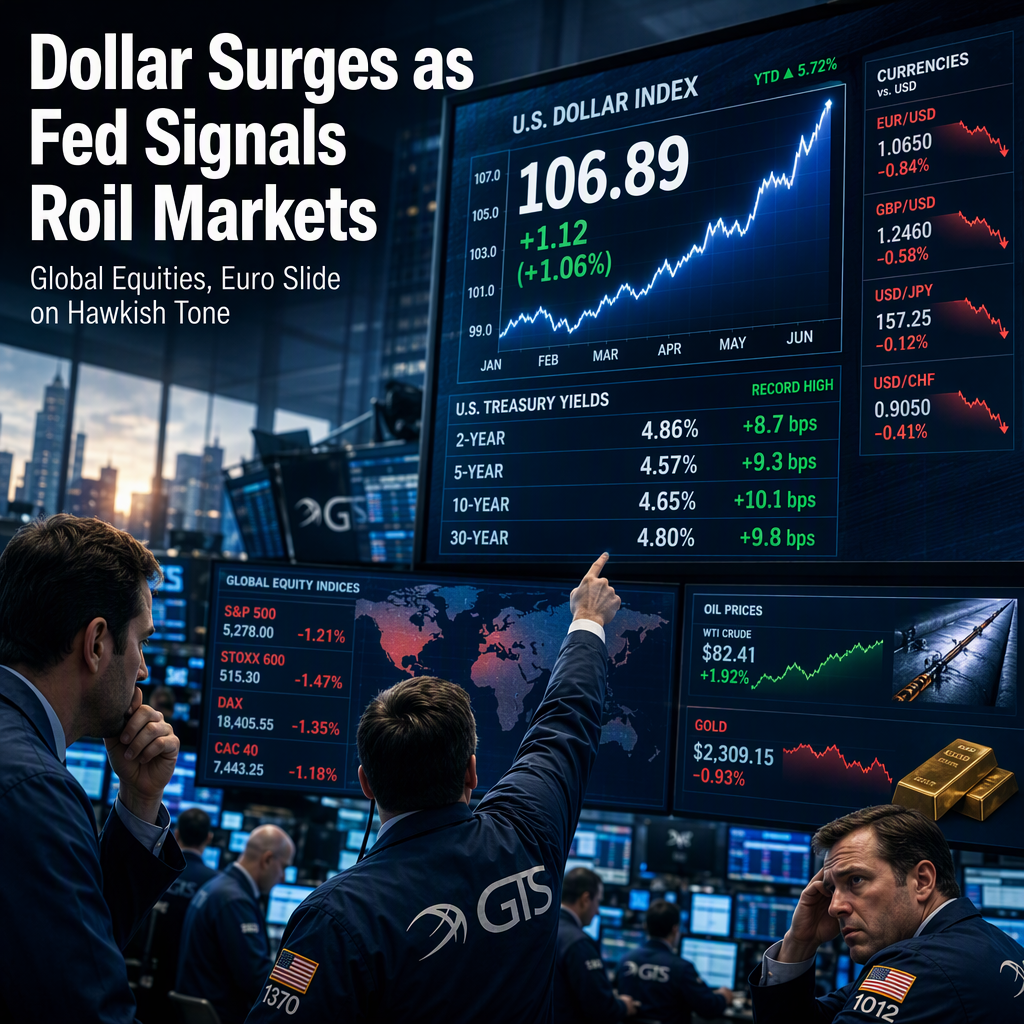
The core event across the sources is a global market reaction to persistent hawkish signals from the U.S. Federal Reserve, surging U.S. Treasury yields, and elevated oil prices. The U.S. Dollar Index reached its highest level since late July near 101.40 before consolidating, having outperformed all major peers this week, with the Euro down 0.8% for the week and nearly 2% over two weeks, and the USD gaining 0.93% against the EUR and 1.01% against the NZD [1][4]. The probability of an October Fed rate hike has surged to nearly 71%, up from 57.6% a week ago and just 9.7% a month prior, according to the CME FedWatch Tool [2][5][9]. This repricing follows strong U.S. economic data, including a PMI report at a four-year high, and hawkish remarks from Fed officials such as Philadelphia Fed President Anna Paulson and Governor Michael Barr, both emphasizing the likelihood of further tightening to combat stubborn inflation [1][4][9].
U.S. Treasury yields have soared, with the 10-year note reaching 5.225%—its highest since June 2007—and the 30-year yield hitting 5.502%, a level not seen since 2004 [5][9]. This bond selloff has spilled over globally, with eurozone and Japanese yields also rising before edging lower on Friday [9]. The elevated yields and oil prices have pressured risk assets: the S&P 500 slipped for a third consecutive session, with two-thirds of its constituents declining, though mega-cap tech stocks provided some offset [6]. European indices also fell, with the STOXX 600 down 0.55%, DAX down 0.57%, and CAC 40 down 0.52% [6]. Dow Jones futures rose 0.14% and S&P 500 futures 0.33% as yields and oil prices eased slightly on Friday, aided by reports of U.S.-Iran talks to reopen the Strait of Hormuz [5][8].
The Euro has been particularly weak, consolidating near three-month lows against the Dollar and flat against the Pound, despite hitting a three-month high versus GBP earlier in the week [1][7]. The Eurozone's German GfK Consumer Confidence Index for October fell to -30.6, its worst in five months and below expectations of -27.4, with the income expectations sub-index plunging to -15.0 from 1.7 and willingness to save rising to 21.5 from 15.5 [1][7][8]. Analysts note that rising energy prices are eroding household income and purchasing plans, and that Eurozone resilience is being offset by wide French-German yield spreads and ongoing political and fiscal concerns [8].
Commodity and FX markets have also been volatile. Gold remains under bearish pressure, trading at 4275 and struggling below resistance at 4300–4354, as higher yields and a strong Dollar weigh on the metal [3]. The New Zealand Dollar held gains as U.S. yields eased, but faces headwinds from lower domestic bond yields and warnings from RBNZ Governor Anna Breman about inflation risks from high oil prices [2]. Asian currencies are expected to remain under pressure due to elevated U.S. yields and oil prices, with thinner liquidity amplifying volatility [5].
Looking ahead, markets are focused on upcoming U.S. data releases, including the University of Michigan consumer sentiment report and durable goods orders, as well as next week's PCE Index and labor market data, for further clues on Fed policy [2][4][5][9]. ING analysts suggest that while much of the rate hike risk is now priced in, government bond yields are likely to remain under pressure due to debt dynamics, and swap spreads could re-widen, especially in the 10-year area [9].
CONCLUSION
Markets are grappling with the impact of hawkish Fed signals, surging U.S. yields, and high oil prices, which have driven the Dollar higher and weighed on global equities and risk assets. The Euro remains under pressure amid weak German data and Eurozone fiscal concerns, while expectations for further Fed tightening are firmly priced in. Investors are now watching key U.S. economic data for confirmation of the Fed's next moves, with volatility likely to persist.