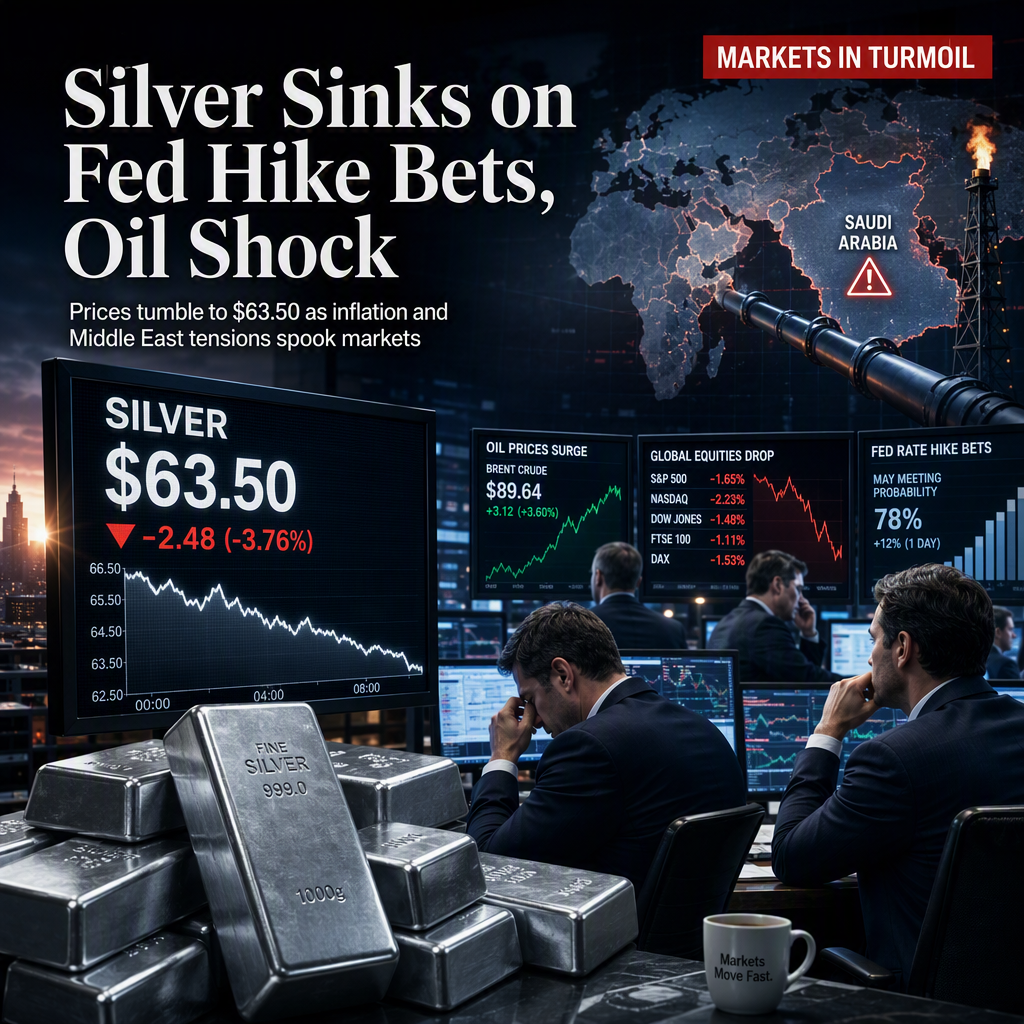
Silver (XAG/USD) prices fell to around $63.50 per troy ounce during Asian trading hours on Monday, erasing gains from the previous day as the market reacted to rising expectations of a Federal Reserve rate hike and surging oil prices [1]. The shift in sentiment follows hotter-than-expected US inflation data: the Consumer Price Index (CPI) rose 0.4% month-on-month in August, bringing the annual increase to 3.4%. Core CPI also exceeded forecasts, rising 0.3% monthly compared to the prior and expected 0.2% gains [1]. These figures have led to an 87% probability of a quarter-point Fed rate hike at the next meeting, up from 59% the previous week, according to the CME FedWatch tool [1].
In addition to monetary policy pressures, silver is facing headwinds from a protracted Middle East crisis that has driven oil prices to four-month highs. A drone attack forced Saudi Arabia to shut down its East-West pipeline, a critical transport route used to bypass the Strait of Hormuz, with no timeline provided for resumption of operations [1]. Rabobank analysts note that the shutdown, combined with the Houthis’ seizure of strategic Red Sea locations, has triggered a renewed energy shock. This has already impacted rates markets, with bond yields surging late last week on rising oil and inflation concerns, and is now affecting broader risk sentiment as Asian equity indices and US equity futures are broadly in the red [1].
The combination of higher inflation, expectations of tighter US monetary policy, and geopolitical tensions in the Middle East has created a challenging environment for non-yielding assets like silver. The market is closely watching for further developments in both Fed policy and the oil supply situation, as these factors continue to drive volatility in precious metals and broader financial markets [1].
CONCLUSION
Silver prices have come under significant pressure due to rising Fed rate hike expectations and a renewed oil shock stemming from Middle East tensions. The market is reacting negatively, with risk sentiment deteriorating across equities and rates markets. Investors are likely to remain cautious as they await further signals from the Federal Reserve and developments in the oil supply disruption.