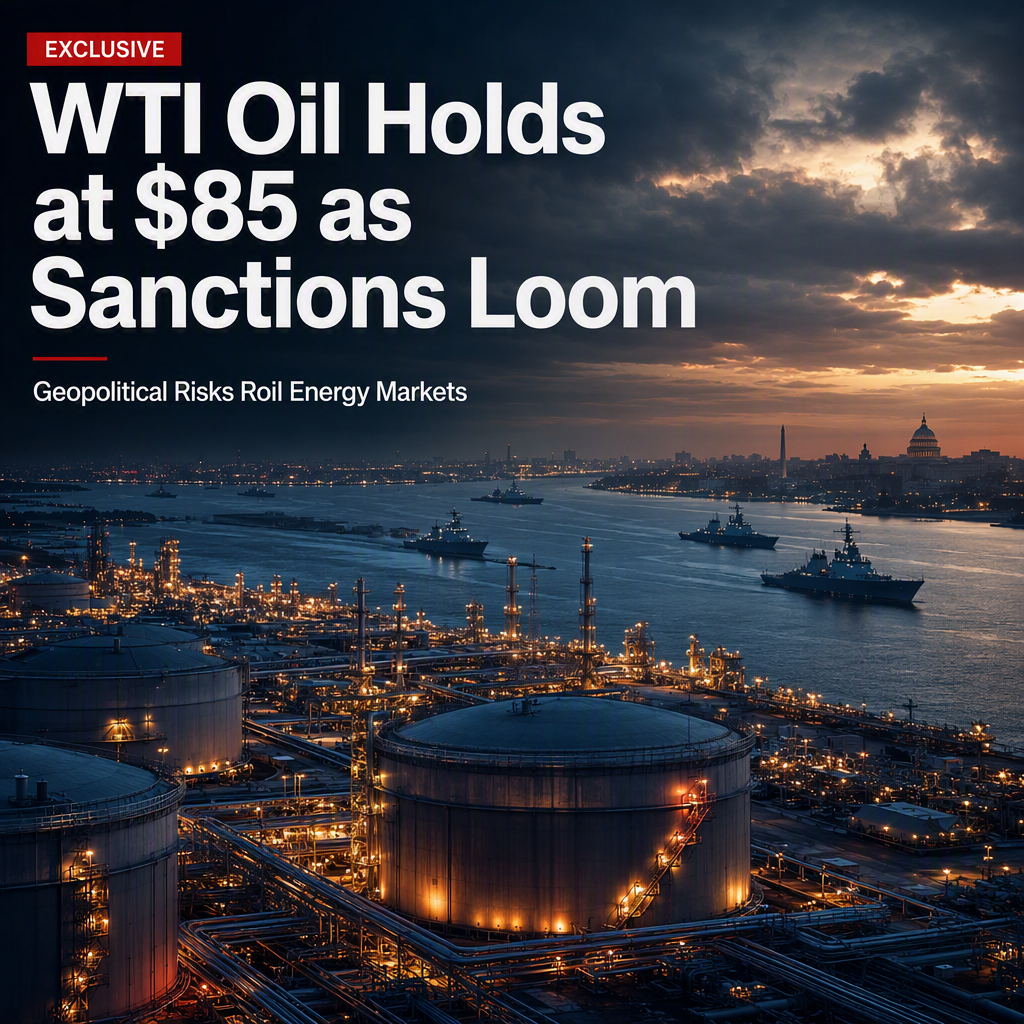
West Texas Intermediate (WTI) Oil prices are trading at $85.35, paring some of last week's gains as markets await the announcement of a new US sanctions package targeting Iran, with potential extensions to Russia or China [1]. US Treasury Secretary Scot Bessent described the forthcoming measures as the 'single greatest offensive ever marshalled against an adversary' in a Financial Times column, and is expected to provide further details in a press conference later on Monday [1]. The initiative, referred to as an 'economic D-Day,' aims to further isolate Iran from the global economy [1].
In response, Iranian authorities have asserted that countries such as China and Turkey will maintain their ties with Iran, and have threatened to halt all oil exports from the Gulf if pressured [1]. Tehran also warned that any collaboration with the US would be considered an 'act of war,' escalating the risk of retaliatory attacks on US allies in the Gulf region and Europe [1].
Analysts at Commerzbank highlight that geopolitical risks, combined with tightening crude and diesel inventories, are likely to limit any significant declines in oil prices [1]. They note that diesel inventories are particularly tight, and further drawdowns could push product prices even higher [1]. On the European gas market, Commerzbank cautions that prices may continue to rise even if inventory levels increase at a slower pace [1]. The analysts warn that if stocks continue to decline ahead of the heating season—especially if Middle Eastern exports remain sidelined and Russian refinery throughput does not increase—product prices could rise further [1].
CONCLUSION
WTI Oil prices remain elevated amid heightened geopolitical tensions and the anticipation of sweeping US sanctions on Iran. Market analysts expect limited downside for oil prices due to tightening inventories and ongoing supply risks. The situation underscores the potential for further price increases if geopolitical disruptions persist.