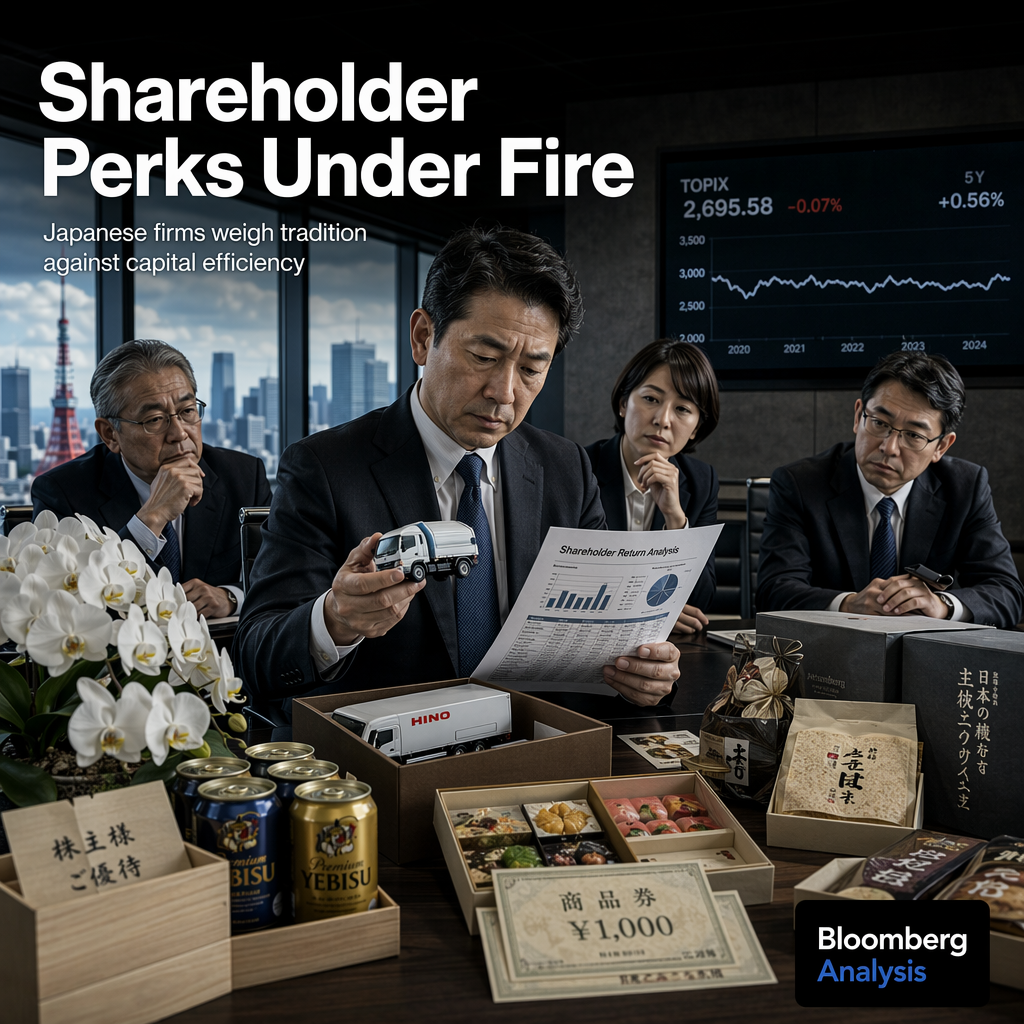
Japanese listed companies have long offered shareholder perks, known as kabunushi yutai, which include items such as orchids, beer, toy trucks, gift certificates, specialty foods, and theme park tickets, as a means to reward loyal shareholders and foster long-term relationships, particularly with individual investors [1]. However, this practice is now under increased scrutiny from investors and corporate governance experts, who question whether distributing such perks is an effective use of capital [1]. Financial data indicates that some companies spend hundreds of millions of yen annually on these gifts, with examples including beverage manufacturers providing beer and automakers sending branded toy trucks to shareholders [1].
While these perks are appreciated by individual investors and can influence retail investor behavior—evidenced by increased buying activity around record dates for perks—there is little evidence to suggest that they have a meaningful impact on share prices or long-term market sentiment [1]. Institutional shareholders often view these gifts as inefficient, and the costs associated with perks are frequently unaccounted for in annual reports, with few companies rigorously evaluating their impact on shareholder value [1].
Market analysis suggests that the distribution of shareholder perks does not significantly affect price levels, support, or resistance for shares of companies offering them. Instead, technical indicators point to the success of firms that prioritize fundamental shareholder returns, such as dividends or share buybacks, over symbolic gestures like perks [1]. Analysts and commentators are increasingly advising investors to demand greater transparency and efficiency in resource allocation, urging companies to disclose the costs and benefits of shareholder perks more clearly [1].
Benjamin Boas, the article's author, argues that boards should treat perks like any other capital allocation decision, weighing their opportunity cost against other uses of capital, such as reinvestment or direct returns to shareholders [1]. The article concludes that companies must consider whether perks genuinely enhance shareholder engagement or are simply a legacy practice from an earlier era [1].
CONCLUSION
The scrutiny of shareholder perks in Japan highlights a growing demand for transparency and efficient capital allocation. While these gifts may attract retail investors, their limited impact on share prices and long-term value suggests companies should focus on more substantive shareholder returns.