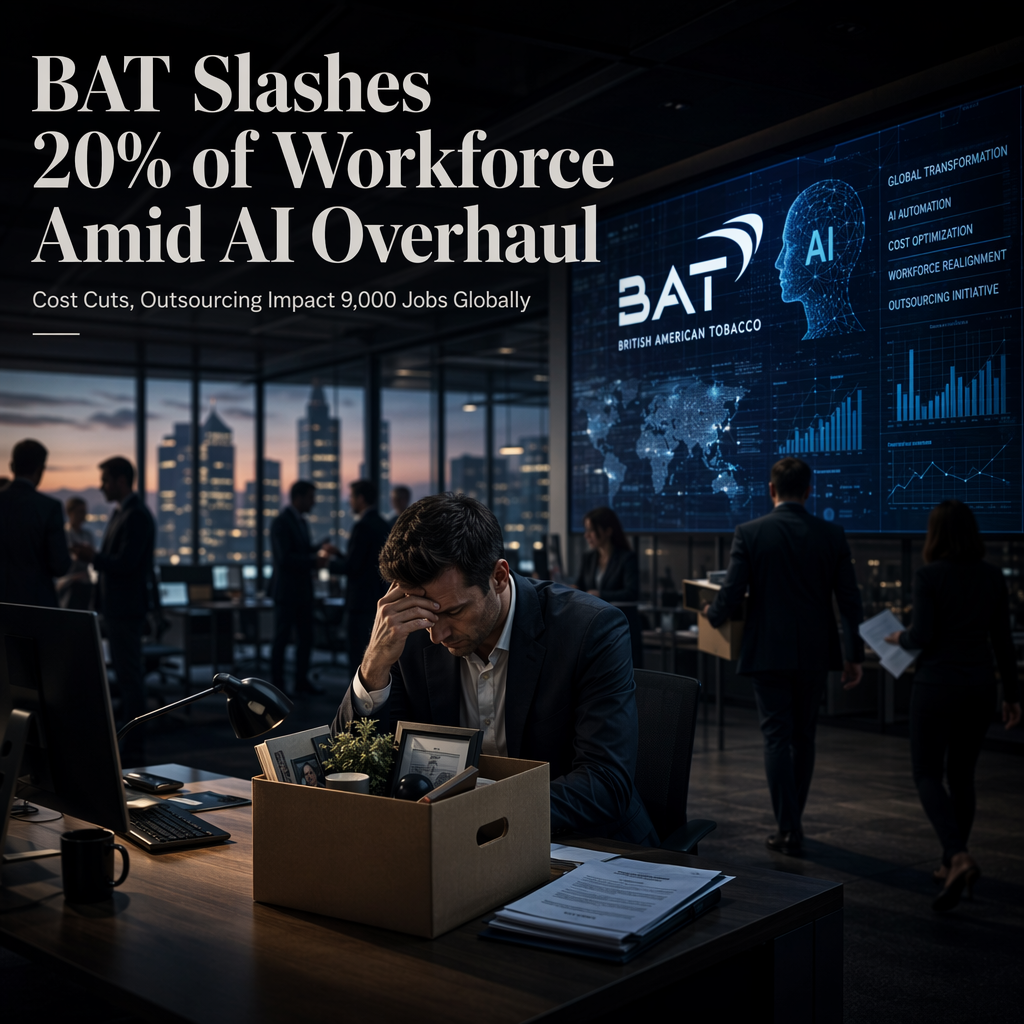
British American Tobacco (BAT), the maker of Lucky Strike and Dunhill cigarettes, announced plans to cut approximately 20% of its workforce as part of a major restructuring initiative focused on artificial intelligence (AI) and cost reduction [1]. The company stated it will eliminate around 5,500 jobs and outsource about 3,500 roles to third-party firms, including Accenture, impacting a total of about 9,000 employees globally, excluding the U.S. [1]. BAT did not specify the geographic distribution of the job cuts but confirmed that most role changes have already been communicated to employees, with remaining consultations ongoing in compliance with local regulations [1].
The restructuring is expected to generate $793 million in annualized savings by 2028, with much of the savings targeted by 2027 [1]. CEO Tadeu Marroco emphasized that the overhaul aims to make BAT more agile, cost-disciplined, and technology-enabled, noting, "These changes affect many of our colleagues and we are focused on supporting them through this transition with care and respect" [1].
BAT's sales and profit growth have been sluggish in recent years, often missing or narrowly meeting company targets, which has disappointed some investors [1]. The company is targeting medium-term revenue growth of 3% to 5% per year [1]. BAT has also been streamlining its manufacturing operations over the past 18 to 24 months, including the previously announced closure of a factory in South Africa [1].
The company expects traditional tobacco product sales to decline 2.5% across the industry this year, prompting a strategic shift toward alternatives such as Vuse vapes and Velo nicotine pouches, although BAT lags behind competitor Philip Morris International in this segment [1]. Regulatory hurdles in the U.S. have delayed the launch of new products, leading to an influx of illegal Chinese products and negatively impacting BAT's sales and market share [1]. Additionally, BAT faces challenges from smokers switching to cheaper brands, rising import taxes, tighter regulations, and illicit trade in markets like Australia and Bangladesh [1].
Roles being outsourced include positions in BAT's Global Service Hubs in Costa Rica, Mexico, Romania, and Malaysia, as well as certain roles in Pakistan, and some digital and technology roles in Poland and Romania [1].
CONCLUSION
British American Tobacco's sweeping job cuts and outsourcing plan signal a significant shift toward AI-driven efficiency and cost savings in response to declining traditional tobacco sales and regulatory challenges. The restructuring is expected to deliver substantial annualized savings and position the company for medium-term revenue growth, but also reflects ongoing pressures in the global tobacco market.