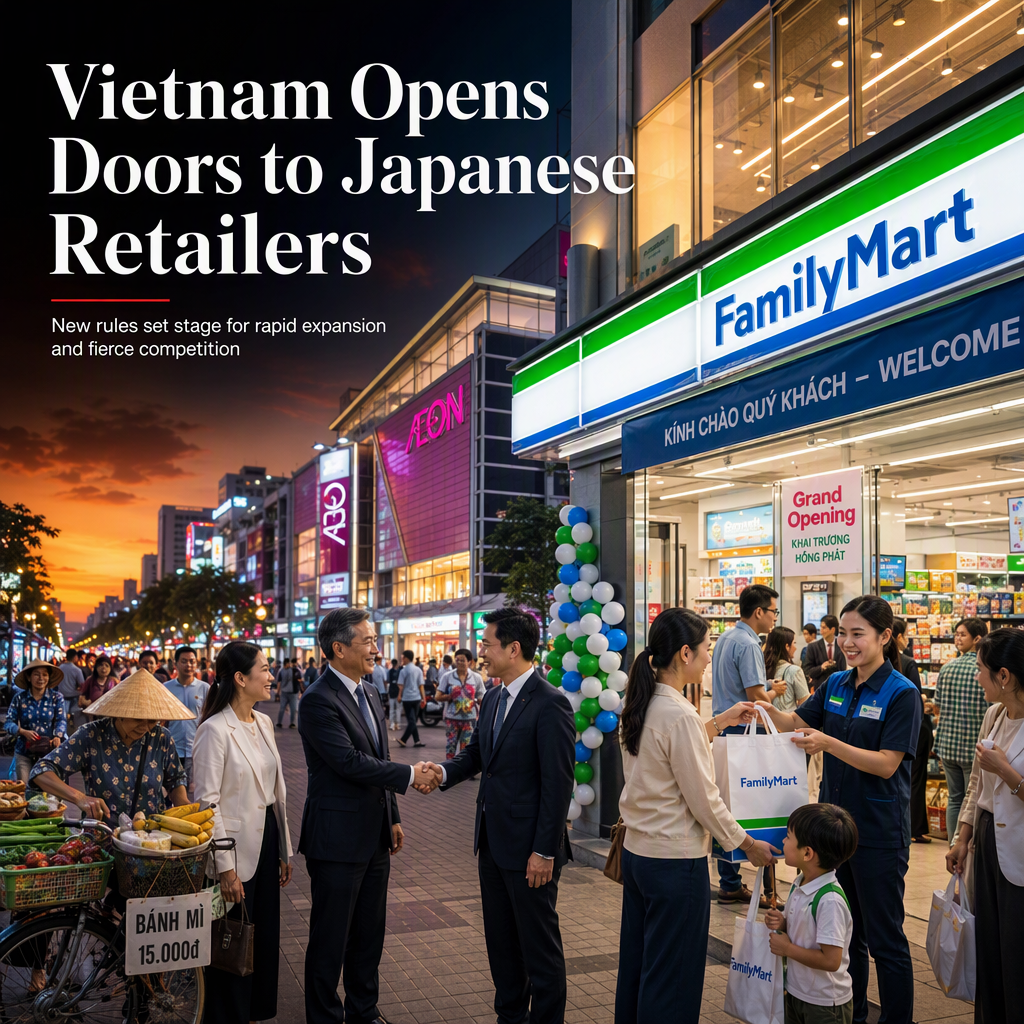
Vietnam has announced a significant policy shift by easing restrictions on foreign investment in the retail sector, specifically exempting Japanese and other multinational companies from additional reviews when opening multiple stores. This regulatory change is expected to benefit Japanese retailers such as Aeon and FamilyMart, who have expressed intentions to expand their presence in the Vietnamese market [1].
The revised rules will streamline the process for foreign companies to open subsequent outlets, reducing operational delays and lowering regulatory barriers. This move is part of the Vietnamese government's broader strategy to attract more foreign capital and modernize the country's retail landscape [1].
Aeon, in particular, has set ambitious targets to increase its number of shopping malls and supermarkets in Vietnam, aiming to capitalize on the country's growing middle class and urbanization trends. The policy change is anticipated to boost retail competition, offering Vietnamese consumers greater variety and enabling Japanese businesses, known for their efficiency and quality control, to scale up more rapidly [1].
Market watchers suggest that this policy is likely to accelerate foreign investment inflows into Vietnam's retail sector, intensifying competition with local players and potentially reshaping the competitive landscape [1].
CONCLUSION
Vietnam's decision to lower barriers for foreign retail investment is poised to accelerate the expansion of Japanese retailers and increase competition in the sector. The move is expected to attract more foreign capital, modernize the retail landscape, and provide greater choice for Vietnamese consumers.