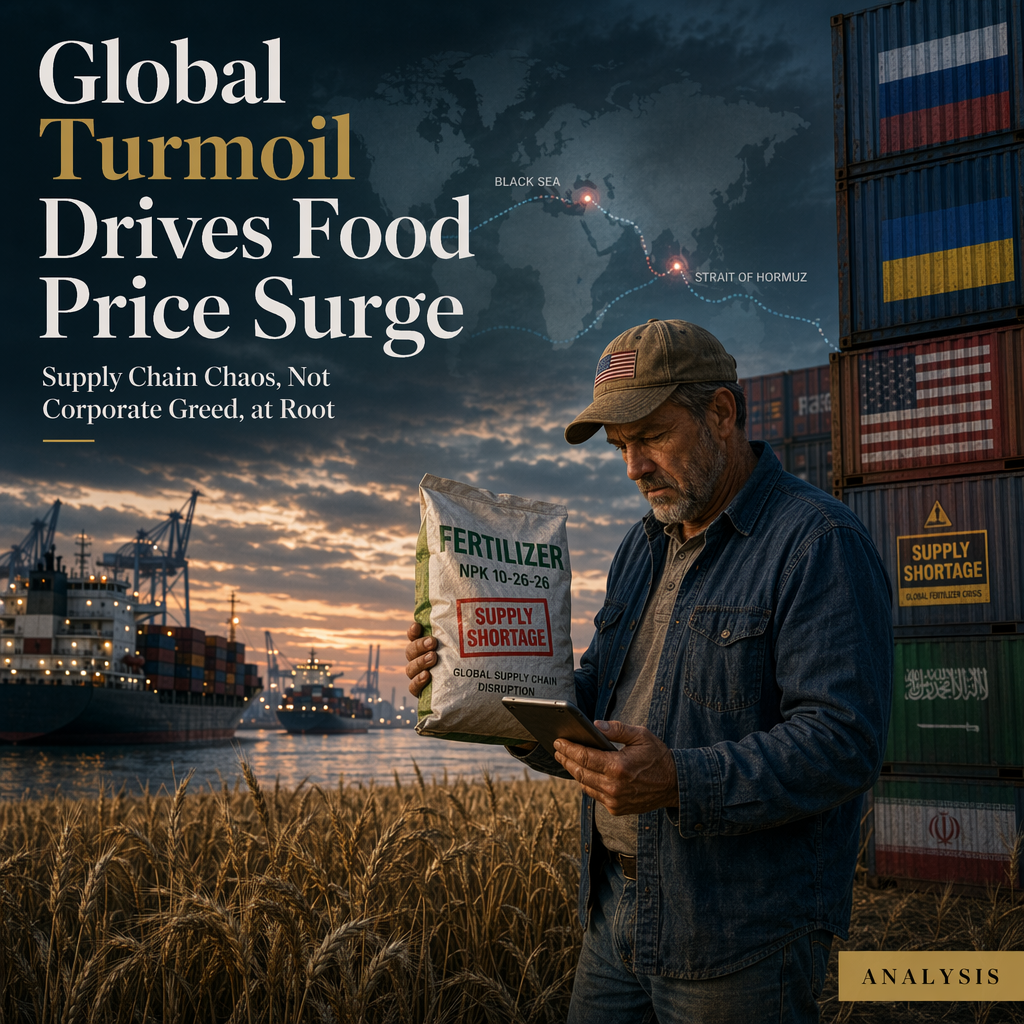
The recent surge in American food prices has been attributed to a combination of global supply chain disruptions, geopolitical instability, and government policies, rather than domestic corporate actions or mismanagement [1]. Fertilizer, a critical input for U.S. agriculture, has seen significant price increases due to these factors. The ongoing war between Russia and Ukraine has severely impacted the supply of key raw materials such as sulfur and ammonia. Russia, which produced 7.5 million metric tons of sulfur last year and is the world's third-largest producer, has seen its ability to export sulfur drastically reduced due to Ukrainian drone strikes on its oil and fertilizer infrastructure [1]. Additionally, Russia's ammonia exports have fallen to approximately 80% below pre-war levels [1].
Further compounding the issue, tensions in the Middle East have disrupted energy production and shipping routes. The effective standstill at the Strait of Hormuz has left about 16 million tons of fertilizer in limbo, with roughly half of the world's sulfur supply also transiting this critical passage [1]. These disruptions have increased the cost and reduced the availability of essential agricultural inputs, leading to higher food prices for American consumers [1].
The article emphasizes that these price increases are a natural market response to scarcity, not evidence of market failure or corporate greed [1]. It argues that punishing domestic producers would be a policy mistake and instead advocates for policies that promote diversified supply chains and a level playing field to enhance food security and stabilize prices [1].
No specific market reactions, analyst opinions, or forward-looking statements from financial institutions are provided in the article.
CONCLUSION
The rise in U.S. food prices is primarily driven by global supply chain disruptions and geopolitical events affecting critical agricultural inputs, not domestic corporate actions. Policymakers are urged to focus on diversifying supply chains and avoiding punitive measures against producers to address the root causes of price increases.