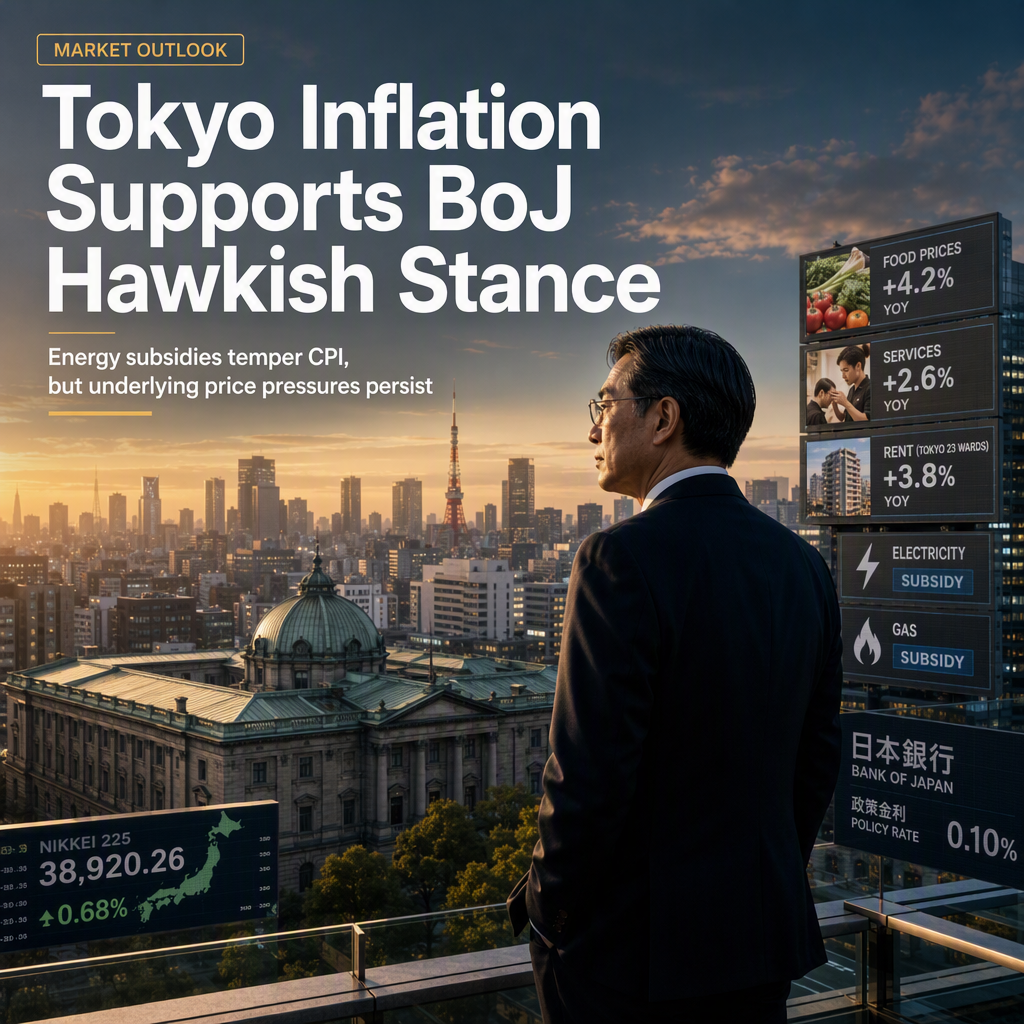
The August Tokyo Consumer Price Index (CPI) data was broadly in line with expectations, according to Societe Generale analysts Reo Sakida and Jin Kenzaki [1]. The resumption of electricity and gas subsidies weighed on inflation figures and is expected to continue exerting downward pressure on CPI through the October data [1]. Despite upstream cost pressures, non-fresh food inflation slowed, while services inflation increased, driven mainly by higher rents and medical charges [1]. However, these changes in services inflation are seen as having limited implications for the nationwide CPI at this stage, though they still support the Bank of Japan's (BoJ) hawkish policy stance [1].
Societe Generale had anticipated a re-acceleration in food inflation from August, but noted that higher upstream costs are taking longer to pass through to consumer prices than expected [1]. Underlying price pressures remain present, and BoJ Deputy Governor Himino recently stated that repricing activity is likely to intensify in the coming months [1]. Additionally, the Teikoku Databank survey indicates another wave of price revisions could occur toward the end of the year [1].
Overall, the current Tokyo CPI dynamics, including the impact of renewed energy subsidies and ongoing price pressures, continue to support the BoJ’s hawkish policy trajectory [1].
CONCLUSION
Tokyo's August CPI data, while tempered by renewed energy subsidies, underscores persistent underlying price pressures. These developments reinforce expectations for the Bank of Japan to maintain its hawkish policy stance in the coming months. Market participants may anticipate further price revisions toward year-end.