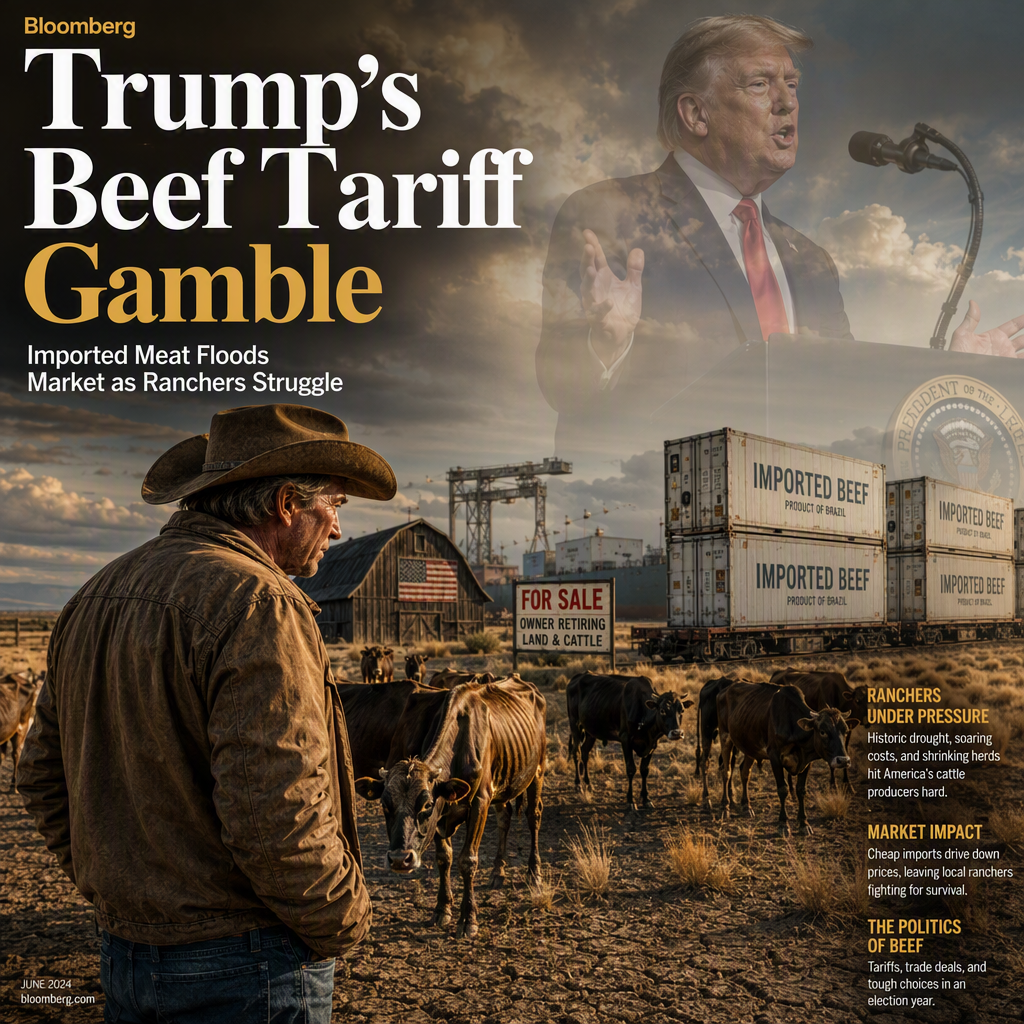
American ranchers are currently facing the smallest cattle herd in 75 years, with the United States entering 2026 with 86.2 million cattle and calves, down from about 94.7 million in 2019, according to the USDA [1]. In response to this historic shortage, President Donald Trump announced a plan to waive higher tariffs on beef imports for 90 days, allowing 300,000 metric tons of foreign beef to be sold at 25% below the current market value [1]. As of August, a pound of USDA Choice beef cost an average of $10.49 [1].
Trump stated that this initiative aims to reduce beef prices for Americans and provide time for the domestic cattle herd to recover [1]. However, the plan has faced criticism from industry leaders. Colin Woodall, CEO of the National Cattlemen's Beef Association, expressed disappointment, arguing that flooding the market with government-subsidized, below-market beef is not the way to rebuild the American cattle herd [1]. Zippy Duvall, President of the American Farm Bureau Federation, warned that the plan could result in a 60% increase in imports over the next 90 days and cautioned that short-term measures might have long-term negative effects for both consumers and ranchers, potentially increasing dependence on foreign-grown food and leading to higher grocery costs in the future [1].
Ranchers across the country are grappling with various challenges contributing to the cattle shortage. In the Midwest, drought conditions are hindering expansion efforts, with some producers choosing to delay herd growth for another year [1]. In contrast, ranchers in the Southeast are dealing with excessive rainfall, which prevents hay cutting and affects the nutritional quality of grass for cattle [1]. Additionally, rapid urban development in regions like Middle Tennessee is prompting many farmers and ranchers to sell their land, as the next generation is often unwilling to continue the demanding work [1].
No specific market reaction or analyst forecasts were provided in the article, but the combination of policy changes, industry pushback, and ongoing environmental and demographic pressures suggests significant uncertainty for the U.S. beef market [1].
CONCLUSION
President Trump's plan to temporarily lower beef import tariffs aims to address soaring beef prices amid a historic cattle shortage, but has drawn criticism from industry leaders concerned about long-term impacts on domestic ranchers and food security. The U.S. beef market faces ongoing challenges from environmental factors and demographic shifts, leaving the outlook uncertain.