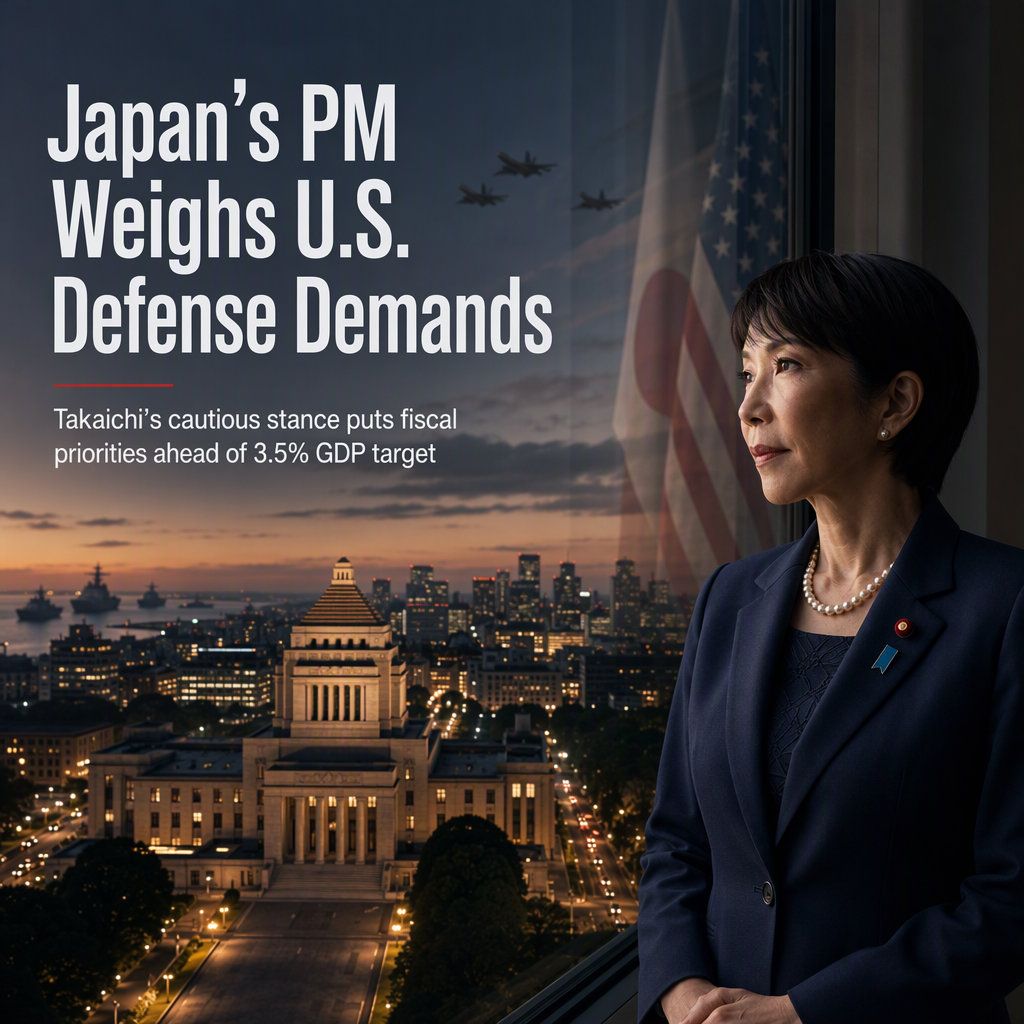
Japanese Prime Minister Sanae Takaichi has expressed increasing caution regarding the adoption of a defense spending target set as a percentage of gross domestic product (GDP) to be achieved within five years, specifically the 3.5% level requested by the United States. This hesitation comes after a recent meeting in New York between Prime Minister Takaichi and U.S. President Donald Trump, where both leaders agreed to strengthen deterrence and response capabilities. Despite this agreement, the Japanese government considers it unlikely that the 3.5% of GDP defense spending level sought by President Trump can be reached within the proposed timeframe [1].
Prime Minister Takaichi's reluctance is rooted in concerns about Japan's fiscal capacity and the significant increase in expenditure that meeting the 3.5% target would require. Historically, Japan has maintained its defense spending at around 1% of GDP. Achieving the higher target would necessitate a substantial reallocation of public funds or increases in government revenue, both of which present considerable political and economic challenges [1].
The ongoing discussion is set against a backdrop of heightened regional security concerns and growing pressure from the United States for allied countries to contribute more to collective defense. Takaichi's administration is carefully weighing these external demands against domestic economic priorities, signaling a more measured and cautious approach to future defense budget commitments [1].
No specific market reactions or analyst opinions were mentioned in the article. The implications for government spending and fiscal policy remain under consideration as the Japanese government navigates these competing priorities [1].
CONCLUSION
Prime Minister Takaichi's cautious stance on the U.S.-requested 3.5% GDP defense spending target highlights the tension between external security demands and domestic fiscal constraints. The Japanese government is unlikely to commit to the target within five years, signaling a preference for a more gradual approach to defense budget increases.