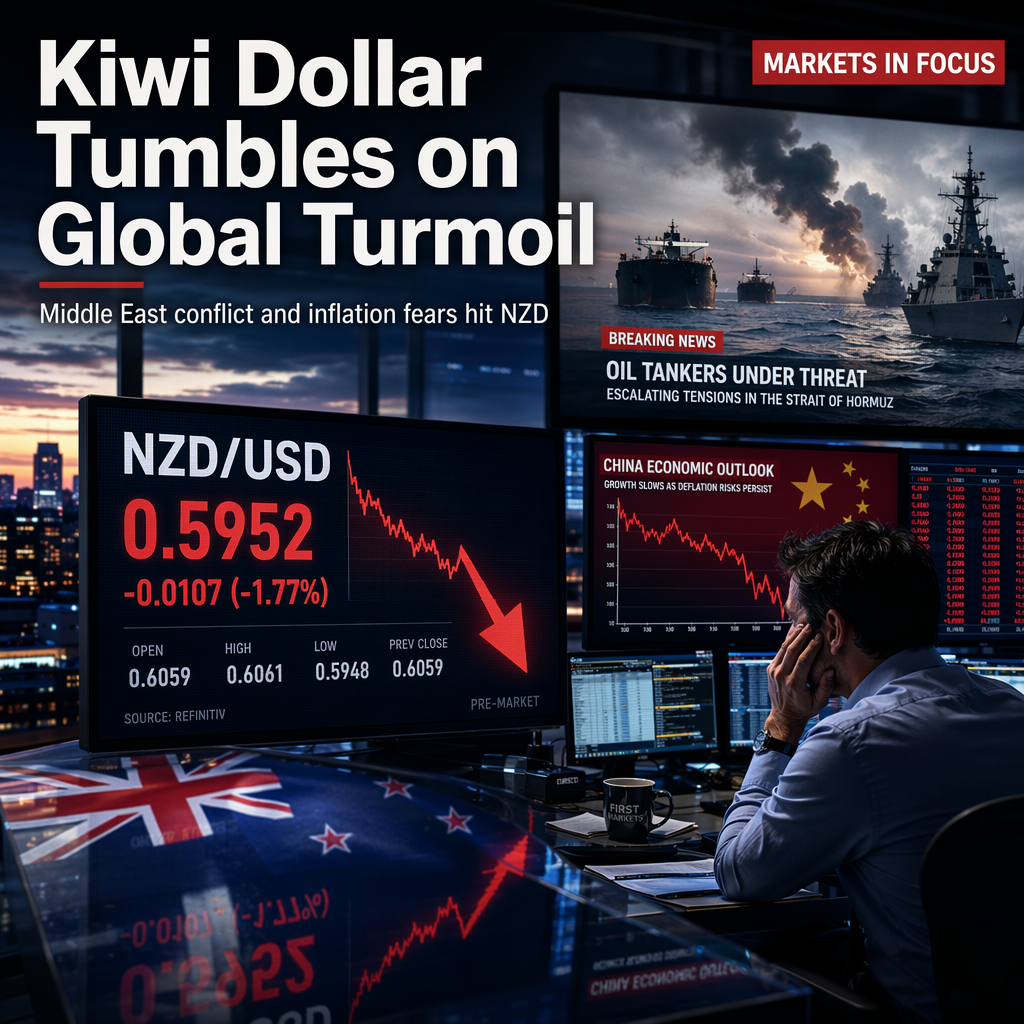
The New Zealand Dollar (NZD/USD) declined to around 0.5840 during Asian trading hours on Thursday, reversing two days of gains as escalating conflict in the Middle East and rising oil prices intensified global inflation concerns [1]. Traders adopted a cautious stance ahead of Friday’s June food inflation data, following a sharp acceleration in May, with anxiety heightened by the geopolitical situation and disappointing Chinese economic data [1].
Reserve Bank of New Zealand (RBNZ) Chief Economist Paul Conway reinforced the cautious mood on Tuesday, warning that persistent inflation, exacerbated by Middle East supply shocks, could necessitate further interest rate hikes [1]. The Chinese economy, New Zealand's largest trading partner, grew at its slowest pace in three and a half years, further dampening investor sentiment and negatively impacting the Kiwi [1].
Safe-haven demand surged in currency markets as the US launched multiple waves of strikes against Iranian coastal military assets and reinstated a naval blockade of Iran. The unpredictability of the conflict increased after US President Donald Trump stated he "does not like giving deadlines" regarding potential US actions against Iranian infrastructure [1]. On Wednesday, US Central Command (CENTCOM) confirmed another wave of strikes to keep the Strait of Hormuz open, including missile attacks on an oil tanker’s smokestack, which disabled the vessel and kept global markets on edge [1].
The combination of geopolitical tensions, inflation fears, and weak Chinese economic data has led to significant losses for the NZD/USD pair, with market participants closely watching upcoming inflation data and RBNZ policy signals for further direction [1].
CONCLUSION
The New Zealand Dollar has come under pressure due to escalating Middle East conflict, rising oil prices, and weak Chinese economic data, all of which have heightened inflation concerns and expectations of further rate hikes. Market sentiment remains cautious, with traders awaiting key inflation data and monitoring geopolitical developments for additional impact.