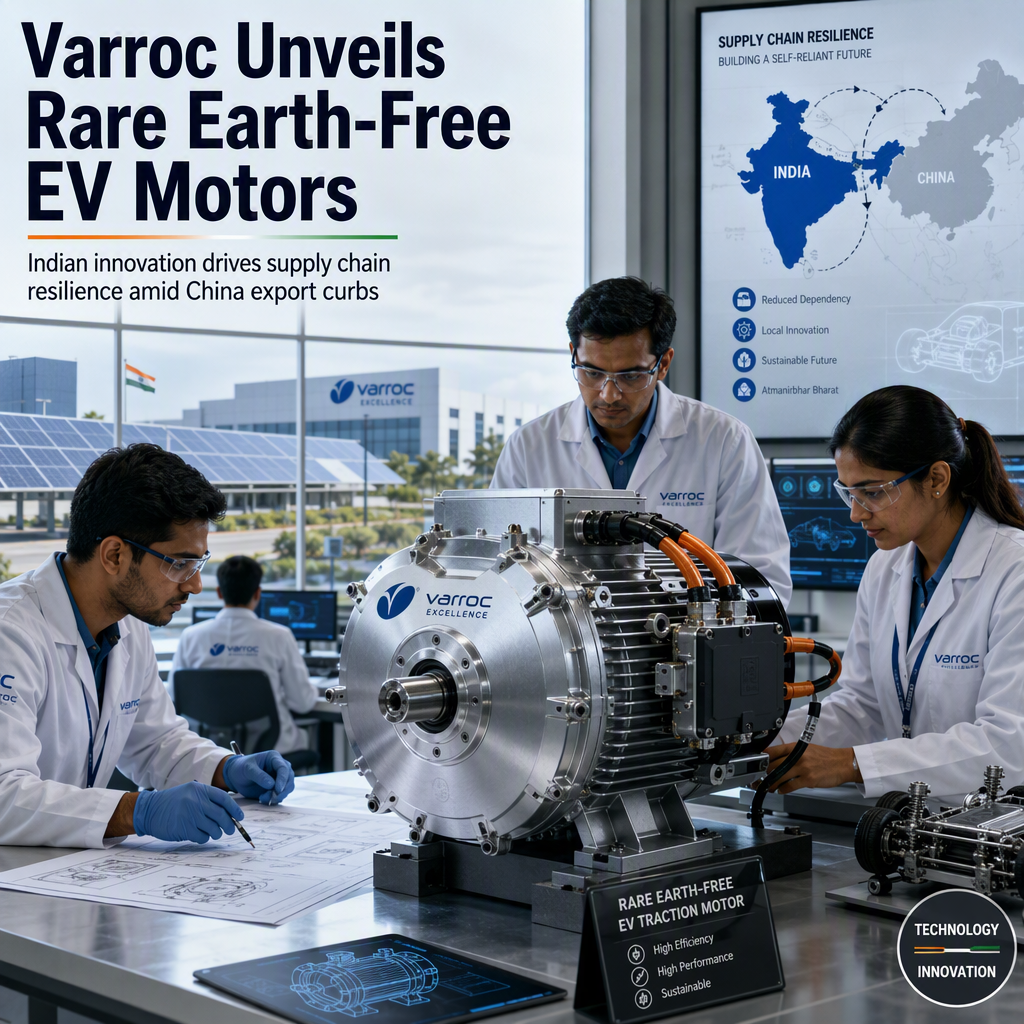
Varroc Engineering, one of India's largest auto component manufacturers, is actively developing traction motors for electric vehicles that do not require rare earth minerals, a move prompted by China's export curbs on these materials last year [1]. Arjun Jain, CEO and whole-time director of Varroc Engineering's India business, stated that the company's growth prospects are largely driven by the electrification trend in automobiles, and that Varroc has significantly reduced its use of heavy rare earths following Beijing's restrictions [1]. The company is focusing on building technology that eliminates the need for rare earth elements in its EV traction motors, aiming to insulate itself and its clients from supply shocks and price volatility linked to China [1].
This initiative is part of a broader trend among Indian companies to localize and diversify their sourcing of key materials and technologies, especially those historically dominated by Chinese suppliers [1]. Jain emphasized that developing rare earth-free motors allows Varroc to secure its own production lines and offer more stable solutions to automakers facing similar challenges [1]. The company is investing in research and development to further reduce reliance on imported components and materials, and is exploring partnerships and in-house innovations to accelerate the adoption of its rare earth-free motor technology [1].
No specific financial data, price levels, or market analysis were disclosed in the interview [1]. The article highlights Varroc's commitment to technological innovation and supply chain resilience as key drivers of its future business prospects [1].
CONCLUSION
Varroc Engineering's development of rare earth-free EV motors represents a strategic response to China's export restrictions and supply chain vulnerabilities. While no financial or market reaction data was provided, the company's focus on innovation and localization is expected to strengthen its position in the growing electric vehicle sector. This move underscores the industry's shift toward supply chain resilience and reduced dependency on single-country sources.