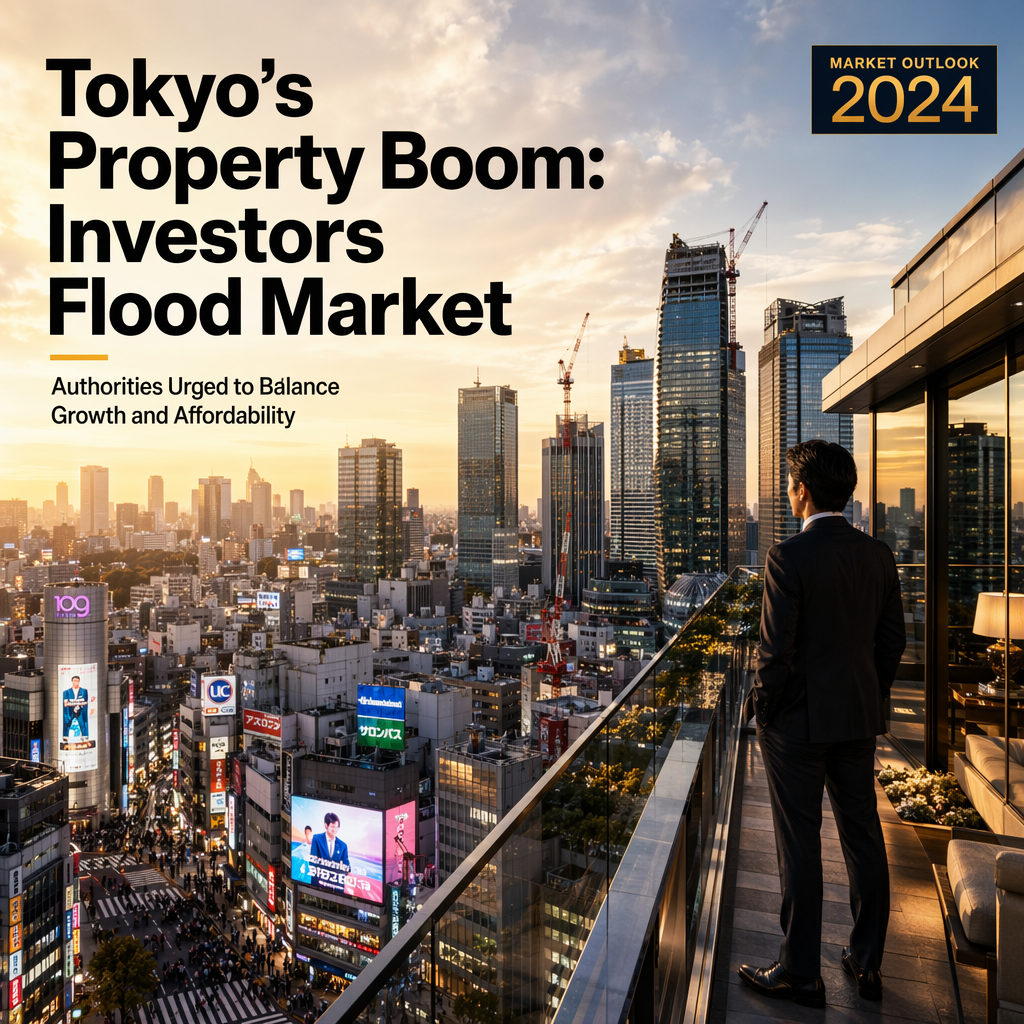
Tokyo's property market is experiencing a significant boom, attracting heightened interest from both domestic and international investors, according to senior economists at the ASEAN+3 Macroeconomic Research Office [1]. The surge in real estate prices, particularly in luxury segments, has been driven by robust demand, with cash purchases of high-end penthouses in Tokyo and Osaka becoming increasingly common. Notably, wealthy buyers from Taiwan and other Asian regions are fueling this trend, while mainland Chinese investors have reduced their activity, altering the composition of foreign investment flows [1].
Land prices across Japan have risen for the fifth consecutive year, a trend supported by a tourism boom and renewed confidence in Japan's economic prospects [1]. In response to growing concerns about housing affordability, Tokyo is considering changes to zoning regulations in areas like Shibuya to encourage the development of more affordable housing. This move signals official recognition of the affordability challenge and the need for policy intervention [1].
Despite the rapid price appreciation, the current market environment is fundamentally different from the speculative bubble of the late 1980s and early 1990s. The article notes that price increases are underpinned by genuine demand and relatively stable financing conditions, with no evidence of unsustainable spikes or speculative excess. Technical analysis indicates that key support levels for Tokyo property prices remain intact despite periodic volatility, and overall investor sentiment is described as positive but cautious [1].
The outlook for Tokyo's property market remains strong, provided that authorities continue to monitor developments, adjust regulations as needed, and ensure prudent lending practices. The authors emphasize that "Japan's property boom is a warning, not a crisis," and stress the importance of policy coordination to avoid the pitfalls of past bubbles. Investors are advised to focus on market fundamentals, stay alert to policy changes, and avoid excessive leverage. The government's ongoing efforts to expand affordable housing and regulate investment flows are seen as critical to maintaining market stability [1].
CONCLUSION
Tokyo's property market is experiencing robust growth, driven by strong investor demand and rising land prices. While concerns about affordability and potential overheating exist, the market is currently supported by solid fundamentals and prudent financing. Continued vigilance and policy coordination are essential to sustaining stability and avoiding a repeat of past crises.