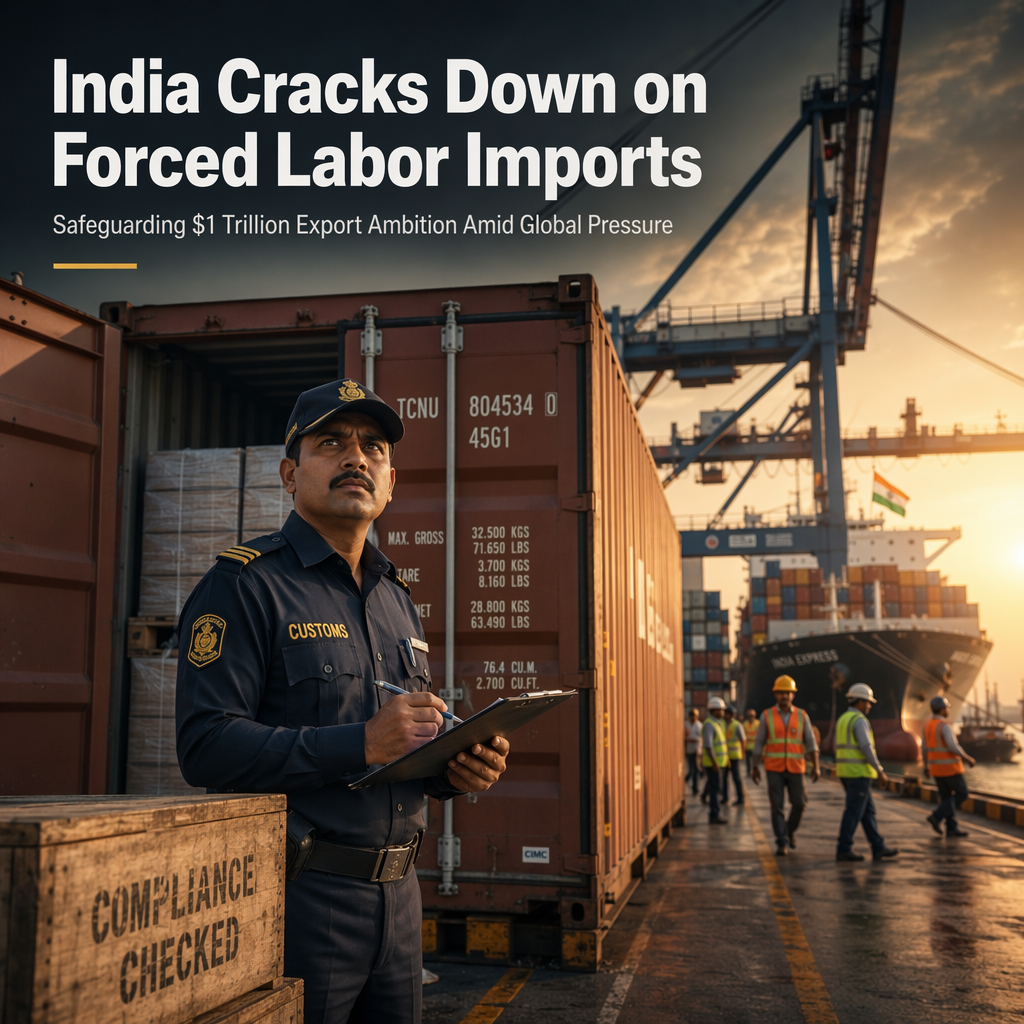
India has enacted a ban on the import of goods produced with forced labor, a move prompted by increasing pressure from major trading partners such as the U.S. and the European Union to eliminate forced labor from supply chains [1]. This policy shift is directly tied to India's ambitious goal of reaching $1 trillion in goods exports for the fiscal year ending March 2031 [1]. The U.S. Uyghur Forced Labor Prevention Act (UFLPA) and the EU's proposed regulations have intensified scrutiny of global supply chains, compelling Indian exporters to demonstrate compliance with international standards [1].
While India's export ambitions remain robust, the challenge lies in eradicating forced labor practices, which are reportedly prevalent among smaller companies and certain sectors [1]. Analysts cited in the article caution that without substantial reforms and enforcement, India's export growth could be threatened by potential trade restrictions or reputational risks in key markets [1].
No specific financial data, market analysis, or technical trading advice is provided in the article [1].
CONCLUSION
India's ban on imports made with forced labor is a strategic response to international regulatory pressure and aims to protect its $1 trillion export target. However, analysts warn that unless India effectively addresses forced labor in its supply chains, its export growth may face significant challenges from trade restrictions and reputational risks.