
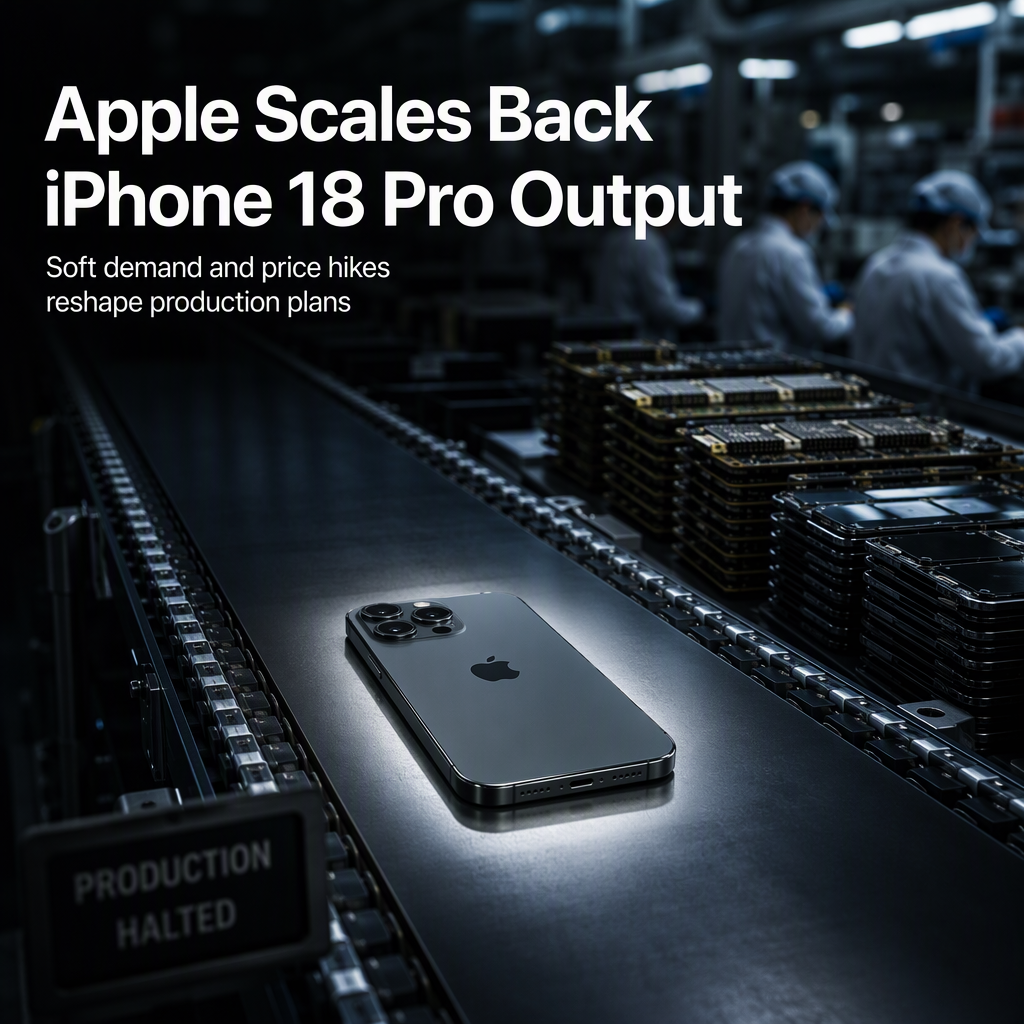
Apple has instructed some of its suppliers to reduce production of components for the newly launched iPhone 18 Pro and iPhone 18 Pro Max, following weaker-than-expected consumer demand attributed to higher prices driven by soaring memory chip costs [1]. The iPhone 18 Pro, which debuted in September, has seen a cooler reception from consumers, with suppliers directly linking the subdued uptake to the price increase necessitated by elevated memory chip expenses [1].
Suppliers report that Apple has specifically asked for cuts in orders for advanced memory chips and display panels, signaling a recalibration of production plans in response to inventory build-up and the need to adjust expectations for its flagship models [1]. A supplier executive involved in the iPhone 18 Pro supply chain stated, "The price increase has had a clear impact on consumer sentiment. Demand is not as strong as Apple initially hoped, especially in markets sensitive to price changes" [1].
Market analysts note that the competitive landscape for premium smartphones has shifted, with rival Android devices gaining market share as a result of Apple's price hikes. In Japan, Android phones now hold a 54% market share following the rise in iPhone prices [1]. The production adjustment by Apple is being closely monitored by industry observers, as it could affect trading sentiment and supply chain stocks, particularly in the memory chip sector, which continues to face supply constraints [1].
Looking ahead, Apple remains focused on premium iPhone launches for 2026, including upcoming foldable models and new variants, but is adopting a more cautious strategy in light of high component costs and evolving consumer preferences [1].
CONCLUSION
Apple's decision to cut iPhone 18 Pro production highlights the impact of rising component costs and price sensitivity among consumers. The move has significant implications for the supply chain and market sentiment, especially in the memory chip sector. Apple's more cautious approach signals ongoing challenges in the premium smartphone market.