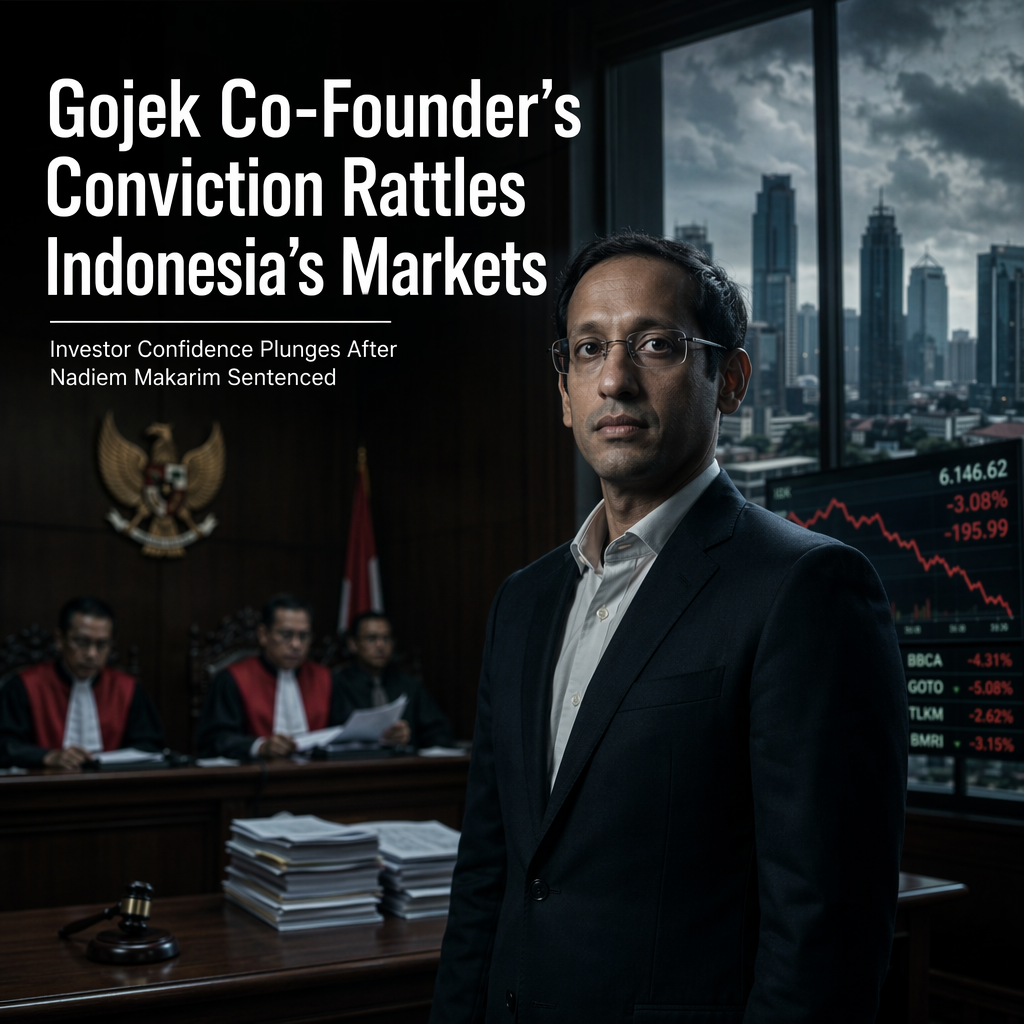
Nadiem Makarim, the former Indonesian Education Minister and co-founder of ride-hailing giant Gojek, was sentenced on Tuesday to 10 years in prison and fined 810 billion rupiah ($45.3 million) after being convicted of corruption related to the procurement of laptops under a national education digitalization program [1]. The case has been widely perceived as a political prosecution, raising concerns about the stability and transparency of Indonesia's regulatory environment [1].
The conviction of Makarim, a prominent figure in Southeast Asia's tech industry, has significantly unsettled investor sentiment in Indonesia. Financial analysts highlighted that the severity of the penalty—a decade-long prison term and a substantial fine—could deter both domestic and foreign investment, particularly in the technology and education sectors [1].
A Jakarta-based investment strategist commented, "This verdict sends a strong signal to market participants about the risks of regulatory and political intervention," suggesting that the ruling is likely to increase perceived risk premiums for Indonesian assets, especially in sectors tied to government procurement [1].
While no specific trading recommendations were provided, market observers advised investors and fund managers to closely monitor further developments in Indonesia’s legal and political landscape, as these could impact valuations and risk assessments for Indonesian equities, particularly those related to technology and government contracts [1].
CONCLUSION
The sentencing of Nadiem Makarim for corruption has cast a shadow over Indonesia's investment climate, particularly in the technology and education sectors. Market participants are urged to remain vigilant as further legal and political developments could influence risk perceptions and asset valuations in the country.