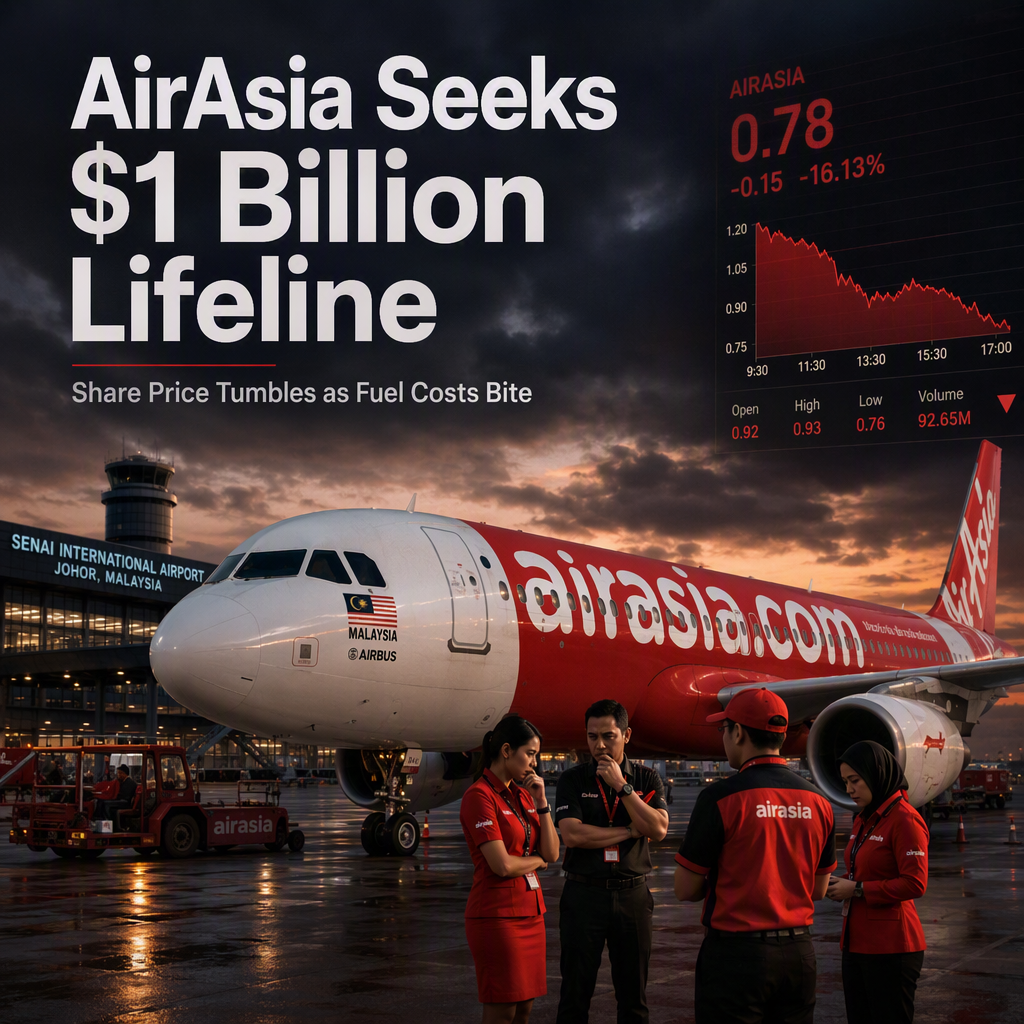
AirAsia Group is seeking to secure $1 billion in financing by January, according to co-founder Tony Fernandes, as the Malaysian budget airline faces mounting financial pressures due to elevated fuel costs [1]. The company is pursuing new funds to refinance its debts after experiencing a significant share sell-off, with its stock price recently tumbling 21% amid growing concerns over funding and liquidity [1].
AirAsia has denied receiving a government bailout, addressing speculation and investor anxiety regarding its financial health [1]. The airline's ongoing operational presence is underscored by its continued activity at Senai International Airport in Johor Bahru, Malaysia, despite industry headwinds [1].
The primary challenge cited is the high cost of fuel, which has put pressure on AirAsia's operating margins and raised fears among stakeholders about the company's ability to sustain operations without new capital [1]. Fernandes emphasized the urgency of securing fresh financing to manage debt obligations and stabilize the company's balance sheet, with the funding plan expected to be completed by January [1].
Market sentiment remains cautious, as investors closely monitor AirAsia's efforts to recover and successfully refinance. The recent share price decline and persistent high fuel costs are seen as significant obstacles, while the anticipated $1 billion financing is viewed as potentially crucial support for both the stock and the airline's operational outlook [1].
CONCLUSION
AirAsia's pursuit of $1 billion in financing by January is a critical move to address debt and liquidity concerns exacerbated by high fuel costs and a sharp share price decline. Market sentiment is cautious, with the success of the refinancing plan seen as pivotal for the airline's stability and future performance.