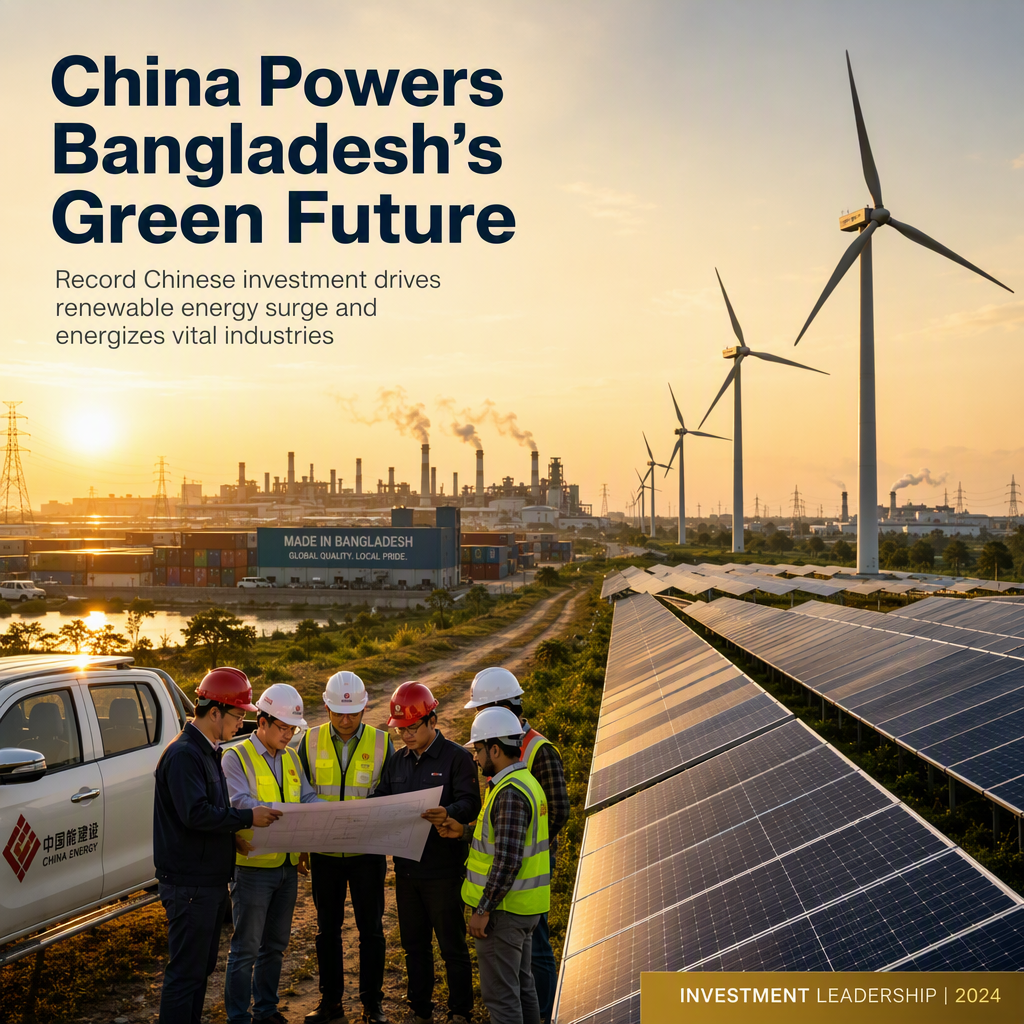
China has significantly increased its investment in Bangladesh's power sector, now accounting for just over a third of all foreign investment in the industry, with a total investment stock reaching $1.18 billion. This surge is primarily driven by solar and wind projects, positioning China as the dominant force in Bangladesh's renewable energy market. According to the Centre for Policy Dialogue, Chinese investment constitutes over 50% of the total investment in Bangladesh's renewable energy sector, underscoring its pivotal role in the country's energy transition [1].
Bangladesh is grappling with recurring energy shortages and outages, which have led to factory closures and financial strain, particularly impacting its export-driven manufacturing sector, including textiles. The influx of Chinese-backed renewable projects is seen as a crucial solution to these challenges, helping to bridge the gap between supply and demand and reduce reliance on imported fossil fuels [1].
Market analysts highlight the unmatched speed and scale of Chinese investment, noting that the technological transfer from Chinese companies—especially advanced solar panel and wind turbine technology—has resulted in cost reductions and improved efficiency for Bangladesh's power grid. This is expected to stabilize energy prices and support growth in the manufacturing and export sectors as new projects come online [1].
While the article does not provide technical chart descriptions or trading advice, market sentiment is positive regarding China's expanding role in Bangladesh's power sector, particularly as the demand for cleaner energy continues to rise [1].
CONCLUSION
China's rapid and substantial investment in Bangladesh's renewable energy sector is expected to alleviate ongoing energy shortages and support the country's manufacturing and export industries. Analysts anticipate continued growth and technological advancement as new solar and wind projects are launched, reinforcing China's position as Bangladesh's top power investor. Market sentiment remains optimistic about the long-term benefits of this partnership.