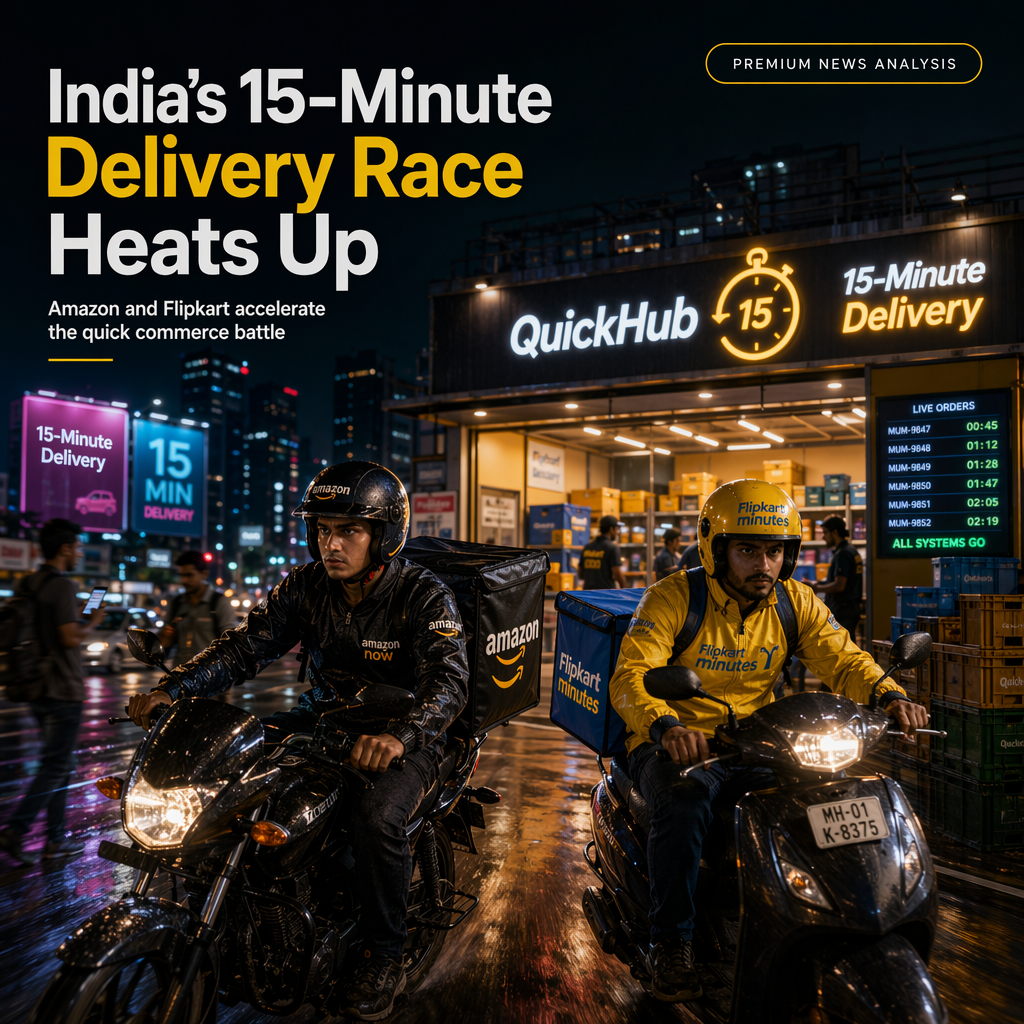
India's quick commerce sector, defined by under-15-minute delivery, is rapidly transforming the country's e-commerce landscape. The segment is projected to account for nearly 40% of online retail sales in India by 2030, highlighting its significance for both local and global players. While local companies currently lead the market, Amazon and Walmart-owned Flipkart are aggressively expanding their presence to challenge incumbents and secure their relevance in this evolving market [1].
Amazon, which was late to enter the quick commerce space, is now making significant moves. During CEO Andy Jassy's visit to India on June 24, he visited a micro fulfilment center in Mumbai and publicly stated Amazon's ambition to become India's 'largest delivery-in-minutes network.' To attract customers, Amazon Now is offering up to 25% cashback on the first five orders and waiving platform fees and delivery charges. The company plans to roll out Amazon Now services in more than 300 cities, aiming to compete with Blinkit, the current market leader with over 2,200 dark stores serving more than 200 cities as of March 2026 [1].
Flipkart is also scaling up its quick commerce offering, Minutes, which now operates over 1,000 micro fulfilment centers across more than 130 cities. Both Amazon and Flipkart are not just seeking market share but are responding to a fundamental shift in consumer expectations, as instant fulfilment becomes increasingly preferred. According to Aakash Agrawal, associate director at Anand Rathi Investment Banking, the move is essential for these e-commerce giants to remain relevant in India's long-term growth market [1].
The quick commerce phenomenon, which began post-pandemic with rapid delivery of fresh produce and fast-moving consumer goods, has since expanded to include electronics, beauty products, and pharmaceuticals. This shift has fundamentally changed consumer habits, with a growing preference for receiving online orders within minutes rather than days. Food delivery companies like Eternal and Swiggy were among the first to leverage localized logistics networks for this model [1].
CONCLUSION
Amazon and Flipkart's aggressive expansion into India's quick commerce sector signals a high-stakes battle for dominance in a market expected to represent a significant share of online retail by 2030. Their strategic investments and rapid scaling efforts underscore the importance of instant delivery in shaping future consumer behavior and maintaining market relevance.