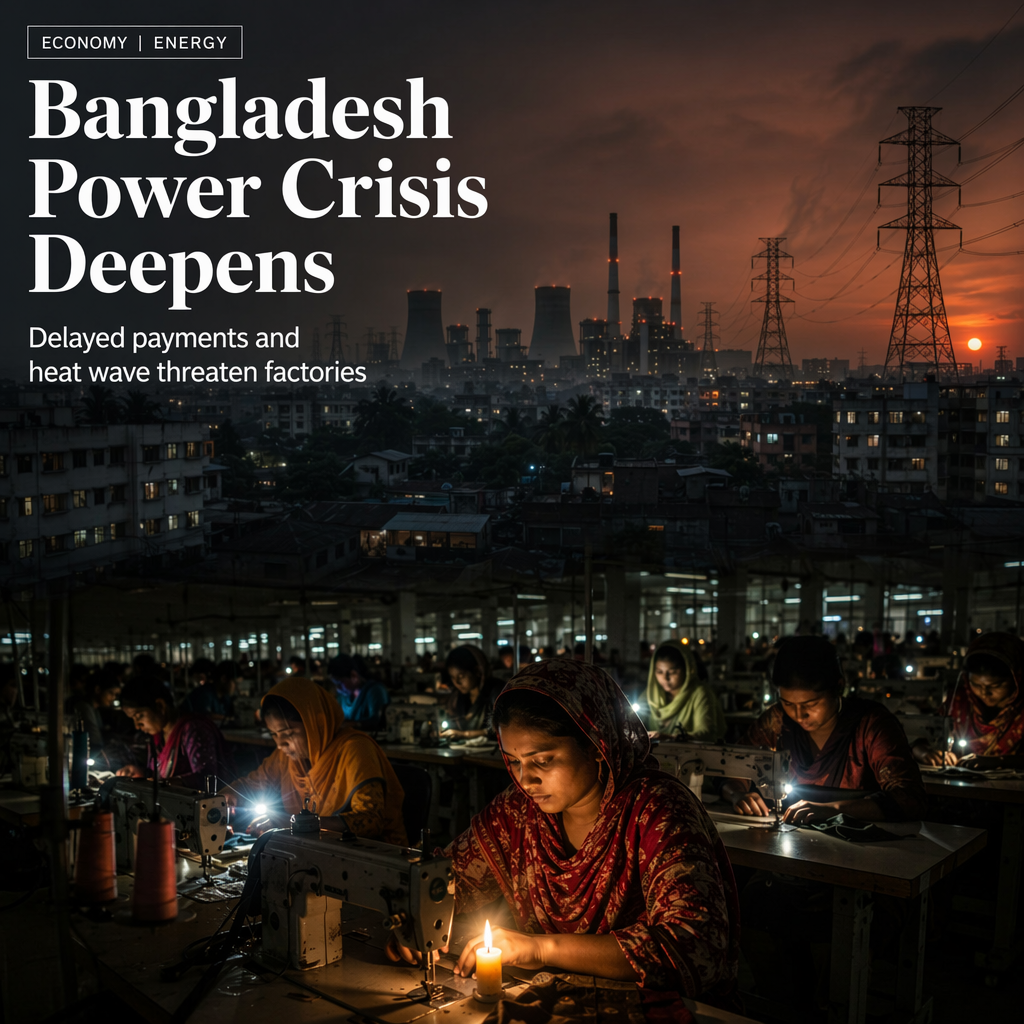
Bangladesh is experiencing significant power outages as the government struggles to make timely payments to power producers, a situation compounded by technical issues and an ongoing extreme heat wave. Over the past two weeks, the country has faced daily intentional power cuts ranging from approximately 600 megawatts to 3,350 MW, with the upper end of this range notably higher than earlier in the year [1]. These outages are particularly affecting rural areas and garment factories, the latter being a vital part of Bangladesh's export-driven economy [1].
The delayed government payments have hindered power producers' ability to secure fuel and maintain operations, further straining the energy supply during a period of heightened demand caused by the heat wave [1]. Industry leaders and local officials have expressed concern that unless payments are expedited and technical issues resolved, the power shortage could intensify, posing a threat to production and export targets, especially within the garment sector [1].
While the article does not provide specific trading advice or price levels, it highlights a clearly negative market sentiment, with growing worries about the sustainability of Bangladesh's energy supply and the broader economic impact [1]. No forward-looking analyst opinions or technical analysis are included in the source [1].
CONCLUSION
Bangladesh's deepening power crisis, driven by delayed government payments and technical challenges, is severely impacting key economic sectors such as garment manufacturing. The situation has raised significant concerns about energy supply sustainability and the country's export performance, resulting in a negative market outlook.