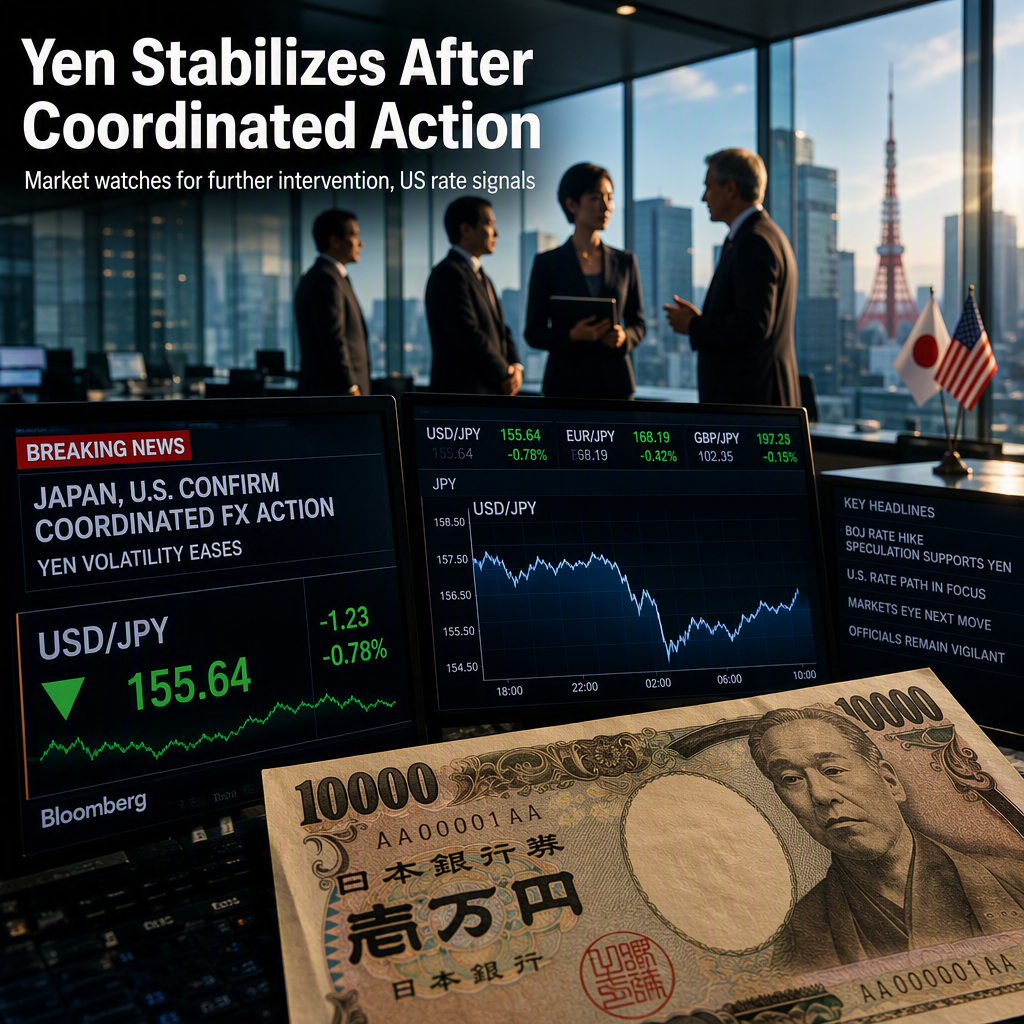
The Japanese Yen experienced significant volatility following a coordinated intervention by Japanese and US authorities, as reviewed by MUFG’s Teppei Ino. The USD/JPY currency pair opened the week at 157.58 and dropped sharply to a low of 155.20 during early Tokyo trading on 3 August, after the Ministry of Finance released a statement from Finance Minister Satsuki Katayama confirming the joint intervention. Additional comments from Katayama and Vice Minister of Finance for International Affairs Atsushi Mimura contributed to the Yen's initial strengthening [1].
After the intervention, the USD/JPY gradually recovered, approaching 158 on 4 August. The recovery was temporarily capped as both Japanese and US authorities signaled their continued readiness to intervene in the currency markets if necessary [1].
On 6 August, during US trading hours, the USD/JPY moved above 158 and climbed to around 158.50, following reports that Fed Chair Kevin Warsh could consider a September rate hike, contingent on upcoming inflation data and other factors. By 7 August, the pair was trading above 158, indicating a stabilization after the previous week's sharp moves. The dollar's decline after the FOMC meeting and the subsequent intervention appeared to have paused, with major currency moves generally limited to within 1% in either direction [1].
No specific forward-looking analyst opinions were provided beyond the authorities' stated readiness to intervene again and the possibility of a US rate hike depending on inflation data [1].
CONCLUSION
The coordinated intervention by Japanese and US authorities led to sharp but temporary moves in the USD/JPY, with the pair ultimately stabilizing above 158. Market participants remain attentive to further intervention signals and potential US rate hikes, which could influence future currency movements.