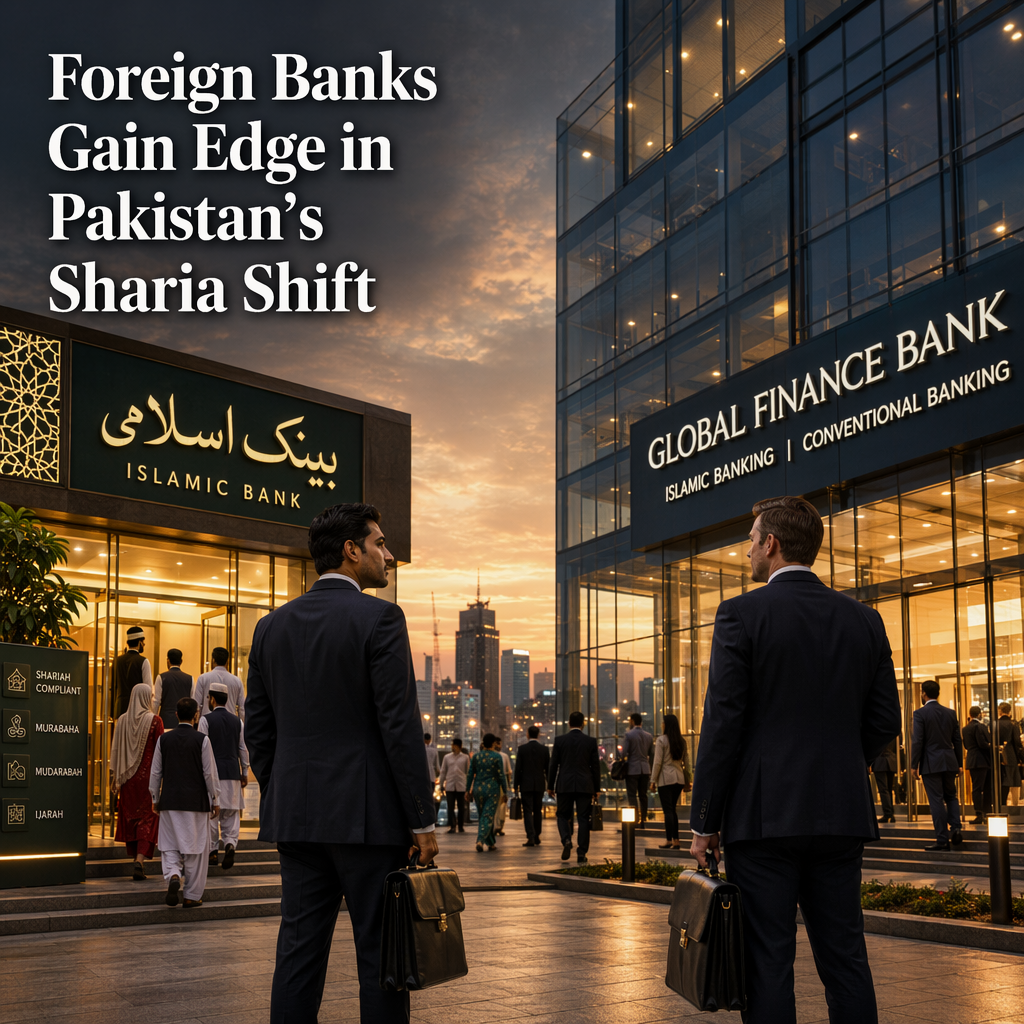
Pakistan is set to implement a major banking reform requiring all domestically owned banks to operate under a fully sharia-compliant model by 2028, effectively eliminating interest-based finance from the country's financial system [1]. This move is in line with constitutional requirements and longstanding demands from religious groups, aiming to further develop the Islamic finance sector in Pakistan [1].
A key aspect of the reform is that foreign banks operating in Pakistan will not be required to fully convert to Islamic banking. Instead, they will be allowed to continue offering conventional, non-Islamic banking services alongside their Islamic offerings even after the new rules take effect [1]. This regulatory distinction provides foreign banks with a potential competitive advantage, as they can serve market segments where conventional banking remains in high demand, while domestic banks will be restricted to sharia-compliant services only [1].
Industry observers have noted that this dual-system approach could create a competitive imbalance, with foreign banks possibly capturing greater market share in areas where conventional banking products are preferred [1]. However, the government has not yet provided details on how it will monitor or enforce compliance among foreign banks, nor clarified whether additional regulations may be introduced to address the competitive environment between foreign and domestic banks [1].
No specific financial figures, market impact data, or analyst opinions are provided in the available content [1].
CONCLUSION
Pakistan's upcoming banking reform is poised to reshape the competitive landscape by mandating full sharia compliance for domestic banks while allowing foreign banks to retain conventional services. This regulatory disparity could give foreign banks a market advantage, though the government has yet to clarify enforcement and future regulatory plans.