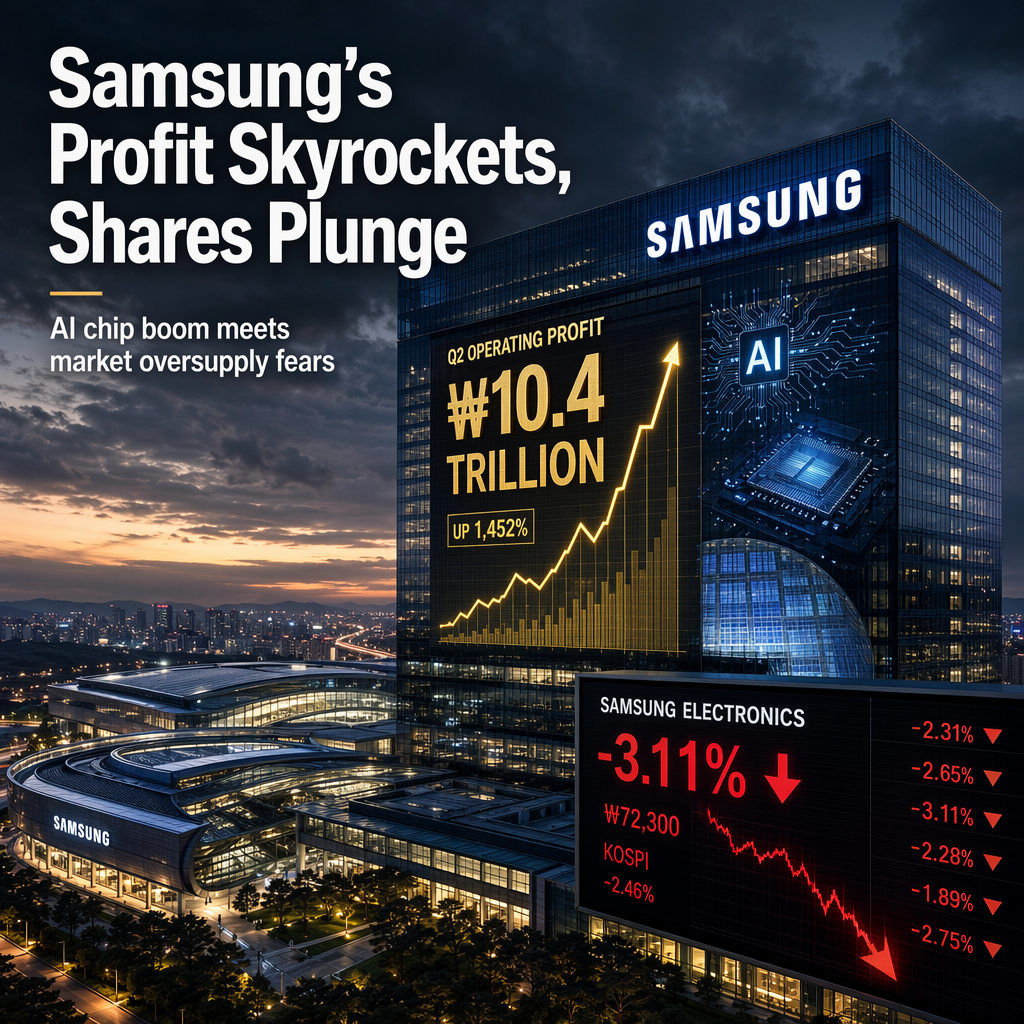
Samsung Electronics reported a dramatic surge in operating profit for the second quarter, reaching 89.4 trillion won ($58.4 billion), which is more than 19 times higher than the same period a year ago [1]. This exceptional performance was attributed to a persistent memory chip shortage driven by rising demand for artificial intelligence computing [1].
Despite the record-breaking profit, Samsung's shares fell sharply by 6.9% following the announcement [1]. The decline was fueled by investor concerns over a potential oversupply of memory chips, as the company revealed plans to build additional fabrication plants to meet the booming AI-related demand [1].
Market analysts highlighted that while the current AI-driven demand has significantly benefited memory manufacturers like Samsung, the industry is known for its cyclical nature and vulnerability to rapid shifts. The recent profit surge comes after a period of shortage, but there is apprehension that increased production could soon result in excess inventory and declining prices [1].
No specific trading advice or technical indicators were provided, but the overall investor sentiment was described as cautious, with doubts about the sustainability of Samsung's profit growth amid the risk of market oversupply [1].
CONCLUSION
Samsung's extraordinary profit growth in Q2 2026 was overshadowed by investor fears of a looming memory chip oversupply, leading to a significant share price decline. The market remains cautious, balancing optimism about AI-driven demand with concerns over the industry's cyclical risks.