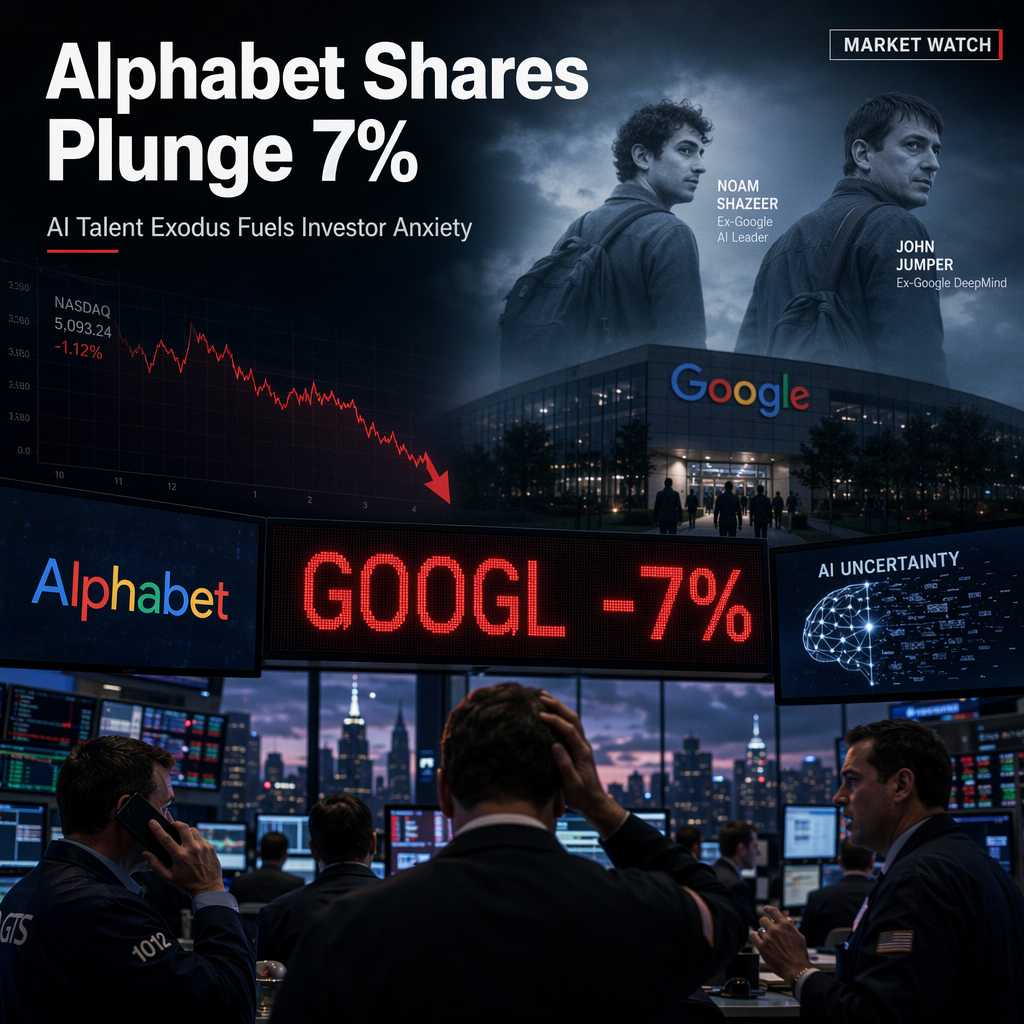
Alphabet shares dropped 7% on June 22, marking the company's worst trading day in a year, as concerns over artificial intelligence strategy and talent retention intensified following the departure of two high-profile researchers from Google, Alphabet's main subsidiary [1]. The stock underperformed both the Nasdaq and other megacap peers, with technical analysis indicating a break of key support levels and increased bearish sentiment [1].
The brain drain began last week when Noam Shazeer, Google's vice president of engineering and co-lead of its Gemini AI models, announced his exit to join rival OpenAI. Shazeer's departure came less than two years after his return to Google, which had previously brought him and Daniel De Freitas back to its DeepMind AI unit in August 2024 as part of a partnership with Character.AI, a startup they founded after leaving Google in 2021 [1]. On Friday, John Jumper, DeepMind vice president and engineering fellow, also left for Anthropic after nine years at Google. Jumper, a Nobel Prize winner in 2024 and co-creator of AlphaFold, was instrumental in predicting over 200 million protein structures, significantly advancing biological and medical research [1].
These departures occurred just weeks after Google unveiled new AI products, including the Gemini 3.5 Flash model and Gemini Spark AI agent, at its annual I/O developer conference [1]. The share decline was further exacerbated by a Wall Street Journal interview with Microsoft CEO Satya Nadella, who advocated for less reliance on "AI Giants" and described the AI market as commoditized. This raises investor concerns about Alphabet's heavy AI spending, which has totaled $141 billion in debt and equity since October, and whether such investments are creating a sustainable competitive advantage or merely increasing margin pressure [1].
Additionally, Google users reported outages on Gmail and YouTube on Monday, adding to the negative sentiment surrounding the company [1].
CONCLUSION
Alphabet's 7% share decline reflects mounting investor anxiety over AI talent retention, strategic direction, and the efficiency of its substantial capital expenditures. The recent high-profile departures and market commentary questioning the durability of Alphabet's AI advantage have triggered a significant bearish reaction. The company's ability to address these concerns will be critical for restoring market confidence.