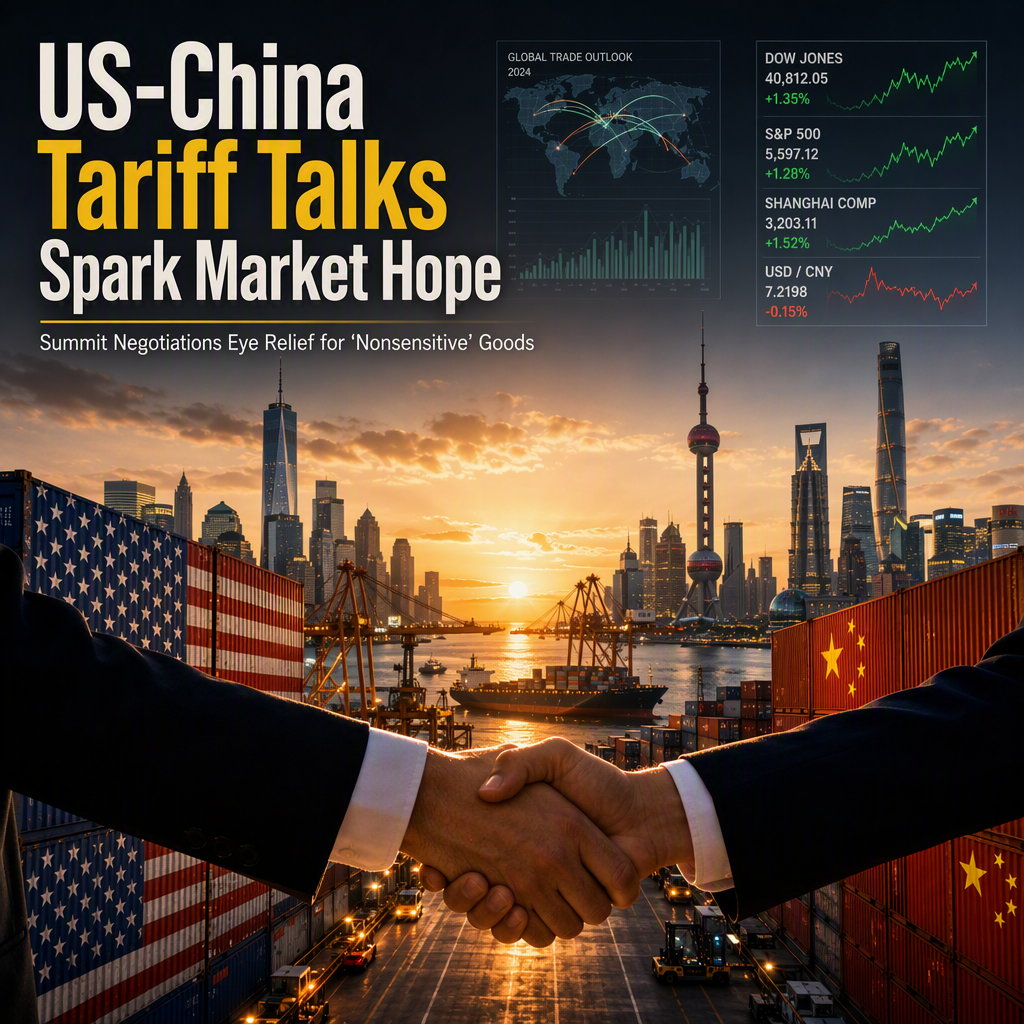
The United States and China are engaged in discussions to potentially lower tariffs on 'nonsensitive' products ahead of an upcoming summit between their top leaders, President Trump and President Xi. According to sources briefed on preliminary talks, both sides have not immediately agreed on the scope of tariff reductions, with ongoing debates about which specific products would be classified as 'nonsensitive' and thus eligible for relief [1].
Working-level talks have focused on the impact of possible tariff cuts, and there is optimism among sources that the summit may result in some easing of trade barriers. However, persistent disagreements regarding the scope and timing of reductions, as well as broader geopolitical tensions involving Iran and rare earths, have kept traders cautious [1].
Market participants are closely monitoring the situation, with expectations that even modest tariff relief could improve sentiment and support equities in sectors previously affected by tariffs. Trade analysts highlight that tariff adjustments have historically served as signals of goodwill in US-China negotiations, but the lack of clarity on product categories and unresolved strategic issues may limit the immediate market impact [1]. Investors are advised to watch for developments ahead of the summit, as any announcement of tariff cuts could trigger a short-term rally, particularly in consumer and manufacturing stocks. Resistance levels for key indices may be tested if positive news emerges, while lack of progress could reinforce support at recent lows [1].
Despite hopes for an extension of the trade truce, underlying tensions and unresolved issues continue to pose risks for further escalation, emphasizing the importance of careful portfolio positioning and risk management in the current environment [1].
CONCLUSION
The ongoing US-China discussions on tariff cuts for 'nonsensitive' goods have generated cautious optimism among market participants, with potential for short-term rallies if progress is made. However, persistent disagreements and broader geopolitical tensions continue to pose risks, making careful risk management essential for investors.