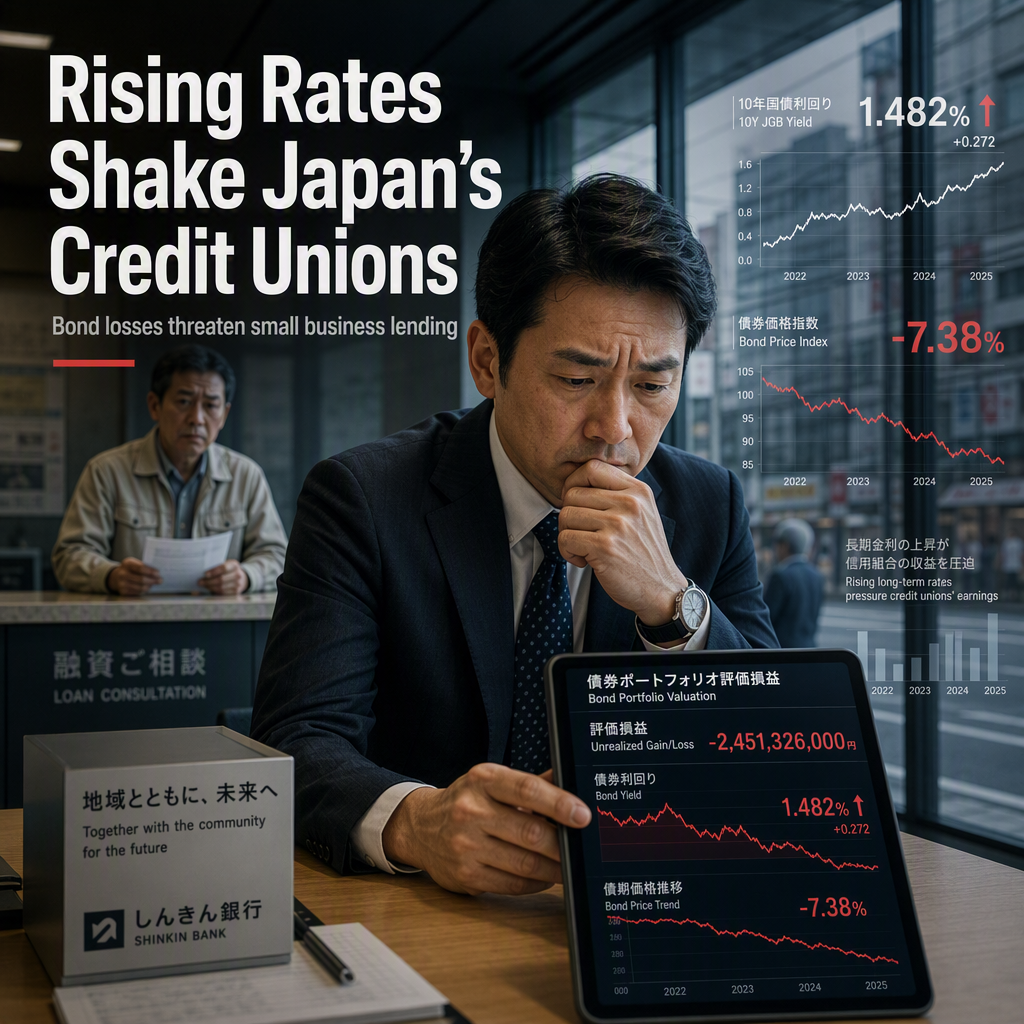
Japan's credit unions, particularly the community-focused shinkin banks, are experiencing significant bond losses as a result of rising long-term interest rates [1]. The increase in rates has led to a decline in the market value of bonds held by these institutions, resulting in mounting unrealized losses on their balance sheets [1]. This deterioration in financial health is weakening the capital positions of the credit unions and constraining their ability to extend new loans [1].
Industry data reveals that 17 regional shinkin banks have reported negative results due to these bond losses [1]. The financial strain on these credit unions is making it more difficult for them to support small business lending in their local communities, at a time when small businesses are already facing economic challenges [1]. The ongoing pressure on credit unions' finances could further limit fundraising options for small businesses, exacerbating existing headwinds [1].
No specific analyst opinions or forward-looking statements are provided in the article. However, the implication is that unless interest rates stabilize or credit unions find ways to shore up their capital, the lending environment for small businesses may remain constrained [1].
CONCLUSION
Rising long-term interest rates have led to significant bond losses for Japan's credit unions, with 17 regional shinkin banks reporting negative results. This financial pressure is likely to restrict lending to small businesses, potentially intensifying existing economic challenges in local communities.