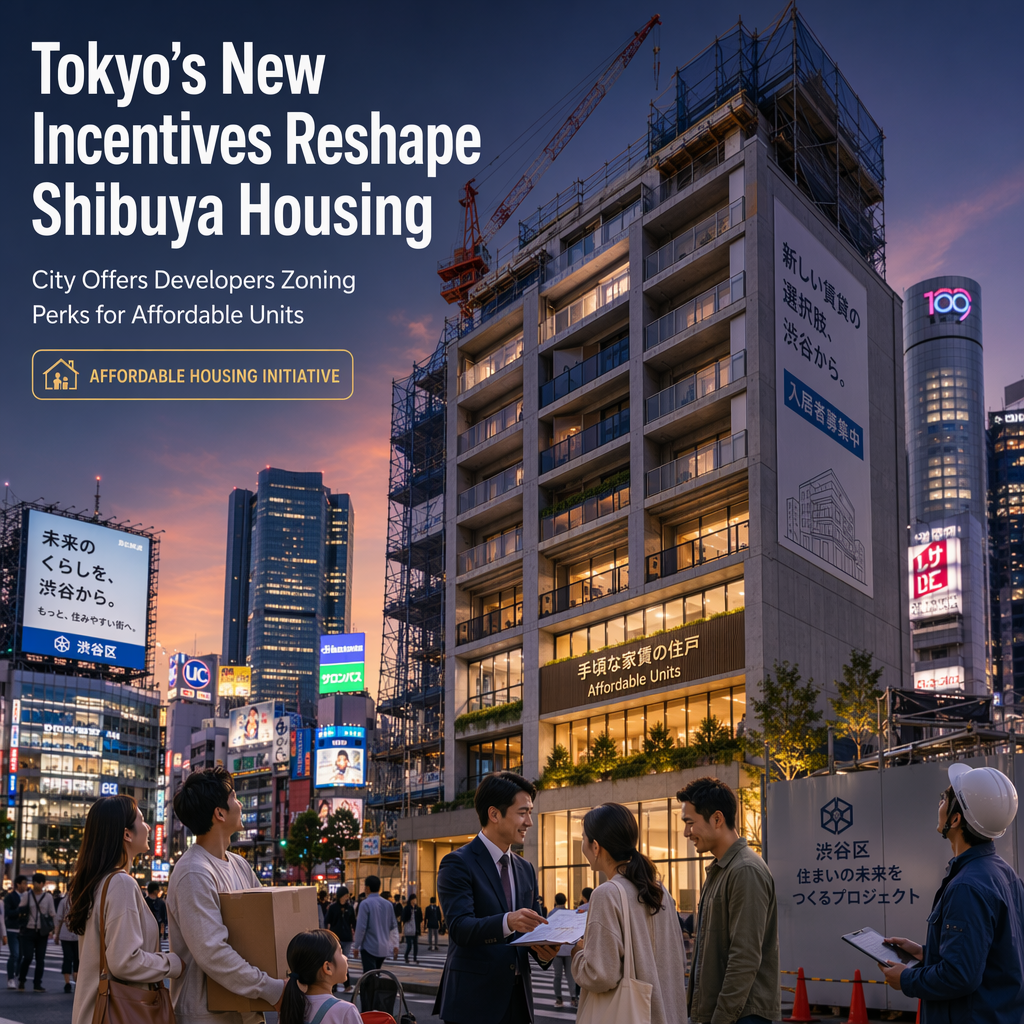
The Tokyo government is introducing new zoning incentives to encourage the development of affordable housing units in central Tokyo, particularly in Shibuya, as part of ongoing major redevelopment projects. Under the new measures, developers will be allowed to exceed existing floor area ratio limits if they include apartments with rents set approximately 20% below prevailing market rates in their projects [1].
This policy shift comes in response to a significant increase in condominium rents in central Tokyo, which rose about 8% year-on-year as of May. The government aims to address the growing affordability issue by increasing the supply of lower-rent apartments, leveraging the momentum of large-scale redevelopment in key urban areas [1].
The initiative is expected to make a meaningful impact on the availability of affordable housing, though the article does not specify the projected number of units or the timeline for implementation. Market implications include potential changes in the residential property market dynamics, as developers may adjust project plans to take advantage of the relaxed zoning rules [1].
CONCLUSION
Tokyo's new zoning incentives are designed to counteract rising rents by boosting the supply of affordable housing in central districts like Shibuya. While the immediate market impact is medium, the policy signals a proactive approach to urban housing challenges and may influence future development strategies.