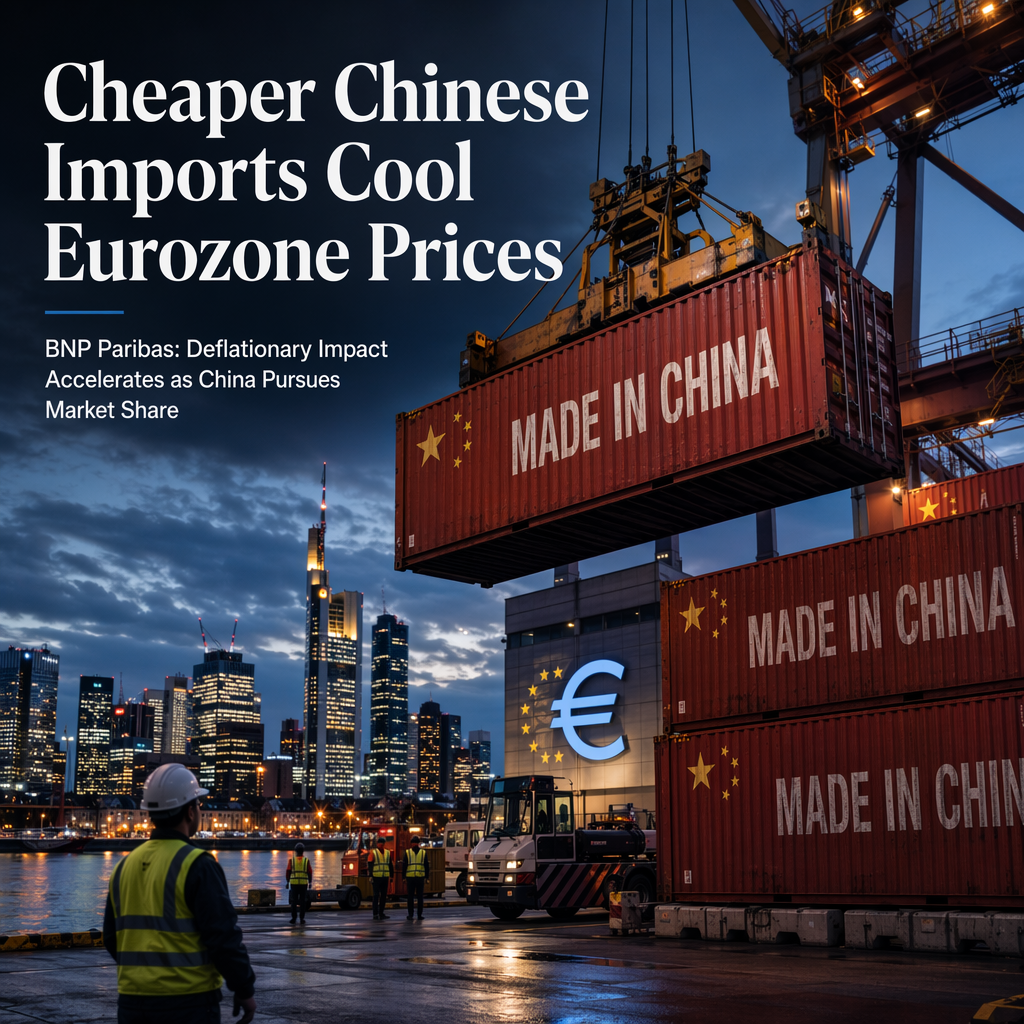
BNP Paribas reports that declining import prices from China are exerting a deflationary influence on Euro area prices, with 16.9% of Euro area imports sourced from China as of April [1]. The bank estimates that a 10% fall in Chinese import prices could reduce headline inflation in the Euro area by approximately 0.3 percentage points, a finding that aligns with recent research from the European Central Bank (ECB) [1]. This deflationary trend has accelerated in recent months, particularly in sectors where Chinese overcapacity is most pronounced, such as chemicals [1].
The report highlights that Europe continues to 'import deflation from China,' and the effect is significant due to the Euro area's heavy reliance on Chinese imports [1]. Despite a recent appreciation of the renminbi against the euro, the deflationary impact has not been mitigated. BNP Paribas notes that, in response to commercial decoupling from the United States, China appears to be intensifying its market-share-focused pricing strategy, a stance likely to persist amid weak domestic demand [1].
No specific market reactions or analyst forecasts beyond the BNP Paribas and ECB research are mentioned in the article [1].
CONCLUSION
BNP Paribas identifies cheaper Chinese imports as a key driver of lower Euro area inflation, with a notable impact quantified by both the bank and the ECB. The ongoing trend suggests continued deflationary pressure on Euro prices as China pursues aggressive pricing strategies to maintain market share.