
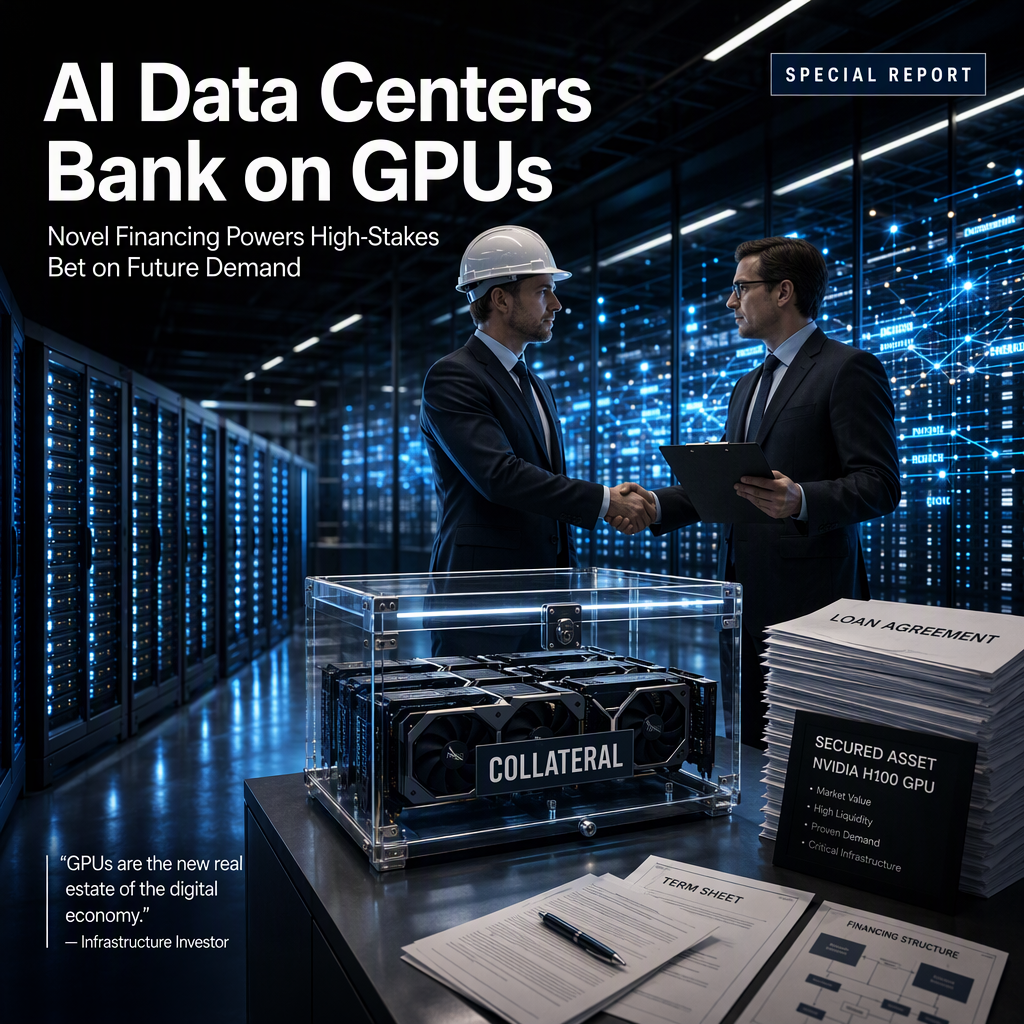
U.S. artificial intelligence data centers are increasingly relying on complex and innovative financing methods, including the use of graphics processing units (GPUs) as collateral, to fund their construction and operation. This trend is particularly prevalent among companies that lack the financial resources of major tech giants, as the capital required for building AI data centers often reaches hundreds of millions or even billions of dollars [1]. GPUs, which are in short supply and possess high resale value, are being used as security for loans, marking a departure from traditional financing approaches such as mortgages backed by real estate or corporate bonds [1].
While these creative financing mechanisms enable smaller players to compete in the rapidly expanding AI sector, they also introduce significant risks. If long-term demand for AI services does not meet expectations, companies may face difficulties repaying loans secured by hardware that could quickly lose value. The volatility and uncertainty surrounding AI demand create a challenging environment for both borrowers and lenders [1].
Market analysts caution that the evolution of AI technology will continue to drive high capital requirements for advanced data centers. Although innovative financing can facilitate investment and competition, it adds new layers of risk to the already volatile tech infrastructure sector [1].
Despite these concerns, investor appetite for AI infrastructure remains robust, fueled by optimistic forecasts for the growth of artificial intelligence across multiple industries [1].
CONCLUSION
AI data centers are adopting novel financing strategies, such as using GPUs as collateral, to meet rising capital demands. While this enables broader participation in the AI infrastructure market, it also heightens risk if AI demand falls short. The sector remains attractive to investors, but analysts warn of increased volatility and uncertainty.