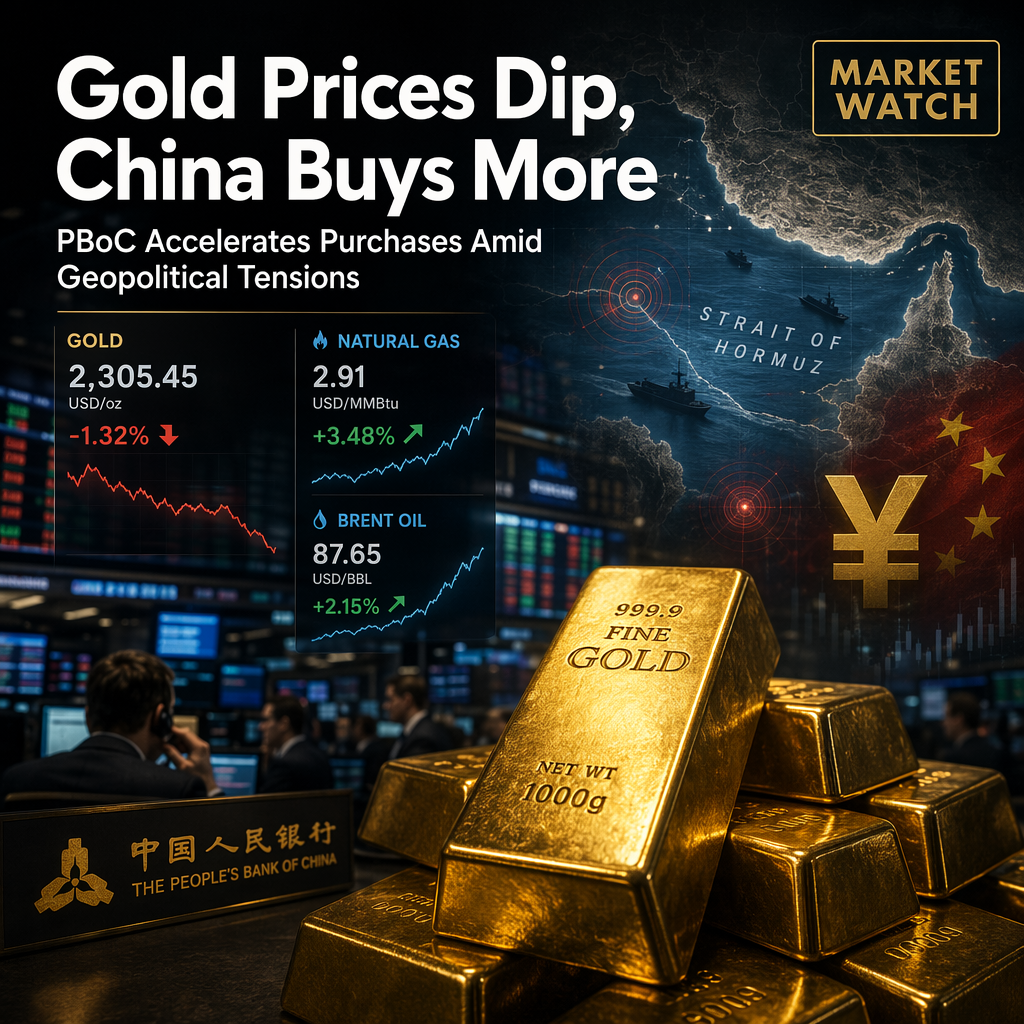
Gold prices fell to USD 4,120 per troy ounce following Iranian attacks on two cargo ships and an LNG tanker in the Strait of Hormuz, which also led to a significant rise in TTF natural gas prices and a slight increase in oil prices, fueling inflation concerns [1]. Despite these geopolitical developments, expectations for U.S. Federal Reserve rate hikes remained unchanged, with the market still anticipating around 30 basis points of hikes by year-end [1].
Commerzbank’s Carsten Fritsch highlights that the downside for gold is seen as limited due to continued strong demand from the People’s Bank of China (PBoC). The PBoC purchased gold for the 20th consecutive month in June, increasing its reserves by 480 thousand ounces, or nearly 15 tons, marking the largest monthly purchase since October 2023 [1]. Over the past 20 months, the PBoC has accumulated more than 80 tons of gold, averaging just over 4 tons per month, but purchases have accelerated recently, with 33 tons added in the last three months alone [1].
Fritsch suggests that the lower price environment has prompted the PBoC to step up its gold buying, which is helping to cushion recent weakness in gold prices [1]. The combination of ongoing Chinese demand and unchanged Fed rate expectations is seen as limiting further downside for gold [1].
CONCLUSION
Gold prices have faced downward pressure from geopolitical tensions, but strong and accelerating purchases by the People’s Bank of China are providing support. With Fed rate expectations steady, the market sees limited further downside for gold in the near term.