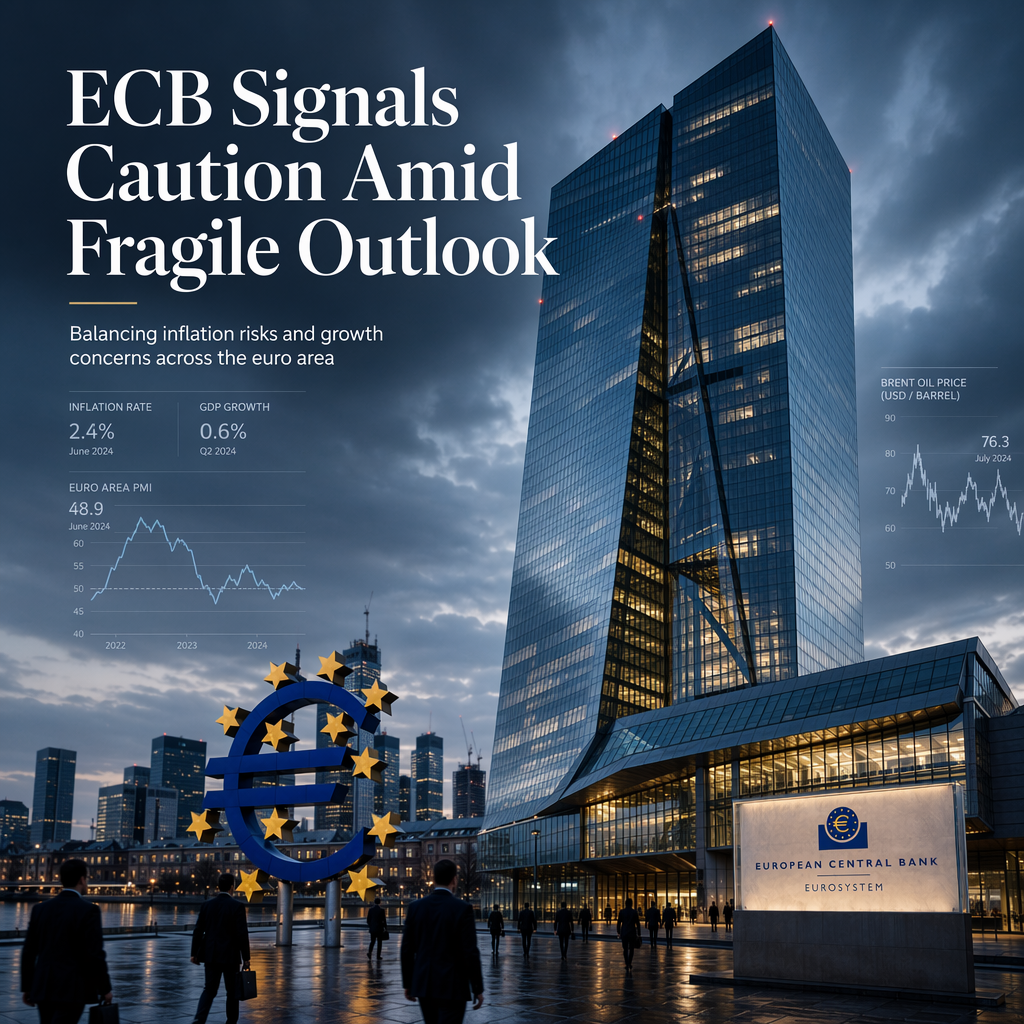
The European Central Bank (ECB) is maintaining a cautious stance as the outlook for the euro area remains fragile, according to comments from ECB Governing Council member Fabio Panetta cited by BNY’s Geoff Yu [1]. Panetta highlighted that the region faces upside risks to inflation alongside downside risks to growth, emphasizing the need for monetary policy to remain flexible and not adhere to a preset path [1].
Panetta described the ECB’s latest rate hike as a recalibration in response to earlier oil-driven inflation pressures, rather than a shift in policy direction [1]. He also noted that recurring supply shocks could require further adaptation of policy to achieve the ECB’s 2% medium-term inflation target [1].
Geopolitical developments, particularly recent peace talks between the U.S. and Iran, were mentioned as potential factors that could eventually ease energy prices, though Panetta cautioned that policymakers must closely monitor energy markets, supply chains, wages, and inflation expectations [1].
While Germany’s manufacturing sector continues to face significant headwinds, recent sector surveys have shown improvement, which has helped reduce near-term downside risks for the broader euro area [1].
CONCLUSION
The ECB is signaling caution as it navigates a fragile euro area outlook, balancing inflation and growth risks. Policymakers are prepared to adapt policy as needed, with ongoing monitoring of geopolitical and economic developments. Recent improvements in German manufacturing surveys offer some relief, but risks remain elevated.