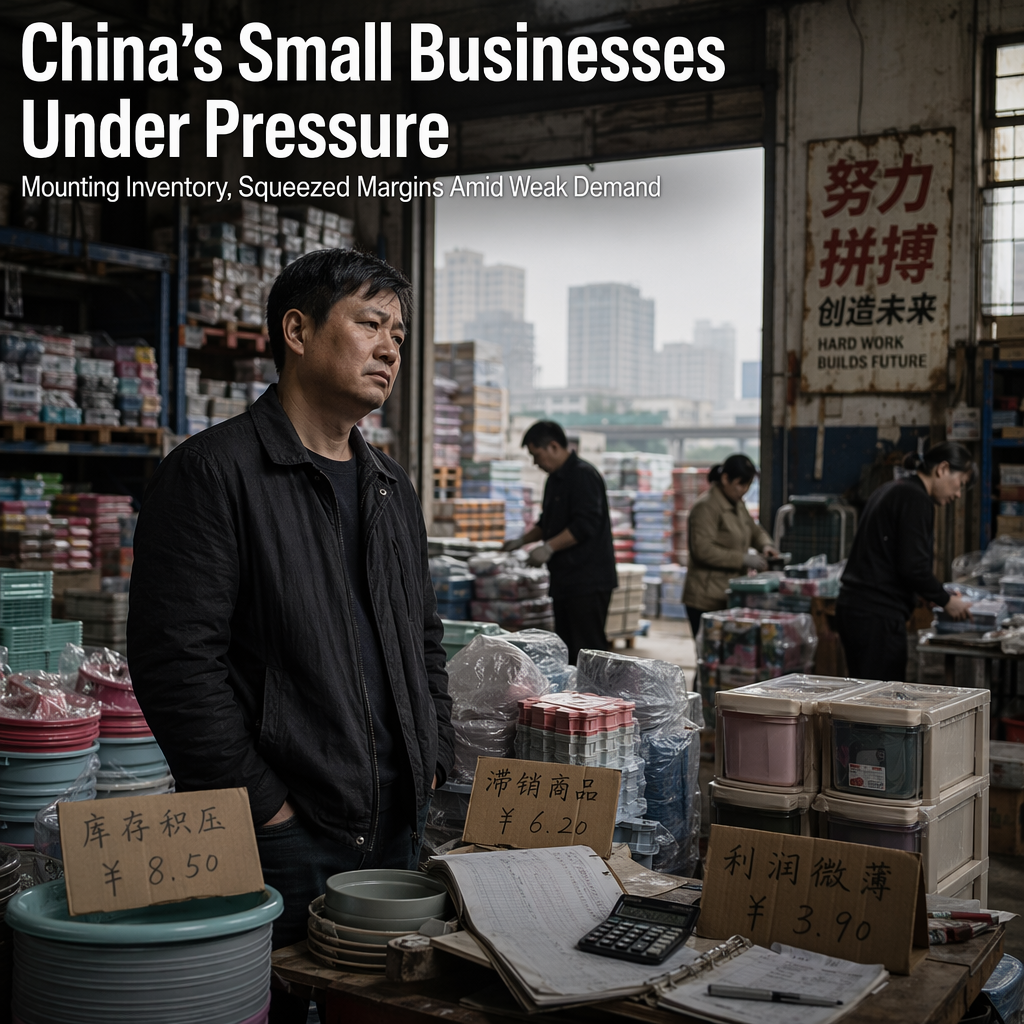
China's small and medium-sized businesses (SMEs) are struggling to raise prices as inventory levels rise, driven by weak domestic demand and increased competition, according to a report published on July 16, 2026 [1]. The ongoing crisis in the Middle East has led to higher supply costs, particularly for raw materials such as plastics and chemicals, further squeezing profit margins for these businesses [1].
Business owners in Ningbo, a city known for its plastic materials market, described how attempts to raise prices earlier in the year resulted in customers seeking alternative suppliers, as competition for limited demand remains intense [1]. Many SMEs are unable to pass on rising input costs to customers, leading to the highest inventory levels seen in years. Despite this, businesses are hesitant to offer deeper discounts, fearing that doing so would result in losses that threaten their survival [1].
The article highlights that some SMEs have already been forced to close due to these pressures, and the lack of effective government policy support has exacerbated the situation. Existing stimulus measures have not succeeded in reviving consumer demand or alleviating competitive pressures in many sectors [1].
Market analysts caution that unless there is an improvement in demand or a reduction in input costs, the SME sector in China could experience a wave of closures in the coming months. For now, small business owners are left managing excess inventory, rising costs, and the risk of further margin compression [1].
CONCLUSION
China's SMEs are facing significant challenges from rising costs, weak demand, and intense competition, resulting in mounting inventories and financial strain. Without a turnaround in demand or relief in input costs, analysts warn of potential widespread closures in the sector. The lack of effective policy support further heightens the risks for small businesses.