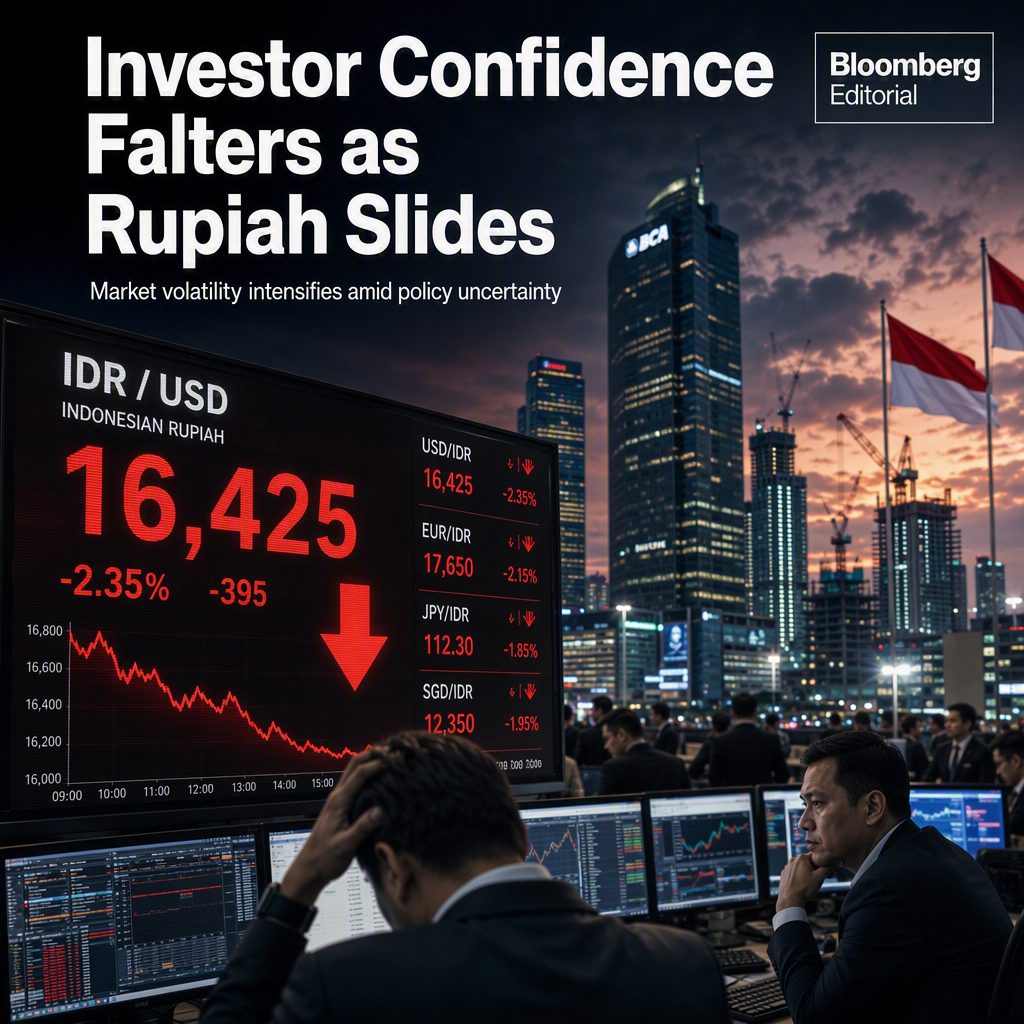
Indonesia's economic policy direction under President Prabowo Subianto has raised significant concerns among investors and economists, as the administration increasingly sidelines technocratic advice in favor of ambitious infrastructure projects and aggressive state intervention [1]. This shift has led to a weakening of the Indonesian rupiah against the US dollar in recent months, with foreign investors expressing wariness over unpredictable policy changes and perceived lack of fiscal discipline [1].
Market participants have specifically cited the government's expansive spending plans and the diminishing influence of experienced technocrats as key factors undermining confidence [1]. Analysts warn that such policies, if not backed by credible funding sources, could result in fiscal imbalances, heightened inflationary pressures, and an increased risk premium for Indonesia in global markets. These risks threaten to further weaken the rupiah and raise borrowing costs for both the government and the private sector [1].
Financial markets have already responded to these developments. The yield on Indonesia’s 10-year government bonds has risen, reflecting greater perceived risk and expectations of higher inflation [1]. The Jakarta Composite Index has shown increased volatility, with foreign capital outflows intensifying whenever government policy announcements diverge from market expectations [1].
President Prabowo’s administration has set ambitious GDP growth targets, aiming for rates above 6% per annum. However, analysts and international institutions caution that these targets may be unrealistic without substantial structural reforms and prudent fiscal management [1]. There is concern that continued economic overreach could jeopardize macroeconomic stability, potentially leading to sharper currency depreciation and higher financing costs [1].
Market sentiment remains cautious, with traders closely monitoring the rupiah’s key support level at 16,000 per US dollar—a psychological barrier that, if breached, could trigger further capital flight and increased volatility across Indonesian financial markets [1].
CONCLUSION
Indonesia's current economic strategy has led to a loss of investor confidence, a weaker rupiah, and heightened market volatility. Without a return to technocratic guidance and prudent fiscal management, analysts warn that macroeconomic stability could be at risk, with further currency depreciation and higher borrowing costs likely.