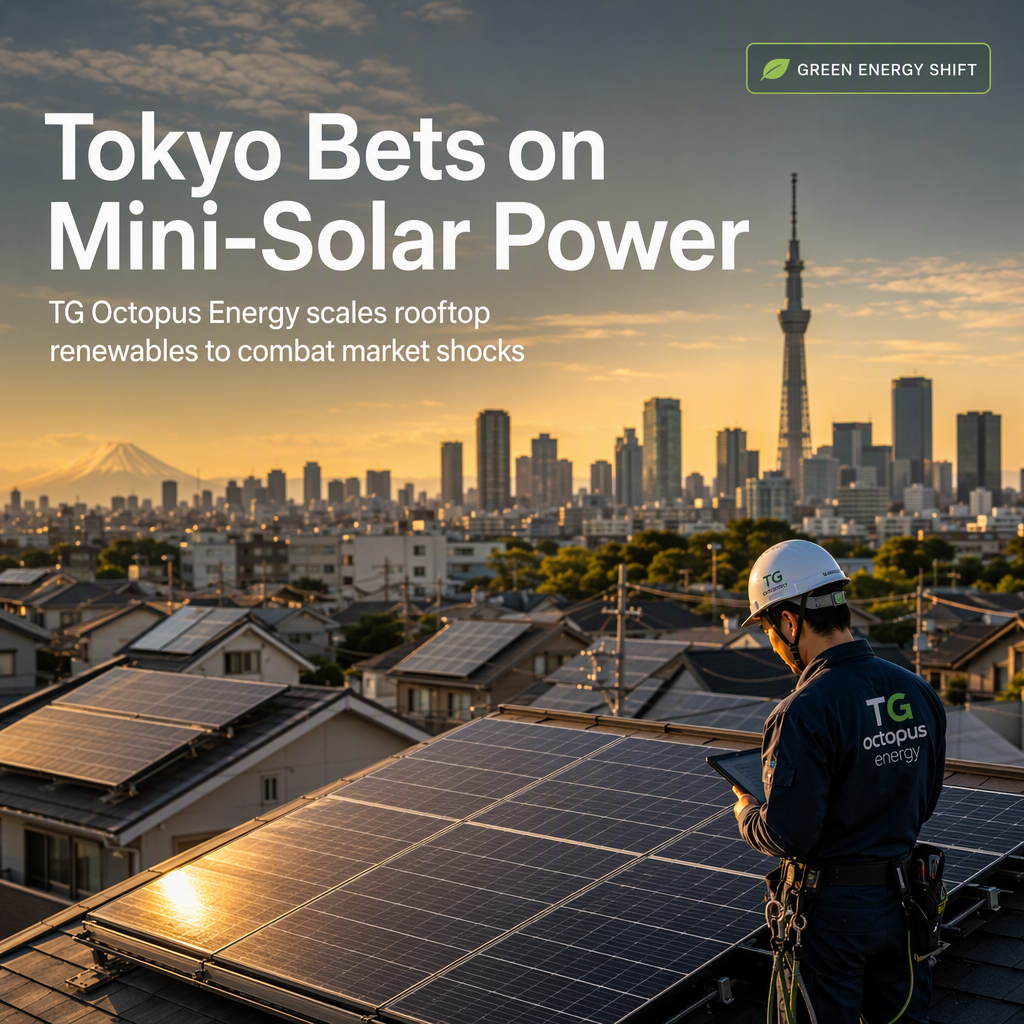
TG Octopus Energy, a Japanese power retailer backed by the U.K.'s Octopus Energy, has announced plans to develop approximately 1,000 small-scale solar power plants in the greater Tokyo region. The company aims to roll out 200 projects per year through fiscal 2030, marking a significant push to increase its own generation sources and reduce exposure to market fluctuations caused by tensions in the Middle East [1]. This initiative is a strategic response to recent volatility in global energy markets, particularly those impacted by geopolitical conflicts [1].
The expansion underscores a broader trend among Japanese electricity vendors to lessen dependence on imported fuels and reinforce domestic renewable energy infrastructure. TG Octopus Energy is focusing on rapidly deployable solar projects that can be integrated into local electricity grids, targeting a steady increase in solar generation assets [1]. Financial specifics, including the scale of investment, expected returns, and direct market impact, have not been disclosed [1]. However, the company asserts that its distributed solar strategy will help stabilize electricity supply and prices for customers in the Tokyo region, especially during periods of international uncertainty [1].
TG Octopus Energy's partnership with its U.K. parent brings expertise in distributed solar operations and access to innovative financing models from European markets. The move aligns with government incentives for renewable energy and advances in solar technology, positioning the company to capitalize on the growing demand for resilient and flexible power solutions [1].
While no trading advice or technical analysis was provided, sentiment among energy market participants is positive, with expectations that increased domestic solar capacity will bolster Japan's power sector against ongoing global energy price volatility [1].
CONCLUSION
TG Octopus Energy's mini-solar expansion is expected to enhance the resilience and flexibility of Japan's power sector, reducing reliance on imported fuels and mitigating risks from global market volatility. Although financial details remain undisclosed, the initiative is viewed positively by market participants and aligns with broader renewable energy trends in Japan. The medium market impact reflects the strategic importance of domestic solar capacity amid uncertain international energy conditions.