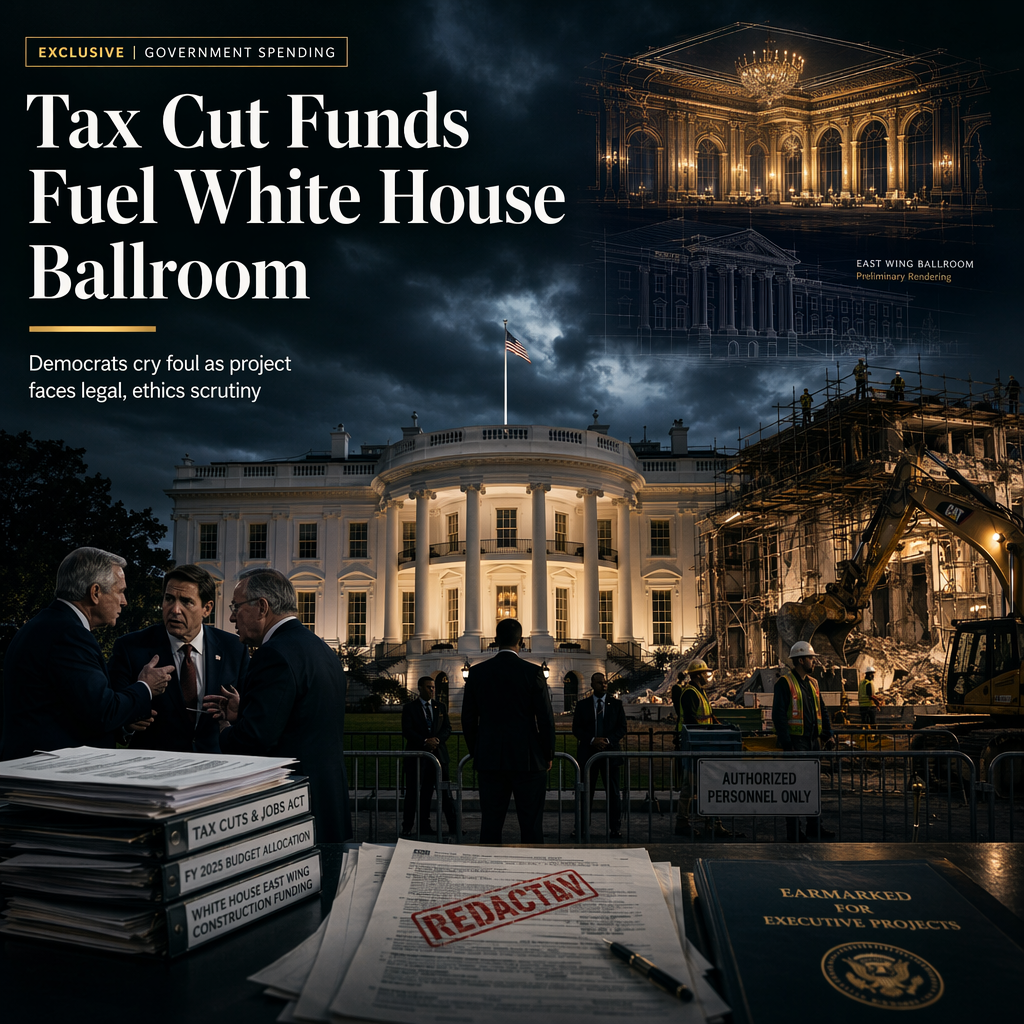
More than $350 million from President Donald Trump’s tax cuts bill has been redirected to White House security, with Democrats warning that these funds appear to be supporting the construction of a new White House ballroom, despite President Trump’s repeated assurances that no taxpayer dollars would be used for the project [1]. The Office of Management and Budget made this allocation late Friday, drawing from two accounts originally intended to provide the U.S. Secret Service with additional resources for hiring and training following last year’s assassination attempts on the president, according to Democrats on the Senate Budget Committee [1].
The shift in funding occurred just days after Congress rejected a $1 billion request for the White House as part of a Homeland Security bill, which President Trump signed into law. The ballroom project itself is currently entangled in legal challenges [1]. Senate Judiciary Committee chairman Chuck Grassley, whose panel initially drafted the security funding, stated he was unaware of the allocations and emphasized that the president had promised the project would be paid for with private money, reflecting public expectations [1].
Senator Jeff Merkley of Oregon, the top Democrat on the Senate Budget Committee, accused President Trump of potentially illegal actions, stating, “After repeatedly telling the American people that zero taxpayer dollars would be spent on his gold-plated ballroom boondoggle, now Trump appears to be using a smoke and mirrors tactic” [1]. Merkley further criticized Trump for allegedly prioritizing vanity projects over legal compliance and responsible use of taxpayer money [1].
The ballroom project has faced significant setbacks, including the demolition of the East Wing to make way for construction and ongoing ethics concerns regarding the use of donations, with watchdogs raising questions about potential corruption and conflicts of interest [1]. According to a project summary prepared by the contractor and reported by The Washington Post, the price tag for the project has ballooned to $600 million, with more than half of that funding reportedly coming from taxpayers [1]. Roll Call was the first to report on the new apportionment of funds for White House security [1].
CONCLUSION
The controversy over the White House ballroom project centers on the alleged redirection of taxpayer funds, despite President Trump’s assurances of private financing. With the project’s cost escalating and legal as well as ethical questions mounting, the issue has become politically sensitive, reflecting broader concerns about government spending and transparency.